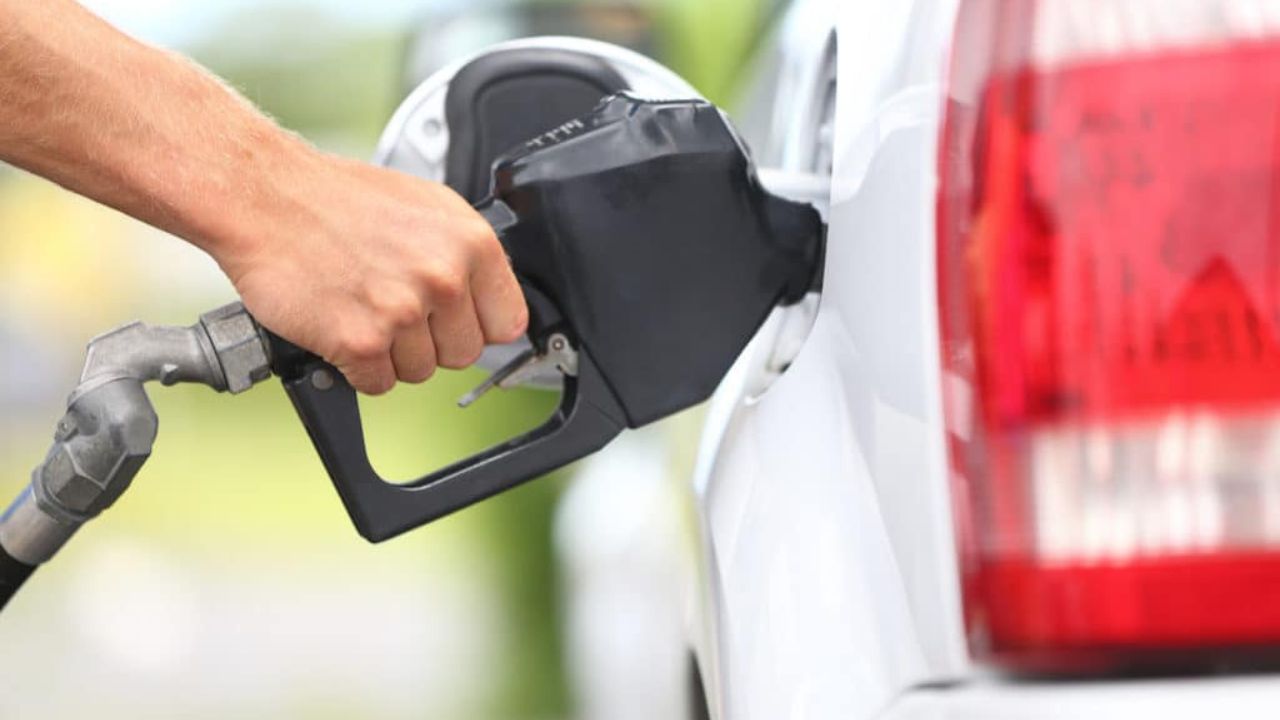
With gas prices extremely high right now, President Trump is suggesting suspending the national gas tax as a way to alleviate the pain for average Americans. It’s an interesting idea and with a surface examination seems like a reasonable plan to ameliorate the problem.
What I’d like to discuss in this blog are two issues. Does the president have such authority in the Constitution and what are the potential effects of such an action. I think one of the problems we face in the world is the elevation of convenience and short-term benefit over difficulty and long-term consequences.
How Much is the Federal Gas Tax
The first thing we should probably examine is the nature of the federal gas tax. It’s important to remember that all of the taxes you pay for gasoline are not imposed by the Federal Government. States apply their own taxes which is why the price for gas is quite different depending on the state in which you are buying gas.
Currently the federal gas tax is 18 cents per gallon. This represents about 35% of the total tax you pay for gasoline with the national average being 51 cents gallon. Obviously, this percentage changes depending upon which state you purchase gas. Still, it’s important to understand eliminating the federal gas tax only partially solves the problem. Basically, if this becomes reality, your gas price will drop by about 18 cents per gallon.
Constitutional Authority to Suspend Gas Tax
To see which branch of government has the authority to suspend the gas is a relatively simple task. We must consult the Constitution of the United States. We don’t have to go far, Article 1, Section 8, Clause 1 grants the power of taxation to Congress. The executive has no Constitutional Authority to suspend the federal gas tax. This, naturally, will not stop the executive from issuing an order but it does make that order unconstitutional.
Therefore, for the federal government to suspend the gas tax, Congress must act or the executive can act and Congress can willfully cede their authority to the executive.
What the Suspension Does
As stated earlier, the suspension immediately reduces gas prices by 18 cents per gallon. This is obviously a positive for people who drive and particularly for those who drive a great deal.
The negatives are fairly obvious as well. The gas tax has a purpose and that is to distribute federal money to the road system and all the ancillary things associated with them. The federal government currently is asking for $72.6 billion for fiscal year 2026.
The federal government collected about $33 billion in 2020 from the gas tax and I’m having a little trouble finding more recent data but based on the graph presented it did not increase a great deal in the preceding years, so I think that’s a fairly accurate guess as to current revenue.
It’s clear that current federal gas taxes do not cover expenditures for the system. We spend more on roads and their ancillaries than we collect. The conclusion becomes fairly obvious. If we suspend the gas tax, we create an even bigger budget shortfall. This means either more debt or further decay to our already crumbling infrastructure.
Conclusion
My point here isn’t that we should or should not suspend the federal gas tax. I merely attempt to point out that such a suspension isn’t simply a bed of roses. There are consequences.
Tom Liberman