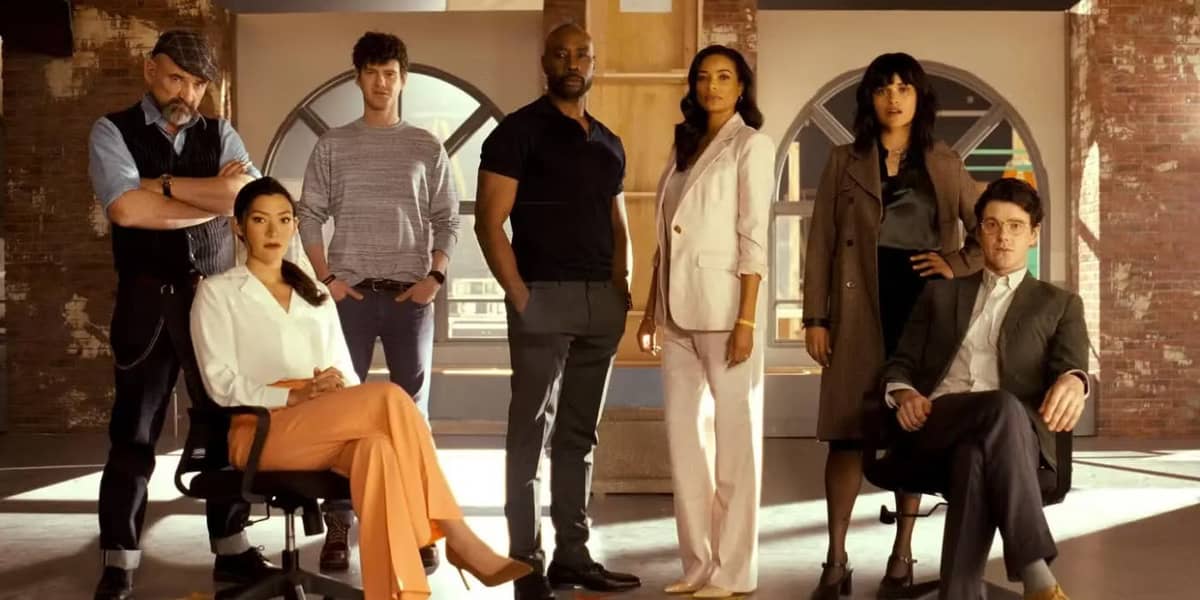
Loss of Immersion Lanterns First Episode

Loss of immersion in Lanterns

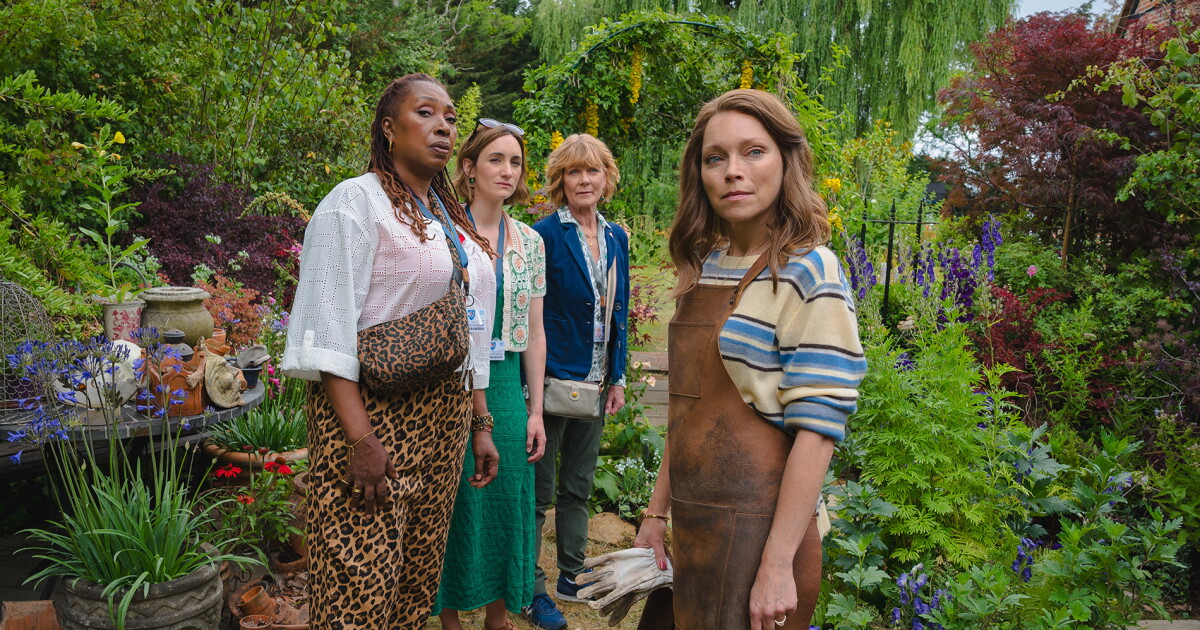
I watched the first episode of Lanterns and I wasn’t particularly impressed although I didn’t hate it either. It had a lot of loss of immersion moments and that’s what I want to talk about today. As I said, the show is far from bad but not great either.

The biggest problem was my loss of immersion. It happened way too often during the course of the episode. It was hardly a deal-breaker and I’ll continue to watch the show. What is loss of immersion, you ask? Why did it bother me?

What is Immersion?

I think most people will agree that when watching or otherwise consuming a particular good show, book, movie, play, sporting event, or any other form of entertainment that time doesn’t seem to pass. That is, you’re so immersed in the event you don’t notice time is passing. Suddenly it’s an hour later, or two hours, or lunch time and you don’t really remember all that time passing. That’s immersion. That’s you immersed in the entertainment and not looking at your phone, the clock, the person next to you, just raptly attentive.

That’s what I hope to discuss today. The various events in the premier of Lanterns that made me stop watching the show and look at my phone, complain to mom, roll my eyes, or otherwise lose immersion. And again, I want to stress, I’m nitpicking here, going into fine detail not to claim the show is terrible, it’s not, but to discuss the concept.

When I lost Immersion in Lanterns Football Field

The first couple of scenes kept me immersed but then things really fell apart at the crime scene. First problem was when John arrived at the football field and was instantly recognized by the deputy and treated harshly. Why? There was no reason for him to be recognized as anything other than a civilian and why the hostility?

Then John finds Hal in the bleachers and we are told it’s been six hours since the scene in Mexico. Now I’m doing math. okay, Nebraska high school football game. Friday night, starts around seven in the evening perhaps. Three-hour game takes us to ten. Celebration on the field and murders shortly thereafter. It should be perhaps four in the morning. The lighting doesn’t look four in the morning to me and John getting there in six hours is a stretch.

Hal tells John that John will learn why Hal has been sitting in the bleachers for six hours doing nothing when the local law enforcement leader comes to talk. We do not learn anything. I’m looking around, wait, weren’t we supposed to be given information about why Hal is sitting in the bleachers, not exposition on the crime?

John goes on the field and now I’m really losing immersion. It’s six hours after the game, after the shooting, and the players are still walking around on the field in full uniform with their helmets on. Not a chance. They’d have taken off the pads and helmets long ago. I know, not a big thing but it takes me out of immersion. Where is state law enforcement, the FBI? It’s been six hours and only a few local officers are on the scene of a mass shooting?

John’s presence triggers the bad guy to run for some reason. Why? No clue. The local law enforcement, claims she is watching this guy. okay, didn’t he just shoot four people on a crowded football field well lit by stadium lights? No one saw him shooting? Can identify him? He’s just standing there while the police keep an eye on him to see if he does anything suspicious? I’m supposed to believe this? I’m rolling my eyes.

He runs off the field and not one local officer gives chase, only John. Again, what gives? The guy runs into the school bursting through door after door. Do writers not care? Schools are locked up at night, even in rural areas. Chains across the doors. John catches the guy who is immediately put in handcuffs and dragged off. No, the cops would have him there on the ground for quite a while, search him, etc.

Just a quick side-note about the villain. Instead of a white shirt, how about give him a bright yellow shirt or shoes as a bit of fan service? It’s not that hard. It’s really not.

The Bar and More Lost Immersion

A mass shooting just took place in a rural town and the local watering hole, huge by the way, is completely filled with people drinking and having fun? And, I’ll mention again, by the timeline it should be morning at this point. I’m shaking my head in disbelief. Most people would be home with their families, the traumatized students, players, cheerleaders, teachers. No one is even talking about the shooting, about the famous Green Lantern being in town.

The Courtroom Loss of Immersion

Hal is the world-famous Green Lantern. The treatment he got was played for humor, I guess, but it just didn’t work for me. I thought the way they introduced the lawyer as the husband to the police chief was clumsy but I see what they were trying to do. Nothing too egregious here but the scene seemed in authentic and again, no one even talking about the mass shooting, just the barroom fight.

The Ranch Loss of Immersion

The ranch is filled with so much nonsense. All the security guards openly carrying assault rifles. Dozens of them. It’s just unbelievable. The Hollywood depiction of rural people is just plain insulting. I’m a city boy myself but I know plenty of rural folk, I went to college in Idaho. If it makes rural folk feel any better, the portrayal of urbanites is generally just as insulting and lazy.

John and Hal are invited for dinner and the evil rich dude is preparing the ribs. And by preparing, I mean handling raw meat and touching everything else in the kitchen. Does he season the ribs? Rub them? No. This guy gets a zero in barbecue. Also, if they are invited to dinner why is he doing the prep work right now, should have been done hours ago. Low and slow. Rub. Why isn’t he making the sauce? I know I’m being nit-picky here but I’m telling you, I lose immersion about things like this.

John advises the kid on how to throw a football and this really annoyed me. Just imagine says John and the kid is suddenly throwing darts. How about a quick lesson in body posture, arm position, throwing motion. I used to play a little football myself; John could say to give some authenticity to the scene.

The grill is a basic barrel grill and we don’t see meat cooking at all. Just a few pieces of corn that looked fairly uncooked to me. The guy is super rich and this is his grilling station? It’s embarrassing. Tongs, equipment, trays?

No dinner table scene, dialog, character development? Just them leaving and the bad guy saying there is nothing better than eating off someone else’s grill? What a terrible line. I understand it’s meant to imply that he knows John had sex with the bad guy’s wife, grandma, but it seemed so in authentic. There’s nothing better than eating from your grill. You made it. That’s what someone would say. The line just jarred me.

Speaking of grandma. The age of grandpa and grandma really gave me loss of immersion. I’m sure it can be explained but ….

Also, John just got badly beaten and he looks unscathed to me. He’s not Superman, he’s the Green Lantern.

Police Station Loss of Immersion

That interrogation room. Don’t get me started. It’s a rural police station, yes, but that’s ludicrous. It was someone’s unfinished basement.

Conclusion

I’m probably forgetting a few moments where I had loss of immersion but I hope I’ve made my point. Pay attention to details, immerse me and you’ve got a great chance at entertaining me. Lanterns fell short.

Tom Liberman

Anna Pigeon from USA is Ghastly

Anna Pigeion

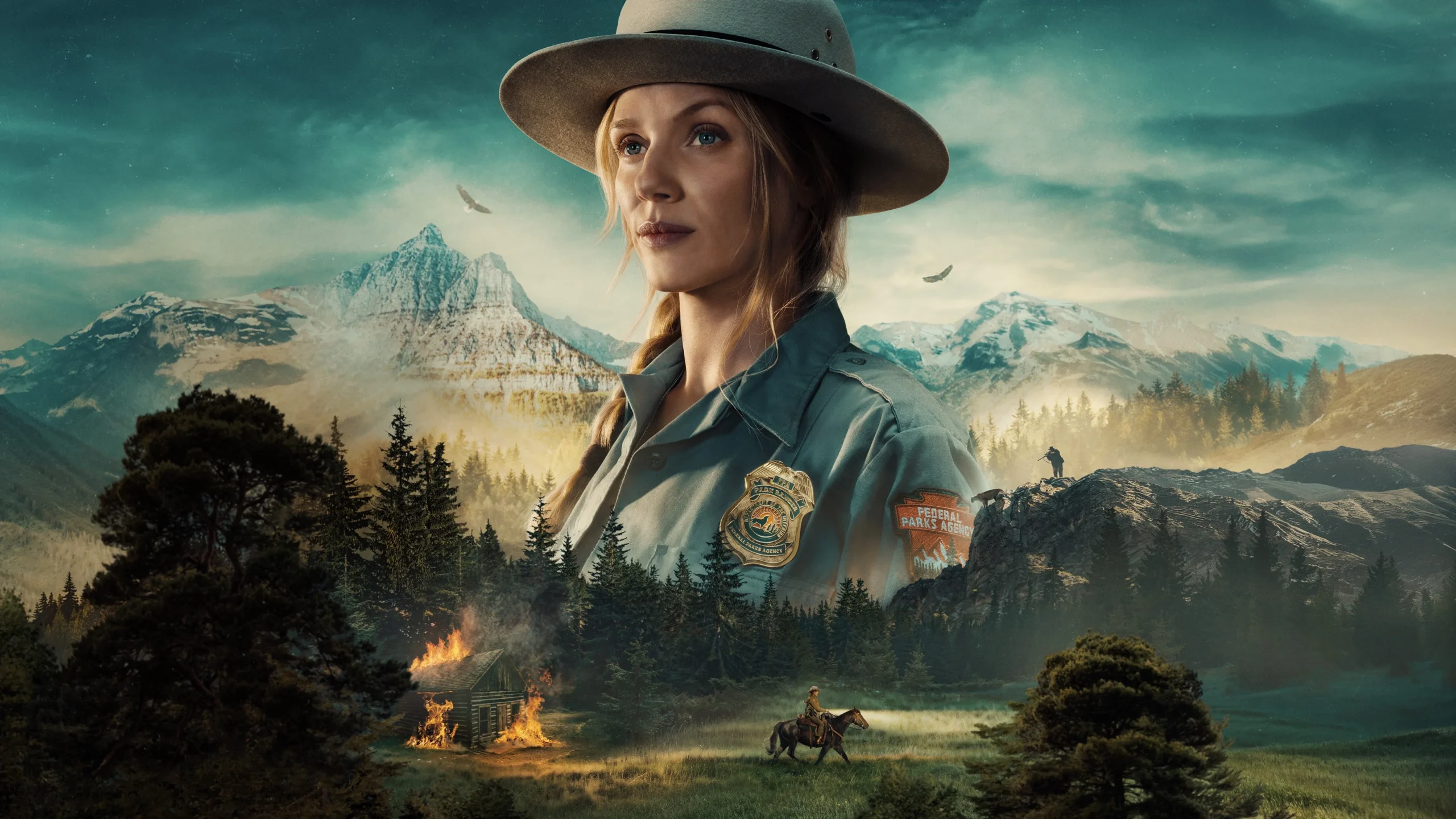
I haven’t done a review in a while so why not break the fast with a scorching take-down of Anna Pigeon? I’d prefer to review a show I really enjoyed but we are where we are. If forced to give a single-word review of Anna Pigeon that word is ghastly. It fails and it fails everywhere. It fails often, it fails broadly, it fails at realism, it fails at portraying believable people, it really fails at physics, there’s a first-year physics student prepared to leap off a cliff after watching the cliff scene.

All right, what’s important here is not that it’s ghastly, it’s why it’s ghastly. That’s the point of a review. What works, what does not work, and why. Such reviews help me in my own writing so let’s get on with it.

What’s Anna Pigeon About?

There was a lot of exposition in the first thirty-five minutes of the pilot episode and I’m going to try and remember some of it; but I wasn’t taking notes so it’s not going to be easy. Apparently, our titular character, Anna Pigeon, worked in New York City in some capacity of theater. I’m sure one of the exposition dumps told me her old job but I can’t remember. Something happened, I think a traumatic divorce but maybe he died, again, not sure, lots of information dumps tend to confuse me and she became a park ranger working at one of the national parks, again, I think they mentioned which one but I can’t remember.

Opening Scene Stupidity in Anna Pigeon?

The show opens with narration about why she is where she is and what’s going on, always great to open a show with narrated exposition explaining the motivations of the main character. And, by always great, I mean the worst steaming pile of human excrement possible. Do not start your show this way! Let us learn, organically, through pertinent scenes, about our main character.

A phone call awakens Anna in the dark. She complains, it’s dark, why are you calling me? Turns out one of her ranger pals didn’t return after her patrol. okay, maybe, I guess. I mean, wouldn’t they have known this earlier? Anyway, this phone call is interrupted by Anna’s sister calling from New York City. Well, I mean, why is her sister calling at this hour of the morning, an emergency perhaps? Dad is dead? The cat needs a liver transplant?

Nope, it’s just so her sister can information dump us on why Anna left the New York theatrical scene in the first place. Stupid information dump but also why would the sister be calling at that hour? It makes no sense. Then the piece de resistance of stupidity, the head ranger calling Anna tells her not to head out in the search until it’s light. Then why did you call in the middle of the night, you idiot.

Ongoing Stupidity in the Search

Out goes Anna to find her friend in a National Park, on foot. No drones, no helicopters, no partner, no horses, just hiking along. No emergency here. And, surprise, surprise, she stumbles on the corpse. Cue five seconds of grief. I’d have some sympathy if they’d had Anna being given the coordinates of her friend’s last known location, her glancing at the GPS on her phone, even using, heaven forbid, a compass and a map. But no, none of that. Just walks right to the spot.

Her friend has obvious bite marks in the neck. Cue up the mountain line and the dramatic music for a standoff. Shoo, says Anna, and off goes the creature. The body is in prickly brush and if the cat killed her and dragged her here, there’d be signs. There are none so Anna deduces it’s a frame job on the cat, genius that she is. And she truly is a genius because everyone else tells her to shut up and go with the mountain lion attack, no need for an autopsy. We need Anna to be a Mary Sue and smarter than everyone else despite the fact that her background is in theater and the others are lifetime rangers. She must be right so the audience understands she’s the hero. Hint, it’s useful if the protagonist has flaws, it makes them relatable.

Anyway, up come her friends to help her carry out the corpse. Oh, look obvious bite marks on the neck, must have been a mountain lion. No, it wasn’t the mountain lion I just saw, it was hunting a badger whose corpse is conveniently close, look see. Cue eye roll.

Let’s Talk about the Beautiful People

Anna, overcome with grief and sadness at the loss of her friend jumps straight into bed with the hunky bartender, ripping off her clothes to display her underthings. When I first saw Anna Pigeon as a new show I went off and looked up the cast. The cast is one great looking bunch of folks and that’s usually a terrible indicator. The better looking the cast, the worse the show. We don’t need to hire people who can act, we need to hire rippling abdomens and heaving bosoms. The mantra of a terrible show.

The Cliff Scene

More stupidity, exposition, and random scene jumping occurs but this is already getting too long and I want to bring some closure. The cliff scene. There is a report of people hitting golf balls of a bluff, Anna gets sent, of course, because it’s a trap meant for Anna. So, the elaborate trap to kill Anna hinges on Anna being the ranger sent to investigate. Stupid. Anna gets to the bluff and sees a beer can near the ledge, she says, out loud, “beer can”. You cannot make this stuff up. She goes to retrieve the can but it’s a dead-fall trap or something and over the cliff she plunges.

Cue the drone camera of her hanging on to a rocky face by her fingertips a good thirty feet down a sheer rock face. She fell thirty feet and managed to catch herself with her fingers. The cliff face is sheer, drops straight down hundreds of feet. On Anna hangs, her entire body-weight held by a couple of fingers. Cue dramatic music. The evil doer drops a rock on her head. She wakes up having fallen onto a ledge. Where did the ledge come from? No clue. Now we get a voice-over monologue of the ex-husband encouraging her to not fall asleep, she’s unconscious at this moment, mind you. C’mon Anna, get up. You must get up. Up she gets, scales the sheer cliff, and heads back to her car.

Who does she call, her FBI buddy to tell him she has a dislocated shoulder, an open wound in her side, and a concussion. His response, chuckle, well, take care of yourself Anna. Anna, goes to car, calls in the attack, alerts the authorities that a murderer is on the loose, waits for help. Just kidding. She gets in her car and drives home, her home, not hospital home, to her cabin. That, dear friends, is when I quit. You’ll have to watch the rest for yourselves.

Conclusion

Is this what people consume these days? My hope for humanity wanes further every day.

Tom Liberman

The Jaded Despair of Willy Wonka

Jaded despair

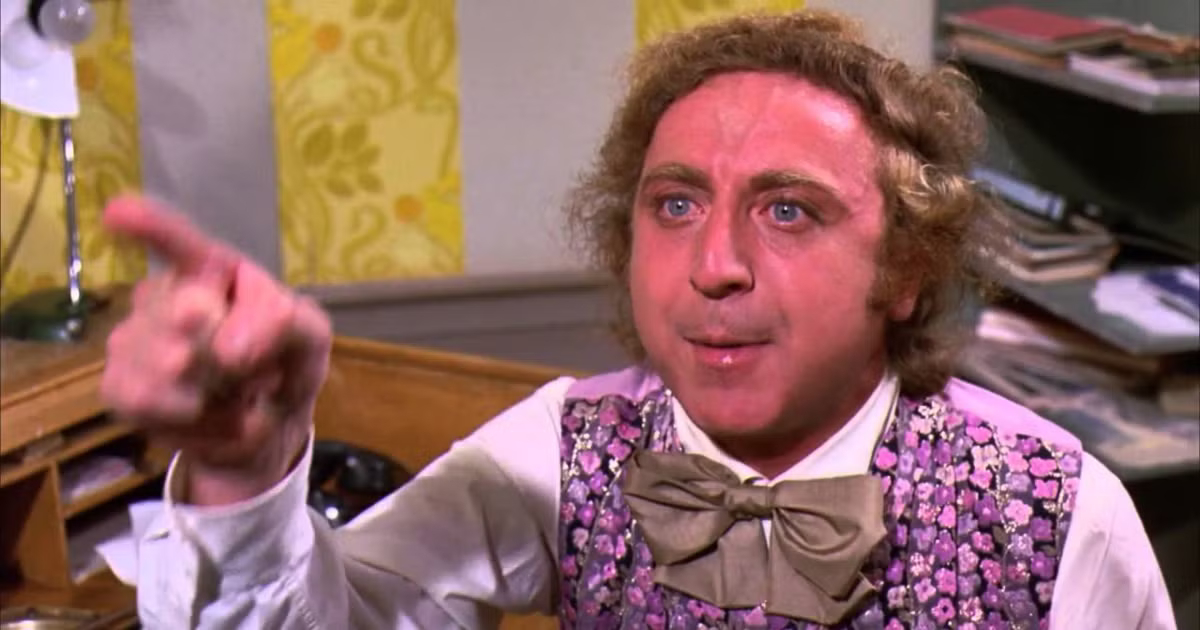
For some reason I’ve been thinking about the movie Willy Wonka & the Chocolate factory and the jaded despair Gene Wilder brought to the character of Willy Wonka. The movie is based on the book, Charlie and the Chocolate Factory although author Roald Dahl disliked the movie enough to disown it. That being said, I found the book and movie both delightful when I read and watched them both as a young lad.

That doesn’t have much to do with what I wanted to discuss today. Willy Wonka, the titular character from the movie although more of a side-character in the book, is played by Wilder in what is widely recognized as a masterful performance. Why was his performance so great? Why does it resonate with me, and apparently many others?

Willy Wonka was clearly a man of Jaded Despair

The way Wilder chooses to play Wonka as a deceitful, angry, jaded, and despairing character. This is not the formula for a heroic character and yet it works wonderfully. I think Wilder got to the essence of Wonka. How did Wonka end up as a man filled with jaded despair? Both the movie and the book go over it fairly quickly but I think the reality is quite fascinating.

We see Wonka’s despair, his jaded outlook, in virtually every scene. He is a man of deceit and Wilder brings this out in his first scene as he pretends to be crippled as he approaches the locked gates.

When the children and their parents misbehave, he admonishes them in a desultory fashion, clearly knowing they are rotten to the core. They are beyond redemption. He doesn’t see the good an anything other than his own works. He is a man who has largely given up but is willing to have one last throw of the dice although he knows it will result in nothing.

How did Wonka get to this Point?

Young Wonka is a capitalist but not a modern capitalist. He is a capitalist of a forgotten era. Wonka wants to make a great product at a price point consumers can afford. This is the sort of capitalism that built the modern world. Wonka is the sort of man who those extolling the virtues of capitalism want us to admire.

Modern capitalism is not this. It is corporate espionage, lawsuits against rivals, bribery of government officials to pass regulations to benefit your company, misleading advertising, cheap products using the lowest cost labor and components possible while producing the bare minimum of acceptability.

This is the version of capitalism that destroyed Wonka and his idealistic goals. This is the form of capitalism that drove him to shut the factory down entirely until he found a way to produce quality products at a fair price without outside interference.

Conclusion

In modern times his rivals would have bribed politicians to look into his, admittedly questionable, labor practices. His potentially unsanitary factory conditions. His experimental designs. In the modern world, Willy would not have survived and his factory would have been shut down. In the modern world, the Wonka Factory does not exist. There are no delightful candies, just corporate garbage.

It’s no wonder Wonka became a jaded man filled with despair. In the modern world Charlie wouldn’t have been offered ten thousand dollars but ten million and he would have kept the Everlasting Gobstopper because money rules the modern world. The untethered accumulation of wealth is extolled as the ideal goal.

Yay.

Tom Liberman

The Value of being First and the Lack Therein

Value of being first

I write reviews on IMDB every once in a while, and it’s impossible not to notice the value of being first. If I write my review after the first episode of a series, the review gets far more attention than if I wait until I’ve finished the season to write my review. That’s the value of being first.

However, there is a rather striking drawback to this approach as well and I don’t think you have to be a genius to figure it out. Still, I’d like to discuss the value of being first and also the problem with being in an instant feedback cycle from whence that value derives.

Fast is Best Society

I don’t think I’m going to break any new ground with my thoughts on this subject. I suspect almost everyone can deduce the problem simply by reading the title. In this world of social media and instant feedback, those who wait are lost. It is generally only those who first make a point who get the value of being first. That is to say, the most eyes, the most responses, the most likes.

The algorithms give enormous preferential treatment to the review that gets the most looks, the most responses, the most clicks. Therefore, obviously, if you rush out with a review on IMDB you get more reads and your review is more like to a be given the “Featured” tag. This means it appears at the top of the review list and, of course, means it will get even more views and clicks.

The Drawbacks to Fast

While the value of being first is certainly obvious, I hope the drawbacks are equally apparent. If you review a show after a single episode, the review is likely to contain information that might not reflect your final opinion about the show. Perhaps you hated the first episode or loved it. Then, upon watching the full season or seasons, realized it was much better, or worse, than you originally thought.

It is possible to go back and edit your original review but that has problems. If you end up changing your mind about a show, all the people who read and liked your original review will disagree with your revised opinion if they ever bother to reread it.

The Value of Being First extends beyond IMDB

The larger issue is that people who leap to conclusions, rush out opinions, shout from the highest rooftop at the earliest moment are succeeding by the metrics of modern society and its instant feedback loop.

The measured response, taken after a prolonged fact-finding mission, is relegated to the dung-heap at the back of the line. No one sees it, no one reads it, it influences no one.

That’s where we’re at and I’m of the opinion it’s not a good place to be.

What is the way out? I’m not completely sure but I do think someone has to look deeply at the algorithms that push the first and most controversial takes out to the majority of viewers.

Again, I don’t think I’ve broken any new ground here today. I suspect most of you not only agree with me but probably managed to figure out the entire contents of this article just by reading the headline. Still, I thought it worth the effort.

Tom Liberman

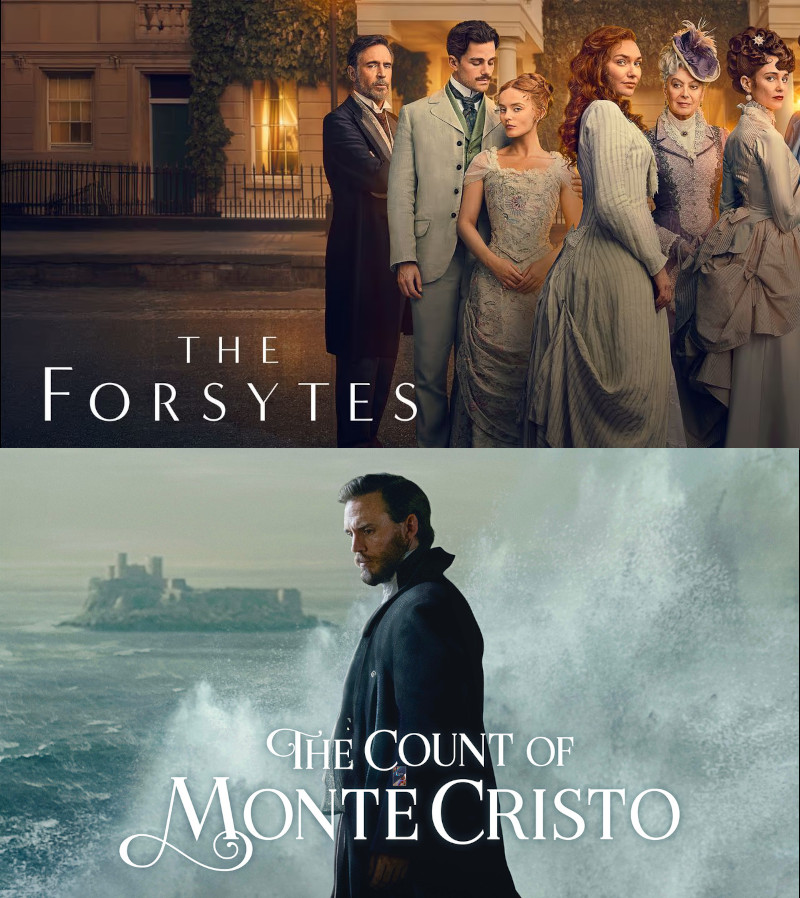
First Scene Comparison: Forsytes versus Count

First Scene Comparison

It is not a perfect benchmark by which to judge a show, but I do think it worthwhile to make a first scene comparison between what I consider good shows and bad. Anyway, it was the first Sunday of new shows on PBS and whilst we, me and mom, eagerly watched both The Forsytes and the Count of Monte Cristo I noticed the stark contrast immediately.

I’d like to make a first scene comparison between the two shows and hopefully explain why I think one effectively grabbed me and the other left me cold and bored.

First Scene Comparison Stage 1: The Forsytes

The Forsytes came before the Count of Monte Cristo so I’ll go ahead and examine that opening scene first. The Forsytes opens with a wedding scene. We see perfectly coiffed and beautiful people milling around the beautiful venue, all smiling happily. A voice over then begins to explain the scene.

First the camera focus on the hairdo, that is to say the leading man. We are told this is Jolyon, who has just returned from a supposedly decadent tour of Europe to help run the family’s investment company. He is considered a bit too free-spirited for the job, or at least that’s what the voice tells us.

The camera then focuses on the bride. The voice explains she is a widow with a ten-year-old daughter. Change of camera focus to the girl. Then back to the bride; she is from an important family and this is an arranged marriage to further the prospects of both families the voice claims.

The camera then moves to another man who we are told is Soames, the brother of Jolyon and jealous of the responsibilities given to said brother. Conflict between the two is brewing says the voice.

Finally, the camera settles on an elderly woman, the source of the voice, and she tell us she is the matriarch of the Forsyte clan and gives us a few tidbits about her character.

First Scene Comparison Stage 2: The Count of Monte Cristo

A ragged man approaches a dilapidated coastal church on a blustery day. He opens the door allowing the light to explode into the darkness. He closes the door plunging the church into darkness again. He walks to the confessional booth and kneels. On the other side is a haggard looking priest.

Forgive me father, for I have sinned, says the man.

When was your last confession, asks the priest.

Fifteen years ago, replies the man.

The man tells the priest he believes he has forsaken God because he wants vengeance on the people who stole fifteen years from his life, who stole the only woman he ever loved.

Which One Sounds Good to You?

If I’ve done anything close to a decent job of making the first scene comparison, I hope I don’t have to tell you which one worked and which one did not.

The problem is quite clear and illustrates one of the fundamental rules of writing; show, don’t tell.

In the Forsytes we are told everything. Yes, we see the principles but we don’t see any evidence of their character, their position, their motivations, their drive. We are just told it is so and expected to believe it.

Ok, my brain says. I guess the voice is telling the truth but it’s given me so much information I can’t even remember who is who. Is that the bad brother or the good brother? I’m bored already, looking at my phone.

In the Count of Monte Cristo we are given far less information but all of it is shown to us. We know people did something terrible to this man fifteen years ago. We know he is bent on revenge. We are drawn immediately into the story. What happened fifteen years ago? Who is he? Who did this terrible thing to him? Will he get his vengeance? I want to know, I must know! Tell me, I’m not moving, I’m watching with full attention.

Conclusion

If you saw both of the episodes, did you have a similar experience to me?

Which show did the first scene better?

View Results

Loading ...

Tom Liberman

Dark Winds Season 4 and the Missing Plot

Missing Plot

I’ve been watching Dark Winds since the beginning and I’ve had my issues with the show but this season has a missing plot. It’s not that the plot is missing the mark, that the plot is not as good as it could be, it’s that halfway through the season and I’m clueless as to the main plot.

I haven’t brought up Dark Winds since the end of season 1 and I do have some issues with season 2 and season 3 but I didn’t feel the urge to talk about it. Season 4 and the missing plot has awakened my inner writer.

The Missing Plot

It’s hard to describe the missing plot because it’s missing.

Reader: Ok, Tom, tell me about Dark Winds season 4, what is the plot?

Tom: No idea.

Reader: You’re four episodes into the season, surely you can explain this problem, why is the plot missing?

Tom: Because it isn’t there.

Reader: You’re not giving me much help here, Tom. Can you elaborate?

Tom: Sighs, looks up, scratches his head, wonders if he should open the last box of fancy chocolates, ok, I’ll give it a go.

The Plot that Isn’t Missing

Season 4 starts out with a bang. A young woman is in a diner with a guy, a blue and white van pulls up, a gun toting villain emerges, shots are fired. Then we go back in time to figure out what we just saw.

Here’s the skinny. The girl is an escapee from a Catholic School on the reservations and has gone off with her cousin because she can help him find something on the reservation, he’s an L.A. boy and doesn’t know the region well. He’s actually looking for his brother who has something or did something or knows something or something.

Much running around. Cousin dies from gunshot wound days later. Assassin kills cousin’s grandfather. Assassin falls in love with Joe for reasons that are unclear. Assassin paints van green with spray paint. Chee is having hallucinations for some unexplained reason.

Law enforcement is looking for green van, although the only van they have accounts of is blue and white but whatever. Who even cares because of the missing plot? What is going. No idea. What is anyone trying to find? No clue. What’s the objective of the assassin? Don’t ask me.

So, off they go to L.A. where the assassin’s father is a crazy Nazi. Some other guy knows the brother. Law enforcement is watching this other guy. I don’t know what’s going on so I can’t explain it lucidly. The assassin works for a menacing guy I don’t know.

Why the Missing Plot is a Problem

The acting is pretty good in Dark Winds and there is a ton of time spent on character development. The problem is I don’t understand the driving motivations. I know the girl and the assassin are trying to find the other cousin, but why? Why? Why?!

There is no MacGuffin. Or, more literally, we don’t know what the MacGuffin is. It’s there. It’s something. It’s the driving force in the show, as it should be, but what is it and why do people want it, or him, or whatever?

Without this crucial piece of information, everyone’s actions seem pointless. There are no stakes for the audience.

Conclusion

The worst part is the problem is easily fixed. Just have the cousin explain to the schoolgirl why he needs to find his brother. Let us in. I suspect that keeping this crucial information secret is to allow them to spring the twist on us at a later time but it’s so damaging. If we know why characters are doing what they’re doing, we are invested. As it is, I’m bored and confused.

Tom Liberman

Was She Lying or Did the Writer Mess Up

Writer Mess Up

Being from St. Louis, I’m doing my civic duty and watching DTF St. Louis. I’m not much enjoying it but that’s not the topic I’d like to discuss today. I spotted an interesting writer mess up in episode two. Or it’s possible the mess up was not a mistake but an intentional instance of having a character lie.

The problem is my confusion about the scene, which of those two things was going on. It gives me an opportunity to talk about writing and one of the things I think it’s good for authors to try to avoid.

The Scene with the Writer Mess Up (or the Lie)

DTF St. Louis tells the story of Clark who is having an affair with Carol who is married to Floyd. I’m not going to go into more detail because that’s not the focus of today’s article. It’s not about the show, it’s about the writer mess up.

It’s established very early in the first episode that Carol makes money on the side by umpiring baseball games. She’s seen in her ridiculously oversized uniform multiple times and Floyd talks to Clark about it in an early scene.

Clark and Carol are flirting and Carol suggests going to a Cardinals game. Clark mentions that his television station gets blocks of tickets and they should catch a game. At this point Carol says she’s never been to a game and she’s not sure if she would even understand what is going on.

I immediately sat up in my chair, my face scrunched up in that infamous Tom Liberman What you talking about Willis expression. She’s a baseball umpire. Clark knows this. She knows all about baseball. She’s clearly a fan of baseball or she wouldn’t have a job umpiring games.

Was Shy Lying or was it a Writer Mess Up?

Sometime later in the show, whilst I was bored with the endless and painful dialog, it occurred to me perhaps the writers did it on purpose to show Carol as a deceitful person. They wanted us to know of her manipulative nature.

I’m still fairly confident it was just a writer mess up but my confusion is, in itself, an indication of a problem with the writing. If Carol was lying the audience should know that she’s lying. The point should be to paint her as a deceitful character and, frankly, a stupid one. She’s an umpire, everyone knows about her side-gig. The lie is blatant and will obviously be exposed sooner rather than later. It’s a terrible lie.

The fact that I don’t know which one with any certainty distracts me from the episode, and I didn’t need anything else to get me to stop watching and look at my phone. Yawn.

Conclusion

If it was a mess up, it’s an indicator of lack of attention to detail. If it was a lie, it’s a bad character development because I can’t distinguish between the two possibilities. In either case, it’s poor writing.

The audience needs to be immersed, we need to believe the characters and events, we need to be drawn in, not forcibly kicked out.

Oh, yeah, the actual ballgame was the single most unconvincing stadium and crowd scene I’ve ever witnessed. Everyone sitting like cardboard cutouts, unemotional, not cheering, not booing, not eating a hot dog. Just sitting quietly, staring straight ahead, while the Clark and Carol had yet another unconvincing dialog. At least the fans wore Cardinals gear.

Tom Liberman

The Importance of Travel Scenes

Travel Scenes in Miss Scarlett versus All Creatures

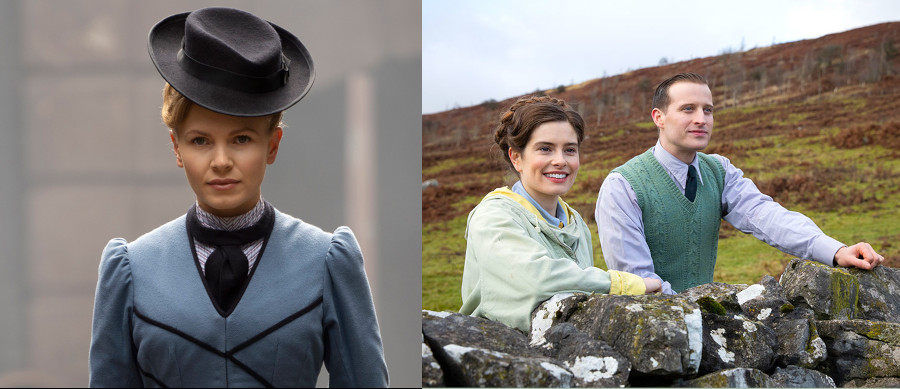
I’ve compared PBS shows before and I’d like to do it again but with a focus on what I call a travel scene. In this case the two shows are once again Miss Scarlet and All Creatures Great and Small. The reason for the comparison is they run back-to-back on Sunday evening so I get to see one after the other.

What is a Travel Scene

A travel scene, at least by my definition, is a scene in between two locations scenes where a character or characters travels from one location to the next. This includes time spent preparing for travel and, indeed, just that preparation can be the entirety of the Travel Scene.

Travel Scenes in Both Shows

The importance of a travel scene is something I’ve noticed before in any number of shows and movies. My general impression is shows that don’t use travel scenes are eager to get to the action, the meat and potatoes. If Miss Scarlett is going to Scotland Yard to confront Inspector New Guy the two scenes are not sandwiched around a travel scene.

Basically, Miss Scarlett tells someone she is going somewhere and the next scene she is at that location interacting with others.

Meanwhile, in All Creatures Great and Small when someone is heading out to visit Mrs. Pumfrey or another client, we generally see them putting on a coat, heading out, getting in the car, and then driving to the location. Perhaps not all of those things occur but at least a few.

What Value is there in a Travel Scene?

I think this is the most important question. What value does a travel scene bring to a show and how can such scenes cause harm? The harm is relatively simple to pinpoint; those sorts of scenes take away from the limited amount of runtime a show has available to it. If we just eliminate them, we have more time for the other scenes.

The value is more difficult to determine but for me it’s all about immersion and transition. When characters teleport around from one location to the other with no apparent means it bothers me. Timelines don’t work as going from places takes time but it is often ignored. Events happen out of sequence as a person couldn’t have done another scene because it supposedly took hours to get to a location.

When a character is seen getting ready to travel, driving, walking, taking a train, arriving outside at a new location, I believe. My reptilian brain thinks, yes, they’ve traveled from one location to another, I believe the upcoming scene.

In addition, travel scenes often allow for a lovely transition of beautiful scenery, period piece vehicles and clothes, and wide shots not possible in indoor location.

Conclusion

I don’t think every journey need be documented with some sort of a travel scene but I’m of the strong opinion that shows that take the time to show them are almost always better than those that do not.

Certainly, it’s not the travel scene alone that makes a show superior but is an indicator of attention to detail. Anyway, I’m curious, have you noticed travel scenes and the effect on the show?

Do you think travel scenes are important?

View Results

Loading ...

Tom Liberman

Best Medicine is Twitchy and Agitated

Best Medicine

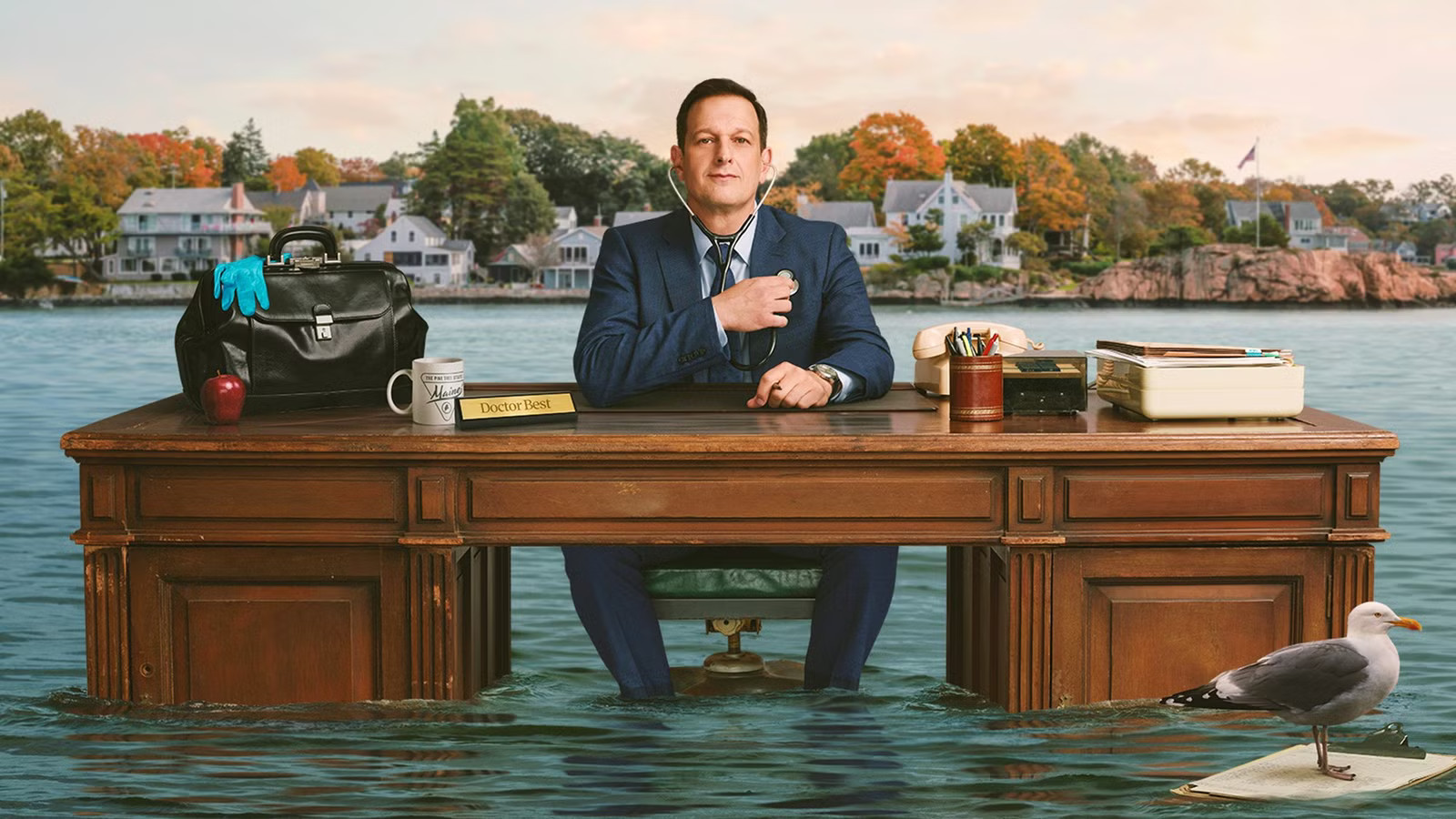
One of my mother’s favorite shows is Doc Martin and she was excited for the release of the U.S. version, Best Medicine. We watched the premier last night and mother did not approve. I can’t say I much enjoyed it either.

There is an argument that if you loved the original you might be predisposed to dislike the remake but I’m not convinced that’s what is going on here. This remake doesn’t take a different tone; it seems to want to emulate the original faithfully. It fails, at least according to mom. Shall we try to find out why?

Sweet and Silly v. Twitchy and Agitated

I’ve not seen every episode of Doc Martin, as has mom, but I’ve seen a quite a few and the original is largely silly and sweet. Doc Martin himself is constantly agitated but the rest of the cast is generally more laid back. The setting is calm and peaceful.

Almost every character in Best Medicine is like Doc Martin in the original, agitated and twitchy. Louisa appears to have Turrets Syndrome, Aunt Lucy shouts all her lines, Sheriff Mark has none of the sweet but clumsy charm of Joe from the original, and Elaine the receptionist might be the most annoying character I’ve ever seen.

I get that she is supposed to be annoying but her portrayal is way too much. I’d call it cartoonish but that’s an insult to cartoons.

I’m not trying to criticize the actors here, I’m guessing this is what the director and writer desired. They are so twitchy and agitated that I get twitchy and agitated just watching them. It’s painful.

Only Bert and Al seem in any way relatable to the original characters but they are barely in the first episode.

Events are Rushed in Best Medicine

Another big problem is the speed at which everything unfolds. The storyline speeds along like the Enterprise at Warp 10. We are introduced to the quirks of all the characters through exposition almost immediately upon meeting them. Doc Martin’s blood phobia is hammered home.

Man boobs. Estrogen. More man boobs. Infidelity. Happy resolution. It all happens almost without stop. Not to mention Doc Martin’s inability to connect the dots on the two cases was baffling. I guessed immediately.

Louisa and Sheriff Mark’s storyline speeds along and the willingness of all parties to immediately confide in Doc Martin just seemed wrong. Why are these people saying these things to a virtual stranger?

Wokeism

Generally, I’m not put off by trying to insert a little diversity into an older show. Here we have two inter-racial couples one of whom is gay and it just seems a little forced. The gay couple were actually the most appealing characters in the episode so I can’t complain too greatly.

Conclusion

Listen, it’s only the first episode. Maybe things will calm down and they won’t continue to rush as much. Maybe the characters will settle in and become less agitated and twitchy. I’m hopeful but I suspect things won’t improve.

Did you like it?

Tom Liberman

The AIDS Hypothesis on Shitty Entertainment

Shitty Entertainment

In a sequence of events only possible in the internet age I heard a hypothesis about why the AIDS epidemic created the shitty entertainment industry we see today. To be clear, I think there’s a lot of fantastic entertainment coming out but there is some truth to criticisms of the blockbuster orientated industry today.

So, onto the AIDS Hypothesis on Shitty Entertainment.

The Sequence of Events

I’m working on my role-playing games, writing a novel, and watching YouTube, my usual daily activities in retirement when I see a long sequence about Judge Janice Goldberg on Law and Order played by Fran Lebowitz. She’s funny, I say to myself. In the comments I see people know her from her writing. Writer? Off to Wikipedia.

She’s an interesting character indeed. I read the article and see her talking about the tragic effect of AIDS on the theater scene in New York. I think to myself, what? AIDS wrecked the theater scene, what’s that about?

I start thinking. Always dangerous. The more I ponder, the more I think she’s onto something but not just about the theater scene in New York; about the entirety of the plethora of shitty entertainment we see these days.

Why AIDS Created Shitty Entertainment

Who did AIDS kill? Gay men. What do gay men do? They go to the theater. The go to musicals. The go to artsy movies. They love the arts. Now, to be clear, I’m firm in my conviction that stereotypes don’t apply to individuals but we’re not talking about a single person here, we’re talking about group dynamics.

An entire generation of young gay men died of AIDS. Men a bit older than I was at the time, teen and twenties. All of a sudden, theaters are selling fewer tickets, particularly to artsy type shows. Creative shows. What’s left are straight men who like things that go boom and curvy women.

These deaths certainly didn’t destroy the theater or creativity in general but it caused some shows to fail where they might have succeeded. Some shows to never make it to the stage. These shows are written, produced, and financed by older gay men with money. There are fewer opportunities in the industry for young gay men to thrive.

Fewer young, theater loving, gay men to become old gay men with money today. I think you follow my reasoning here.

It’s Not all AIDS of Course

Our current cookie cutter, boom bang, Mary Sue, virtue signaling, generic rut of shitty entertainment isn’t completely driven by the fact there are fewer artsy gay men in the industry but if you don’t think it’s a factor, well, we disagree.

The next time you decide to bitch about Hollywood and shitty entertainment, take a moment to mourn the lost.

Tom Liberman

Watson is Watson not Sherlock

Watson

I finished watching the pilot episode of Watson and I came away shaking my head in disbelief. I’m an enormous Sherlock Holmes fan. I’ve read all the official Arthur Conan Doyle stories and novels and a number of Holmes stories by other authors.

When I heard about a new Sherlock Holmes spinoff television show, Watson, excitement flowed through my neurons, as did fear. Excitement because it seemed like a new spin on the Sherlock Holmes lore with the potential to be quite interesting. Fear because it might disappoint. No spoilers here, my disappointment is immeasurable, and my day is ruined. Why? Let’s discuss.

So Many Things Wrong with Watson

There are many things wrong with Watson and most of them are the same problems manifested in a lot of shows these days. A lot of exposition, too many pretty people playing roles for which they clearly are not suited, fast-paced dialog that is impossible to follow, and lots of mumbling. Having mentioned all those horrors, they are not the major problem with the show.

The Big Problem with Watson

Watson is Sherlock! I’m not kidding. The character of Watson is not playing the character of Watson. He’s playing Sherlock Holmes. Watson is the solid and discreet companion. He is the stalwart friend. He is kind. He is sturdy. He is a people person.

Sherlock Holmes is a jerk. He’s addicted to cocaine. He’s not a people person. He’s intolerant of those who don’t have his exceptional gifts. He’s condescending. He’s impatient.

In the pilot, Watson is Holmes. He’s not Watson. He’s the genius diagnostic physician who through observation and Wikipedic knowledge of diseases is able to figure out what ails the patient. Eventually patients.

He’s condescending to his staff. He’s addicted to pills. He’s brusque. He’s overbearing in his know-it-all attitude.

What were they Thinking?

Who is this show designed to please? Anyone who is a Sherlock Holmes fan knows this isn’t a show about Watson, it’s a show about Dr. Sherlock. The show is titled Watson! Watson. The entire show is advertised as being about Watson. I’m utterly baffled.

Would I like to see a modern and reimagined Watson navigating the world? Yes, by golly, I would. I’m not exactly sure how such a show would work, I could put on my writer’s cap and likely come up with something but that’s not my job today.

Did anyone like it? Why? I’d be interested in hearing what you have to say.

Tom Liberman

Counter Strike Global Offensive Gambling Correlation

Counter Strike Global Offensive

Almost everyone knows about Luigi Mangione and the murder of Brian Thompson but most of you are probably unaware of what is happening with Counter Strike Global Offensive. Much like the murder of Thompson, there are no good guys in this story but the news of both gives us an insight into some of the problems facing the world right now.

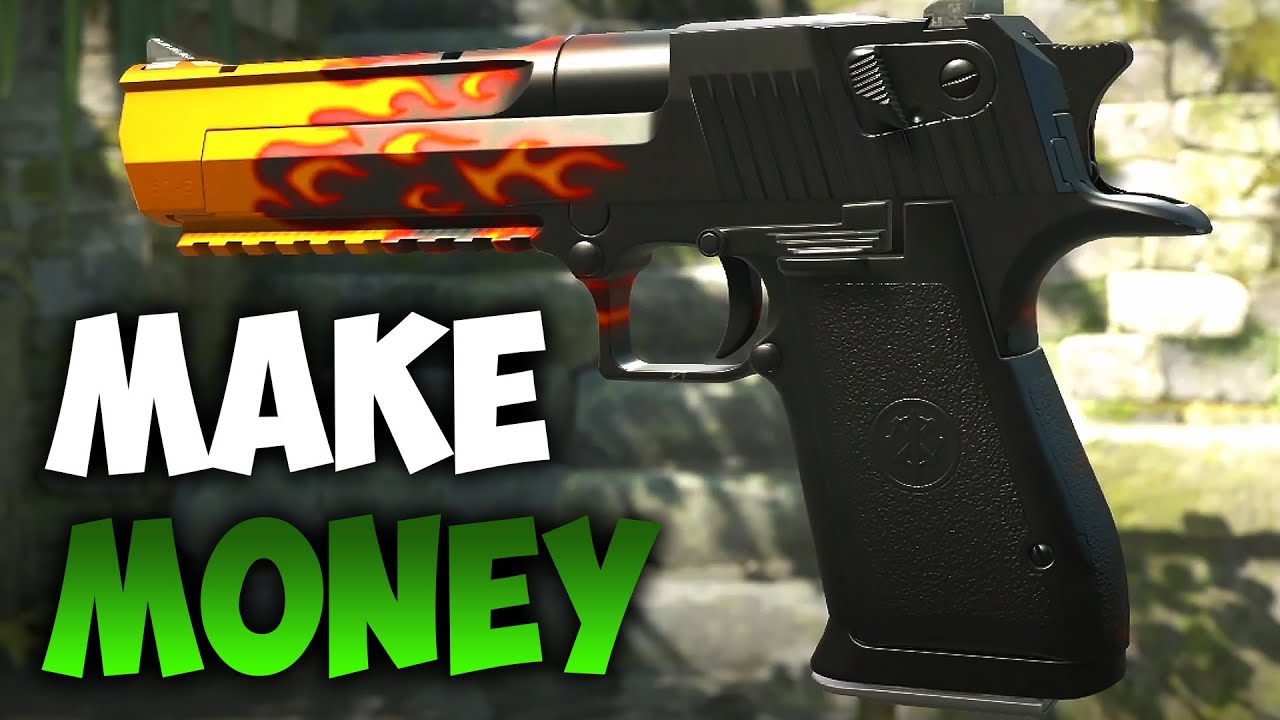
Counter Strike Global Offensive, technically Counter Strike 2 now but most call it CS:GO, is a gambling website and computer game. Many people who play the game simply do so to gamble and this includes a lot of young people. There is tremendous damage being done and people are angry.

Counter Strike Global Offensive and Skins

Valve, the developer of Counter Strike Global Offensive, introduced skins to the game back in 2013. These skins are cosmetic items applied to weapons. No big deal so far. These skins are popular and Valve runs a cash store where people can sell their skins to other players for money. Valve takes a percentage of this money, estimated at over a billion dollars in 2023. That’s Valve’s cut, not the entire value of the sales. Just their cut of it.

How do people get skins? They get them by playing or buying in-game weapon cases for $2.49. The items in the weapon case are randomly generated, with most of them being of low or no value. The rare skins sell for many thousands of dollars. This created an industry where influencers purchase these weapon cases live on their streams and, when they get high value items, respond with over-the-top excitement.

These influences draw in young people who want to win. They, in turn, spend enormous amounts of money on the weapon cases, hoping for financial return. It’s, for all intensive purposes, gambling. Many young people suffer enormous negative outcomes from this gambling. They use their parents’ money and cause financial hardships.

It’s bad.

Personal Responsibility with Counterstrike Global Offensive

Don’t get me wrong. I do think people who purchase these weapon cases are largely to blame for their own financial suffering. No one forced them to buy the cases. That being said, there is a lot of rage out there against the influencers who promote this destructive gambling. The same rage we see from people who are delayed, deposed, and denied in the healthcare industry.

Think if your child destroyed the family finances and their own future because they emulated an influencer who was pretending to gamble.

No Legal Recourse

Fueling the rage is the lack of legal recourse, both in Counter Strike Global Offensive and the Healthcare industry. People suffer, for years, horribly, and the courts ignore them, finding for the side who can pay for better lawyers.

The Palpable Rage

The rage is enormous. People who suffered want someone to pay, in the same way Mangione wanted Thompson to pay. Coffeezilla just released the first installment of his take on this and it’s a fascinating watch.

People are organized, they harass, they threaten, they incite. They think they are doing the right thing; they are certain our courts have abandoned them, that they, the little guy, has been sold out. They might be right.

Big money is winning and we the people are losing. Rural, urban, right-wing, left-wing, Christian, Atheist, young, old, sick. Liberté, égalité, fraternité doesn’t always end politely.

Tom Liberman

The Penguin is Just Plain Boring

The Penguin

It’s not often a comic book adaptation is boring, but The Penguin manages it with honors. Full disclosure, I am not generally a fan of comic book movies. They are usually ridiculously stupid with contrived action sequences, over the top special effects used to replace meaningful dialog and filled with enormous plot holes. Not that The Penguin doesn’t suffer from some of this as well.

The bigger problem is the show is just plain boring. There are huge segments of nothing happening in order to get us to a boring soliloquy that is supposed to touch us emotionally. Rage, sympathy, understanding, pity, whatever. None of it works.

The Penguin

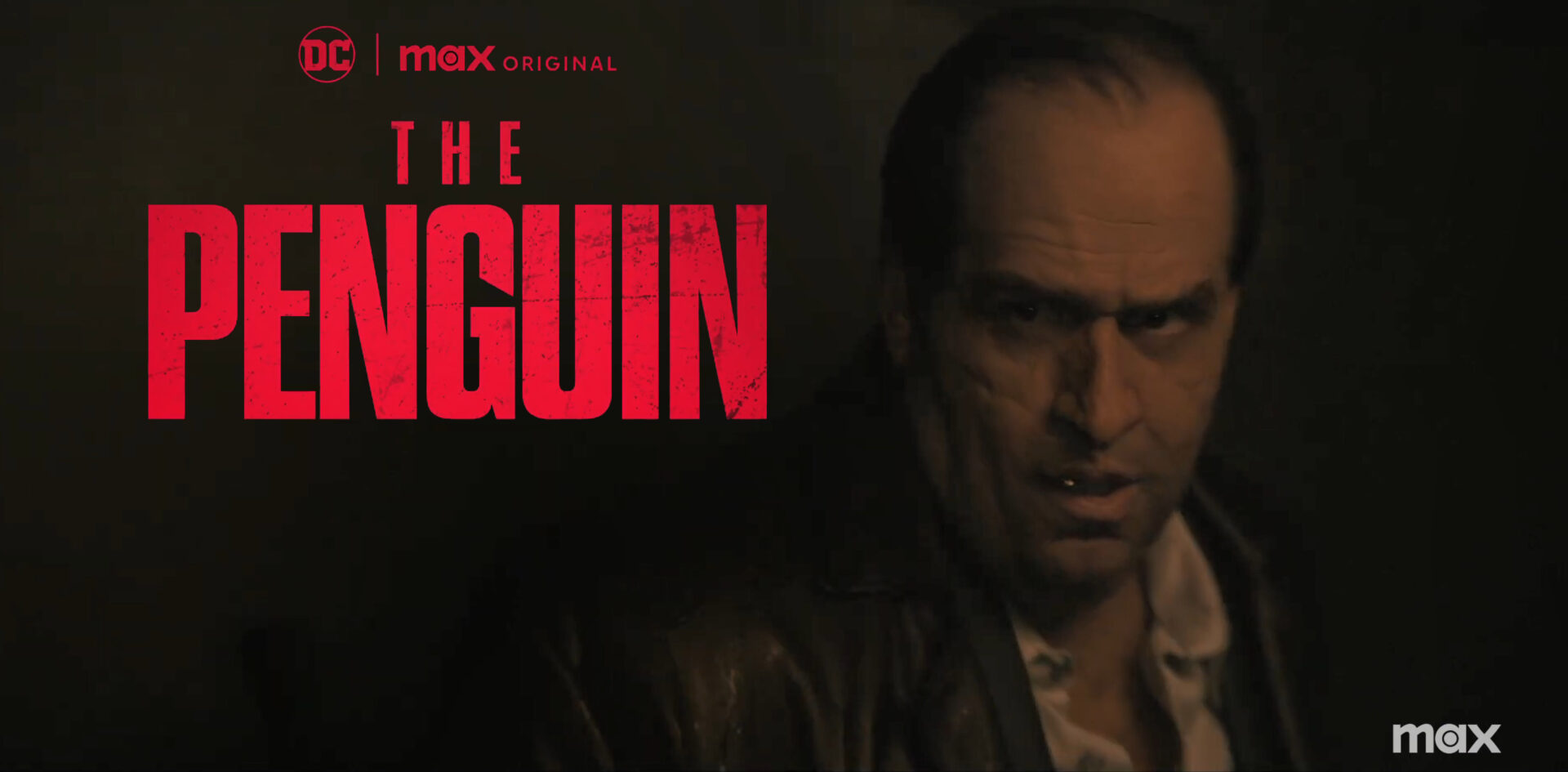
What is The Penguin about? It’s about the rise of Oswald Cobblepot from organized crime button man to the king of crime in Gotham City. It follows on the heels of The Batman movie in which Colin Farrel played the titular character.

Oz, as he is called throughout the series because he has yet to earn The Penguin sobriquet, is a member of the Falcone crime family at the beginning. He murders the newly crowned boss of the family in a fit of rage and events spiral from there. His main foil is the sister of the boss, Sofia, played by Cristin Miloti.

He also picks up Victor as a sidekick when the boy attempts to steal hubcaps from the Penguin Mobile.

Why is it so Boring?

I’m going to have to get into a little bit of my own writing experience in order to explain why I think the show ended up so incredibly dull. I couldn’t make it through most episodes and was looking at my phone for extended periods.

When I write a novel, I try to flesh out pretty much everything that is going to happen. This includes most of the important scenes, conflicts, various resolution points, and, of course the ending. What I don’t have finalized in my mind is the vital middle work. In order for my big scenes to have meaning, I’ve got to lead up to them. I have to lay the groundwork. I must include foreshadowing, character development, and other writing elements in order to get the audience immersed and ready for the big scene.

This is the hard work of a novel, at least for me it is. The big scenes are easy to write. They largely write themselves. What’s hard is getting to them.

I think the writers did a pretty good job of imagining the big scenes. They knew where they wanted to get. The Penguin, Sofia, Victor, or another minor character has a big, long soliloquy all ready to go, all ready to punch home a point to the audience.

The problem is twofold. First, there are far too many big speeches, three or four an episode at least. It’s impossible to lay the groundwork for that many monologues. It’s almost like they pretty much gave up even trying. We skip over everything in order to rush from one big, boring speech to the next. The speeches themselves are probably pretty good, they are certainly acted powerfully, but because there is no buildup, they left me flat, bored.

One Example

I don’t want to waste a lot of your time giving example after example of what I’m talking about so I’ll only give one. Oswald sways the other crime families to his side. He gives a big speech while passing out beers from a ridiculously oversized cooler.

Ok, great. That could be interesting. The problem is we’ve barely seen any of the other families, there are no scenes where they are convinced to come to the big meeting. They are just there, the scene prefabricated and ready for the speech. Who are they? The Tongs are the only one we’ve sort of met. Other than that, just actors standing around pretending to look impressed.

I’m not invested because nothing led me to this moment. I suppose the big speech is fine although the oversized cooler really does bother me. I mean, there are like ten people there. Ok, enough, must move on.

Lots of Torture

As a side note, there is way too much torture. I guess that turns some people on. Baddies getting tortured. I don’t like it. It’s just awful. The episode about Sofia was impossible to watch. It was designed to get us into her mindset for when her big speeches come but it was just gratuitous and unhelpful.

If you like torture, well, have no fear, there is yet another torture scene coming soon.

Other Aspects

The acting is good, the music is fine, the sets are largely great, the cinematography is well done. The production values are top notch throughout. I honestly think, and judging by the predominantly positive reviews, this is the sort of thing people want. Hollywood knows what they are doing, I guess.

Conclusion

It’s not for me.

Tom Liberman

I Found Joe Pickett Inauthentic

Joe Picket Inauthentic

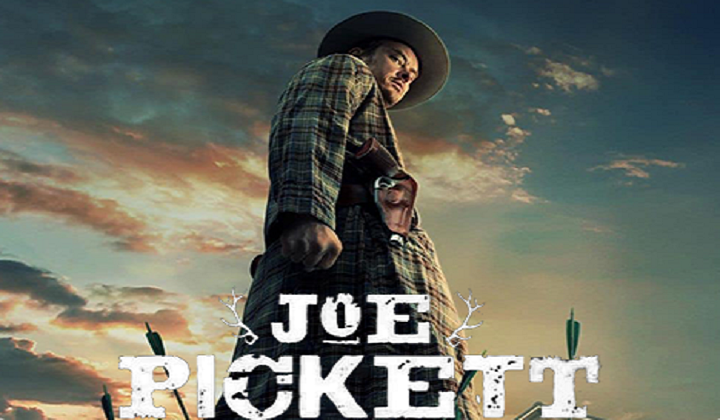
I just finished watching the penultimate episode of the first season of Joe Pickett and I’ve just about had enough. I found the show to be almost completely inauthentic. The premise is incredibly interesting, and it’s based on a popular book series by C. J. Box.

The titular character is a game warden in Wyoming fulfilling a childhood dream between he and his brother. Joe’s wife, Marybeth is pregnant with a son; and they already have two daughters. Joe seems resolved to be a good father, throwing off the genetic heritage of an alcoholic and abusive father. Sound interesting? I thought so also.

My Wyoming Bona Fides

Let me preface my thoughts with the fact I’m a City Slicker. Born and raised in St. Louis, Missouri. What do I know about authentic Wyoming you can rightly ask. It’s a fair question.

I can only tell you I went to college in Idaho and I have a number of friends from rural Missourah. Does this make me an expert in what is authentic Wyoming? No, it does not. If you disagree with my assessment, go ahead and let me know.

What’s Inauthentic about Joe Pickett

My background now divulged, let me tell you I found almost every character in Joe Pickett to be completely inauthentic. I didn’t believe they lived in Wyoming, that they grew up in Wyoming, that they were in any way related to Wyoming.

The town of Saddlestring didn’t seem like a small, northwestern town. The people in town had lots of unusual names. The men I know from rural areas tend to be named Bob, Dick, Tom, Glen, Brian, and Mike.

I just didn’t believe any of it. The sheriff didn’t act like a rural sheriff, at least to my eyes. The wealthy family seemed egregiously not Montana. All the gun toting seemed like someone’s fantasy of what it’s like to live in the west.

Don’t even get me started on the southern accents.

Northern Exposure

I want to spend a moment making a comparison to another show, Northern Exposure. It’s not exact but I think it largely illustrates my problem with the authenticity of Joe Pickett. In Northern Exposure the characters are varied, interesting, multi-dimensional and all of them, with the exception of Joel of course, came across to me as Alaskan, authentic.

The interior and exterior of the town of Cicely seemed authentic. I really believed this was Alaska and the actors were Alaskan. When I believe the people and places, I’m much more likely to become immersed in the show, to forget I’m watching and just experience.

The Experience of Joe Pickett

I never felt that Wyoming experience in Joe Pickett. Some of the cinematography was really beautiful but whenever we weren’t looking at vistas, I just wasn’t buying it.

Other Stuff

The plot went completely off the rails and a lot of stuff happened that made no logical sense but I don’t want to get heavily into all of that, although it certainly effected my enjoyment, or lack thereof, of the show.

Conclusion

Sadly, by the end of Joe Pickett I found myself shaking my head and almost every scene, completely out of immersion and into finding everything wrong. There were a lot of problems with the first season of the show but I thought its inauthenticity was an underlying issue that hurt everything else.

I won’t be watching season two.

Tom Liberman

Who is the Protagonist of Pretty Woman?

Pretty Woman

Whilst clicking my way through channels the other day I flicked past Pretty Woman and it got me thinking about the movie. Who is the protagonist is the question I ask myself as a Boomer. I am no longer the thirty-something year old infatuated with Laura San Giacomo.

I think it’s an interesting question because the obvious answer is Vivian, played by Julia Roberts. It is, after all, her story. She has the arc. Doesn’t she?

Edward has the Character Arc

The thing is, Vivian doesn’t really change much or at all. She’s the hooker with a heart of gold. She’s a little rough around the edges perhaps but she is clearly educated, intelligent, and capable. She starts that way and she finishes that way.

Edward, on the other hand, changes dramatically. He starts the movie as a corporate raider with no qualms about staging a leveraged buyout of Morse Industries, a shipbuilding company run by Jim Morse along with his grandson, David.

Early Edward is the villain of the movie. The corporate raider. The dismantler of capitalism. His interactions with Jim, David, and Vivian change him. That’s his arc. By the end of the movie, he is joining Morse Industries as a partner. He will build ships with the company rather than dismantling it and selling it off for profit.

We like the finished Edward. He’s the hero. He’s changed. He has an arc.

Edward, Jim, and Capitalism

In thinking about Edward and his arc in Pretty Woman, my thoughts turned to leveraged buyouts, private equity, and capitalism.

It seems to me that, generally, we now admire beginning Edward far more than finished Edward. Make as much money as possible for yourself and your shareholders.

Edward contrasts dramatically with old-school Jim Morse. Jim owns a company but isn’t interested in squeezing the maximum profit from it. He wants to build big, beautiful ships. Ships that serve our country, yards that employ people. His goal is to create, employ, and, of course make money. He’s a wealthy industrialist. His company is successful but not as profitable as it could be and thus a target for Edward and his leveraged buyout.

A Moment about Private Equity

I’m no naïve do-gooder who thinks Private Equity firms and leveraged buyouts have no place in capitalism. They are valuable tools to keep companies in line. They play a useful role in ending bloated companies with dozens of board members and executives earning enormous salaries, siphoning off all the profits. Such companies deserve their fate.

The problem is when the Edwards of the world can leverage a buyout of a largely successful company that isn’t squeezing maximum profits. We instinctively admire Jim Morse and his grandson. They are embodiment of the best parts of capitalism.

Build a great product, provide a useful service, employ hard-working people at a fair wage. That’s the end-result of healthy capitalism. We hate early Edward in Pretty Woman.

Conclusion

It’s a complicated problem and not easily solved. I do think the ability to borrow enormous sums and immediately declare bankruptcy and not pay them back if things go wrong is a big part of the problem. These days, the darling of the capitalistic world is early Edward. We should know better.

Tom Liberman

The Porter is Ultimately Disappointing

The Porter

I recently finished watching the BET+ series The Porter and came away fairly disappointed. The show tells the story of a group of porters working the railroad lines between Canada and the United States in the 1920s.

The porters face various obstacles in their quest to live their lives. These obstacles include racism and general unbridled capitalistic abuses. Why was I disappointed? Let me tell you.

Lost Story

The central story of the porter revolves around their desire to join the railroad union and improve their working conditions. The show itself highlights the problem in almost the opening scene when a young porter falls to his death off the top of a train car doing a job requiring more people than were allocated.

In addition, we see racism between the other employees of the railroad and the black porters. These are the two main stories, and they are both compelling, interesting, and historically accurate. There are also hints of the main character’s service in combat during World War I.

Sadly, these stories take a backseat for most of the show. Instead, we focus mainly on a porter working a gambling ring with a powerful black mobster in Chicago. A young woman trying to advance her career as an entertainer and examining her interracial relationship with the dissolute son of the railroad owner. And a nurse working in the black community to bring healthcare to the minority working class who are denied such at the white hospitals.

All three of these stories are moderately interesting at best and take a huge amount of time away from the more compelling stories.

I want to know about the union. I want to see the porters performing their jobs. There are a number of scenes with this focus but they are largely relegated to the back carriage of the show. This was the big problem for me. The compelling story, the reason for the show, the title of the show even, is just not developed well enough.

Acting in the Porter

The acting is fairly good with some standout performances from Mouna Traoré as Nurse Marlene Massey and Ronnie Rowe Jr. as Zeke Garrett the union agitator. The rest of the cast is fairly good to mediocre.

Sets and Cinematography

The sets are largely great with the interior carriage scenes meticulous and beautiful. The homes the porters live in are believable and well-done. The scenes themselves are largely framed nicely with a variety of angles.

The show does heavily rely on CGI for the exterior train shots and it’s not so great.

Music

The music is largely good and maintains a background presence rather than dominating the scenes although it does get obtrusive now and again.

Conclusion

I think the show had a great deal of potential and thus my disappointed. If it didn’t have such a high bar then its ultimate disappointment wouldn’t bother me as much. It could have great but they really just lost track of the compelling stories and focused on things that held little interest for me. Others may think differently.

Tom Liberman

All Four Seasons of True Detective (to date)

True detective

I finally finished watching Season Three of True Detective, the last one I watched, and now it’s time for the big recap. What I hope to do with this review is compare and contrast the seasons to one another, pointing out the good and the bad. What went right and what went wrong.

I already compared Season One to Season Four of True Detective if you want to read about that. I’ll be making some of the same points here though. On with it.

Believable Detectives

In a detective show it is clear to me the detectives themselves must be believable. I’m not saying they have to be great detectives. If they are terrible at their job, that can be believable under certain circumstances. It’s vitally important the audience believes.

Season One

Utterly believable. I believe Kohl and Marty are seasoned, capable detectives. They go about their business with professionalism. We see them doing their work on many occasions and not just getting key information fed to them.

Season Two

Largely unbelievable. It’s a given in this season that Ray, Ani, and Paul are not the cream of the crop. Ray is chosen for the case because he’s compromised. That being said, none of them manage to do any sort of real detective work. Everything either falls into their laps or happens to be the first thing they investigate. I did not believe.

Season Three

Pretty much a mirror image of Season One. I absolutely believe Wayne and Roland are detectives, good ones.

Season Four

Utterly unbelievable. I just cannot believe that either Liz or Evangeline holds the position and rank they do. Both do little to no detective work in the series. Both rely on third parties to get all the pertinent information.

Likeable Protagonists

It’s useful if the audience likes the protagonists. I’m certainly not saying they have to be kind, nice, generous, thoughtful, and everything else that gets wrapped up into likeable; but I shouldn’t despise them. I shouldn’t find them repugnant and hate every moment they are on the screen.

Season One

Marty and Kohl are complicated characters and in many ways, not particularly likeable. They have big old flaws. But, in the end, I like both of them greatly while recognizing their flaws.

Season Two

I hate Ray and Ani. Hate. Paul is more a figure of pity than anything else but he’s certainly not likeable. Ray is an awful, despicable person and Ani isn’t any better.

Season Three

Again, we have two flawed characters. Both with problems but both likeable in the end. Roland and Wayne want to solve the case, they care about the missing girl. They are decent human beings although hardly perfect.

Season Four

It’s hard to even describe how much I despised Liz and Evangeline. They are terrible people. Just awful. Horrible to everyone they meet. I can’t remember hating protagonists this much in any other show.

Sundried Film Making Features

I’m not going with a season breakdown here. The music, sets, camera work, and everything else is almost always fantastic. One exception is the mumbling of Wayne in Season Two. He’s not always understandable. Other than that, all four seasons are superb.

Comprehensible Story

Season One

I followed the plot all the way through with little or no confusion. It all made sense. Events happened in good sequence and I was rarely, if ever confused.

Season Two

A jumble. The case was far too convoluted and wasn’t even really about what it was apparently about. I was totally lost on several occasions and by the end just didn’t care anymore.

Season Three

It was largely understandable but the three separate timelines were one too many. The two timelines in Season One worked very nicely. Mainly because they were sequential. In Season Three we are constantly transported back and forth in time and it became too much. Particularly when it came to the final episode. More on that in a minute.

Season Four

This one wasn’t even really a detective story, it was a macabre horror story. It didn’t make any sense at all for the most part. The entire supernatural element was jammed at us the entire series run and yet turned out to be a giant red-herring. I understood events to some degree but it was generally a bit of a mess.

Stick the Landing

The ending must be right or everything before it loses its luster.

Season One

Perfection. Marty’s final gift to Kohl wrapped it up with a pretty bow and sent me away completely satisfied.

Season Two

The story itself ended incomprehensibly as mentioned earlier but if anyone didn’t see the final twist with Ray and his son coming, they must have fallen asleep and stopped paying attention. Dull, contrived, sappy.

Season Three

I’m not even sure they knew how to end this season and just threw everything at us in a mess of a final episode. I was quite satisfied with Julie’s final fate but everything else just seemed tacked on. All the relationship things just did not land.

Season Four

I actually really liked the resolution to the case here but it flew in the face of everything they gave us before. I imagine it angered many who were invested in the supernatural events preceding.

Conclusion

Season One is fantastic. Season Two is poor. Season Three was almost as good as Season One except the mumbling and failed finale. Season Four was fine if you like supernatural horror but was otherwise not even really a True Detective show.

Season Five? I’ll be waiting.

Tom Liberman

The Ballad of Dr Disrespect

Dr Disrespect

The gaming world is buzzing over recent events surrounding Dr Disrespect. The details of the story allow me an opportunity to discuss the difficulties related to rational as opposed to emotional thinking.

First off, most of you probably don’t know anything about Dr Disrespect. He’s a streamer who became very popular on YouTube and Twitch playing battle royale games. At the height of his career, more than four million people followed him on Twitch and You Tube both.

On June 26, 2020, just months after signing a multi-year contract with Twitch, the platform banned him for violating their community standards. At the time he protested the ban and told his audience Twitch never informed him what standard he violated.

Cody Conners Tells us Why Dr Disrespect was Banned

Now we fast forward to June 21, 2024 when a former Twitch employee named Cody Conners released information that Twitch banned Dr Disrespect because he inappropriately messaged a minor. As you can imagine, the game world erupted.

Three schools of thought filled the charged comment sections.

  1. Dr Disrespect did it, he’s scum, his past behavior, namely cheating on his wife and general douche-bag behavior on his channel, is all the evidence necessary.
  2. He didn’t do it and Conners is a lying, wannabe scumbag who is just trying to drum up publicity for his own endeavors. Dr Disrespect would never do something like that and jeopardize his career, it makes no sense.
  3. I don’t know if Dr Disrespect did it or not. He certainly got fired for some reason back in 2020 and this could be it. On the other hand, it might have been something else. I just don’t know.

Emotional Thinking

What I want to discuss today is the first two opinions are emotional in nature. I get it. People are emotional. We sometimes think with our hearts not our heads. Ask me about a few of the women I’ve dated.

There are a lot of people who don’t like Dr Disrespect because the personality he displayed on his former channels was extremely abrasive. I’m a jerk and I don’t care. There are also a lot of people who love that attitude.

Those two groups came to opposite conclusions but used the same methodology. Both were wrong, despite the fact one turned out to be right.

Rational Thinking

It’s not easy to think rationally in emotional moments. To control yourself and make the best possible decision despite raging emotions. In this case, the third choice is clearly correct. The evidence is clear that he did something wrong back in 2020. Twitch is unlikely to have fired one of their primary revenue sources without good reason.

But we just don’t know. Conners allegations were just that, allegations.

Guilty

He did it. After more information came out, Dr Disrespect himself admitted he spoke inappropriately to a minor and it led to his firing from Twitch.

It’s important to understand just because those who convicted Dr Disrespect without evidence ended up being correct, doesn’t mean their thinking on the subject was rational.

Naturally, many of those who defended Dr Disrespect continue to do so. Making whatever apologist argument they can find. It’s highly likely those who attacked him to begin with would behave similiarly even if it was discovered he didn’t do it.

Conclusion

This is what emotional and irrational thinking does to you. You become chained to the truth of your ideology. Because you didn’t use logic to come to a conclusion, you aren’t bound by a logical refutation of it.

If you consider a problem logically and attempt to minimize your emotional attachment, you can change your opinion when new evidence arises. When you are emotionally attached to an argument, you find yourself stuck defending the indefensible. It’s a bad look.

Tom Liberman

Joey Chestnut Banned from Nathan’s Hot Dog Eating Spectacle

Joey Chestnut

** Update **

I’ve read several comments suggestion that Chestnut insisted on his new brand of hot dog being used for the contest. If this is the case; then he is to blame. It’s Nathan’s contest and they should use whatever dog they want. However, the updated articles I’m reading still state he was “banned” and therefore what I’ve written stands.

** End Update**

Well, color me jaded. Joey Chestnut banned from Nathan’s Hot Dog Eating spectacle not for performance enhancing drugs, not for cheating, not for criminal activity; but because he now sponsors a different company.

Crazy me, I thought it was a competition open to everyone. Apparently, you’re only allowed to compete if you shill for Nathan’s. Welcome to the sad state of America.

Not a Competition at All

I am triggered. You heard it here first; Nathan’s Hot Dog Eating Contest is not a contest. It’s just an advertising campaign. Who knows how many competitors weren’t allowed to take part in the past because they chose not to hawk Nathan’s wares? The entire thing is a sham. A sham!

Every single “winner” is tainted. The entire spectacle is invalid. I refuse to call it a contest anymore. It’s not. For it to be a true competition you must allow everyone to play. When you ban your most famous competitor you void the entire thing.

Shame on Nathan’s! Shame! I point my finger at you! Shame! We want Joey Chestnut!

Competitions are Open

Do they ask the spicy competitors at the county fair if they sponsor one of the hot sauces? No, they do not. Do they ask the apple pie eating heroes if they sponsor one apple producer? No, they do not. Are professional athletes forbidden to have contracts with sports apparel companies that compete with league apparel sponsorships? No! No! No and no again!

What happened to the spirit of competition in this country? Are we so afraid of competition that we ban anyone who represents a rival brand? I guess so if you’re Nathan’s.

Conclusion

Rise up! Take to the streets. Take to Social Media. Rouse your neighbors, set your dogs barking. Get it, dogs?

Get Joey Chestnut back in the contest and let him sponsor whomever he wants.

Tom Liberman

True Detective Season Two a Horrific Tragedy

True Detective Season Two

I finally managed to choke down the last episode of True Detective Season Two and I’m glad. I’m glad it’s finally over. Have you ever repeatedly hit yourself in the face with a hammer? What a slog. Season One is some of the finest television I’ve ever seen. Season Four has moments but was ultimately a letdown, perhaps as I watched it directly after True Detective Season One that is to be expected.

Season Two. What to say? I’ll give it a firm do not recommend. It has a fine cast including Colin Farrell, Rachel McAdams, Taylor Kitsch, and Vince Vaugn but they just can’t overcome the morose writing and directing.

What is True Detective Season Two About?

Darned good question. I’ve seen it and I’m pretty much in the dark. A financier guy who has a bunch of mob money meant to be invested in the high-speed rail project in California gets killed. From there, you’ll need a flow chart.

There are some blue diamonds from a robbery years ago with corrupt cops, vengeful orphans, Russian mobsters, Mexican Mobsters, Arabic Mobsters, corrupt politicians, a new age touchy feely dad, a homosexual war hero with a girlfriend, a corrupt cop, other corrupt cops, corrupt land evaluators, a singer in a nightclub who is a Venezuelan human trafficker, a psychiatrist is also a human trafficker but the bad kind, not the nice kind, sex workers, a black guy who is in charge but I don’t have any idea who he is, a white guy who is friends with the homosexual guy but isn’t. Hell, I have no idea. I lost track of it somewhere around episode three and never got it back.

Relief. Any Relief. Please.

About two thousand years ago some playwrights came up with the idea of comic relief. Shakespeare knew about it. It’s generally considered useful. The people who wrote this mess figured, nah, over-rated. What they figure we want to see are scenes where two people talk to each other in gravelly voices, enunciating each word slowly with the pretentious vocabulary of a dandy Harvard English Professor.

To spice things up between these interminable conversations they throw in an implausible shootout. I use the word implausible generously.

The show is absolutely relentless in its humorless, overly dramatic tone. It never stops. It’s like the Terminator. It will not stop until you are bored and looking at funny cat videos on TikTok, and even then, it will keep going.

Please, you’ll beg, just one joke. A funny line. A prat. I mishap. Anything. Please. For the love of the Flying Spaghetti Monster, I just want to smile once, I don’t even need to laugh, something, anything. A dad joke. A knock-knock joke. Denied! Or, in the language of the show; A predilection for humorous anecdotes is not my natural inclination.

Acting

I can’t blame the actors, it’s clearly the directing. I’ve read the producer of True Detective Season One was given total control of Season Two. Absolute power doesn’t end well. Poor Vince Vaugn has to deliver those awful lines in one slowly spoken conversation after the next. He’s been labeled as miscast but I don’t think it’s his fault. He does the best he can with what he’s got.

Colin Farrell’s son is clearly cast for a single purpose and they think it’s subverting expectations when it turns out to be false in the end. I saw that one coming from episode one and anyone who didn’t just wasn’t watching closely.

Stylish

The show is stylish to a fault. Every camera shot is perfectly diagrammed. Every background meticulously crafted. We get wide-angle shots, close-ups, deserts, cityscapes, redwoods. It’s all beautiful and gritty but it doesn’t seem real. It seems like a student film made by someone who worshipped Alfred Hitchcock but skipped all the other classes.

The Music

Overbearing. Even if a scene doesn’t seem tense, the music tells us it will be soon. The music doesn’t enhance here, it leads the mood. You know exactly what is going to happen when the music starts playing in almost every scene.

Conclusion

I could go on. I won’t. Avoid this. A confusing, overbearing, mess.

Tom Liberman