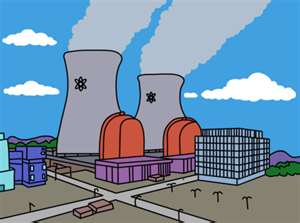
Nuclear Plant

Nuclear Power – Pros and Cons

Nuclear PowerToday I’ll try to examine the arguments for and against Nuclear Power. It’s a controversial subject to say the least and I think it definitely needs a further study. It is also an incredibly important argument because energy is the driving factor in many of the issues the world and the United States face.

The need for energy in the modern world continues to rise and how we get that energy and who profits from payments for that energy is a key to future economic power. The rise of the fundamentalist Islamic state was certainly fueled by oil money more than any other factor and the revenue that will be generated by future, ever increasing, energy demands is a topic well worth discussion.

Wikipedia, as usual, rises to the occasion with an excellent article about the debate over Nuclear Power but I’ll try to summarize here as best as possible.

Energy Source

There is little argument here. Nuclear power is a tremendous energy source, just look at the sun, and has the potential to provide all the energy the world needs for the almost infinite future.

Energy Security

This is not about the safety of nuclear energy but about how a country can cut dependence on other nations for their energy demands. Again, for the United States, there is little argument here. Nuclear frees us from foreign dependence. We don’t have the oil reserves to sustain ourselves. I know, I know, we have shale. People, it doesn’t count. It’s not really feasible as a substitute for Light Sweet Crude and it’s not even better than coal for simple power plants. It’s filthy, expensive to extract, and basically not worth talking about compared to nuclear. If anyone tells you the U.S. has huge deposits of oil this is what they are talking about and they are, essentially, lying to you.

Reliability

Again, nuclear beats out wind, tide, and sun for its reliability. Always on, always ready. However, there is argument that nuclear plants are likely to shut down under extreme conditions. I see this but frankly, so are conventional plants. There doesn’t seem to be any evidence that nuclear power is less reliable than other sources.

Economics

This is a difficult one to track down. The basic idea is how much does it cost to produce the same amount of energy from nuclear, coal, wind, sun, tide, etc. There are a number of studies on this and it is absolutely true that while at initial glance nuclear power seems cheap there are factors including massive government subsidies to start up plants. Many people will quote the cost of energy in France, very low, but they don’t take into account that the entire nuclear system was built with government money.

Fairly reliable data indicates nuclear costs more than coal, gas, and hydroelectric but less than others. However, as infrastructure for solar and wind increase their cost will drop. It’s a tough one to answer directly. I’d say it’s fair to call nuclear competitive.

Environmental Impact

This is one that nuclear appears to lose, hands down. But, on closer examination it actually does quite well, particularly in comparison to coal which has a large negative impact. Miners lose their lives, filth enters the air and water, etc. Nuclear is largely clean except if disaster strikes. But, when disaster strikes it is bad. Oil spills are bad as well. Clearly, wind, wave, and solar have a lesser impact but solar panels require chemicals to produce and wind turbines take their toll on wildlife. In conclusion I’d have to side with renewable energy on this one.

Waste

Ah, the Achilles Heel of nuclear power. What to do with the waste. One possibility is Thorium reactors which don’t produce nearly the large amount of toxicity of uranium and plutonium reactors. Still, they produce highly toxic waste. Storing this waste is a huge problem, not in that we don’t have vast tracts of land available to store it, but do we have the political will to open up those lands and drive the waste across the country to them?

Accidents

Another thorn in the side of nuclear power. Accidents happen and in nuclear power they can cause utter devestation. Still, oil spills cause far more damage every year than nuclear accidents. France has been on the nuclear grid for many years without a single mishap. Still, the more plants out there increases the chance of accidents like in Japan.

Proposed Fourth Generation plants are definitely safer and Thorium plants actually have very little chance of disaster as they cool naturally over time if a mishap occurs.

Nuclear Proliferation and Terrorism

This is yet another problem for nuclear power. The byproduct of Uranium and Plutonium plants is material that can be converted into a powerful nuclear bomb. If stolen this presents a huge danger to the world. Thorium plants produce less dangerous material but still presents dangers.

All right, I’ve gone on pretty long here. I’ll save my conclusions until tomorrow but hopefully you have a better idea of the pros and cons of nuclear power.

Like, Tweet, Stumble, and comment if you feel the urge!

Tom Liberman
Sword and Sorcery fantasy with a Libertarian Twist
Crony Capitalism

Crony Capitalism

Crony CapitalismThe topic for today is something called crony capitalism which is destroying free enterprise. The basic idea of capitalism is that free markets provide the best economic model for the growth of a nation. There are a lot variables within capitalism but at its most fundamental it is an idea that includes private ownership and production, wages for workers, free competition, and accumulation of capital for profit.

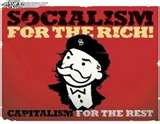
The ideas of capitalism are probably good fodder for another blog. What I want to discuss today is how crony capitalism is destroying the free market and with it our libertarian ideals. While crony capitalism has the word capitalism within it, it is actually a form of socialism, or government control of industry. Socialism is another badly misunderstood word and I should take that up in another blog. The ideas keep rolling in!

What is largely meant by this term is not capitalism at all. The United States government has become overly involved in the success of business. It is through government involvement that a particular product or service now succeeds. This has spawned an entire industry of lobbyist who spend their days trying to convince government officials to pass laws, regulations, and make actual purchases that favor their employer.

Most people see this problem with the U.S. military and decisions on which system to purchase are often decided by factors other than the actual effectiveness of the product.

However, this crony capitalism extends much deeper into society than most people realize. Go ask your employer if you have any government contracts. Ask them how much of the company money is spent on trying to get government agents to give them advantages.

There are a lot of reasons to fear this subversion of true capitalism but I think the main idea goes back to what Ayn Rand suggests in her writing. That the individual achiever must be allowed to succeed or society as a whole will eventually fail. The problem with crony capitalism, from my perspective at least, is that companies and individuals achieve not on the merit of their work but upon their ability to bribe government officials into altering the playing field so that they succeed. This eventually means companies that are good at bribery and backstabbing succeed while companies that just want to make a good product, employ hard workers, pay them a good salary, and make some money are defeated.

Again, we arrive at the point where I’ve complained all day long and not offered any solutions to the problem.

This is an extremely difficult problem but at its heart it comes down to fairness of government regulation. I’m a relatively moderate Libertarian in that I believe government regulation is necessary to prevent anti-trust situations but these regulations need to be broad and aimed at creating a fair playing field for all businesses.

It’s not easy to come up with legislation of this sort but I’ll take on food labeling as an example of my ideas. There are currently a bevy of regulations on how to display the nutritional contents of food. The problem is in defining what percent of a particular nutrient applies to a wide variety of people and what defines a serving size. It seems clear to me that nothing is going to be applicable to someone of my size, 5 foot 7 inches (1.7 meters) 165 lbs (74.8 kg) of twisted steel, and say, the left tackle of the St. Louis Rams. Go Rams!

So, why not simply put in the actual nutritional value of the entire package on the label. I can figure out how much of the package I eat, I can easily find out the daily allowances for someone of my size. It’s not the governments job to lead me to  the water and hold my hand while I drink.

Another example might be the animal husbandry industry. Simply make the producer put a webcam on their livestock and slaughtering pens and make it publicly available. If I know how the animal is treated then it is up to me if I want to save a little money or purchase the more expensive, but better treated, animal.

I’m a believer that government needs to regulate but the purpose is to create a fair playing field so that the best business can succeed, which is a winning formula for you and me.

Tom Liberman

The United States is becoming a Democracy

Focus GroupOne of the areas I find people have a great deal of confusion about is the idea that the United States is a democracy. The U.S. is a representative republic which I spoke about in a previous post. The issue I want to take on today is the idea that we are slowly becoming a democracy.

When the Founding Fathers established the political system of the United States they broke authority into three branches of government. The Federal Convention is where the Founding Fathers gathered to draft the wording for the new constitution. There was much consternation about how the people in these branches would get their jobs. There was also a great deal of concern about how much power should rest in the hands of the federal government but I’ll save that conversation for a future blog. For now I want to talk about how our representatives get their jobs and their duty therein.

The Federal Convention ended with a system, after much debate, where the lower house, The House of Representatives was elected directly by a vote of the people, an upper house, the Senate, appointed by state officials, the executive, the President, who was elected through a mechanism called the Electoral College, and a Judicial, Judges, who were appointed by the executive.

The Senate and House of Representatives make laws, the Executive signs them, and the Judicial determines their meaning in individual cases. The important factor here is that it is Congress (the collective term for the Senate and House of Representatives) makes the laws. The laws are not voted on by the people. The founding fathers did this for a specific reason that I will talk about tomorrow.

Most state governments operate the same way.

Things have changed to a large degree. The main culprit in this change, I think, is the proliferation and immediacy of polling and voter outrage. By this I mean that the people can almost instantly respond to any proposed legislation before it becomes law and organize opposition. Also, with sophisticated polling, the politicians are aware of the will of the people before they cast their vote. This has the effect of pushing politicians in the direction of the majority of the population. Not just in their legislative duties but in their campaign promises and party platforms.

Focus Group

We’ve seen massive vote swings based on popular opinion quite recently with the SOPA act but that is only the tip of the iceberg. Politicians regularly hold focus groups in order to weigh the popularity of a particular plan. They fear getting removed from office if they make decisions that are unpopular with their constituency.

This is not the system envisioned by the Founding Fathers. The original plan was that the representatives made the laws and the people redressed that situation once every two, four, or six years with elections. Even then only the House of Representatives faced direct election by the people. The Senators were appointed and the President elected via the Electoral College. So, the drift towards democracy is something that was not originally planned.

Now, there are quite a few people out there who consider this movement towards democracy a good thing and they have some interesting points. I’ll talk about what this change means for the future of the United States tomorrow.

Stay tuned!

Tom Liberman
Sword and Sorcery fantasy with a Libertarian Twist

Susan Komen – Planned Parenthood – Loyalty

I’m going to talk about the trait of loyalty in this post. It comes to my mind because of the recent stories about the Susan Komen Foundation and their contributions to Planned Parenthood. I don’t want to talk about the merit of cutting off their donations, the reasons behind the decision, or the reasons behind their reversal. These are all interesting topics but I’m going to write about loyalty.

There are two reasons this topic comes to mind today. One is that it is a theme of my first book, The Staff of Naught. The character of Oliver is supremely loyal to another character. I discuss this in length in this video.

I think most of us consider loyalty a good trait. The world is filled with people who have their own agenda and this is natural and normal. When we make friend, allies, business associates, and the like it is through loyalty that we succeed. There are other factors in success but it is difficult to get anywhere in life if you don’t have friends who watch your back. We all make mistakes and we all need friends who don’t betray us because it might make them some money or get them on the local news.

Now, there are limits to loyalty. While being a loyal person is ostensibly a good thing there are people who can use that against you. This is often called misplaced loyalty. They can demand your loyalty while essentially throwing you into the pit to be devoured by the beasts. But, by and large, I think being loyal to your friends and family is a great trait.

My best friends watch my back when I’m out and about. They try to talk me up to women who might interest me. At work my associates don’t wait for me to make a mistake and then badmouth me to the boss. There are people like that, people who want to get ahead at your expense, and it is your friends who help you time and again against them, often you don’t even know it has happened.

If we give no loyalty then we are diminished. Without loyal friends our lives are not full.

What I saw in the Komen/Planned Parenthood situation absolutely sickened me. An executive for the Komen Foundation is a foe of abortion and her influence was raised as a possibility for the original funding drop. The President and Founder of the Komen Foundation, Nancy Brinker, protected her friend. She said, no, that’s not the case, the decision was made because of legal issues that Planned Parenthood is facing. Nancy was a good friend. She protected her friend, tried to do what was right. That’s loyalty. That’s a good thing. Kudos to Nancy.

To repay Nancy, said executive immediately jumped on the self-promotion, live television bandwagon and proclaimed her a liar. She stabbed Nancy in the back to get ahead and to attack her enemy, Planned Parenthood. Disgusting. Vile. Disloyal. Here you go Nancy, I’ll tell the world you lied about me and about our reason for cutting off the funding so that I can get a little publicity and maybe pick up a high-paying job.

Well, anybody that hires said executive is getting a disloyal, self-serving, traitorous, bag of excrement. You’ve been warned.

Now, the second reason this topic comes to mind for me today is that my sister is having breast cancer surgery this morning. My thoughts are with her. My sister and I have never been all that close. We have different ways of looking at the world. If you say something bad about her I’ll pop you in the mouth.

Tom Liberman
Sword and Sorcery fantasy with a Libertarian Twist.

I blame you … and me

VotingOne of the common themes I see in politics is frustration with our representatives in Washington. They are perceived to be partially if not fully responsible for the woes of our nation. Personally, I don’t find fault with them. I blame me and and I blame you.

In the United States we live in what is called a Representative Republic. This basically means that the voters elect representatives who make the decisions. Now, we are slowly becoming a democracy but I’ll save my opinion on that development for a future post.

One argument here is that if we don’t like what our representatives are doing in Washington, in our State, or in our home town, then we have a simple remedy. Vote for someone who makes better decisions.

However, this is not my main argument. In a representative Republic the politicians are representative of the voters. So, if we don’t like the politicians then our problem is with ourselves. What has happened to the United States? Or has anything happened? Have we always be selfish, bickering, and out to gratify our immediate needs regardless of future consequences?

I think the evidence suggests that there was a time when Americans cared about something besides themselves. Certainly the Founding Fathers were trying to build a nation that would change the world, not just their circumstances with England.

I realize there are many wonderful people in this country but the we must look to our politicians because they are a reflection of who we are. Our votes, our values, our desires. That’s what we see in Washington, us. I see men and women who desire election more than governance, whose decisions are based on what will grant them immediate gratification (election victory, donor money) and no stomach for painful solutions. Why do I see this? Because this is us. We vote for them, we, apparently, want them.

Don’t get me wrong here. I’m still an Objectivist of the Ayn Rand school. People need to do what is in their self-interest. But, it is in our self-interest to have a strong country.

Your next question is, and should be, so Tom, complain away but what do you offer as a solution? Stop telling me what’s wrong and start telling me how to fix it.

Here it is. Teach people to think critically.

Write blogs on how to make good decisions. Think everything through so as to be a shining example for your friends and your family. Listen to the political pundits and then research their words. Read articles, come to an informed, critical decision. If the majority of people can do this, and it’s not easy, then we will elect politicians who do the same thing. Then, well, anything is possible.

Tom Liberman
Sword and Sorcery fantasy with a Libertarian Twist

Clint Eastwood – Advertising – Politics

Clint EastwoodLike many people in this country, I watched the Super Bowl this Sunday. Great game. What I want to discuss today is the Clint Eastwood commercial.

To get in the mood you might want to listen to this or this.

First a little background about Mr. Eastwood. His politics are a mix of ideas that appears largely Libertarian and he has supported both Republicans, John McCain, and Democrats over the years.

When the commercial started I thought to myself, “Oh no, a stupid political ad that tries to pull all the notions of patriotism into support of one politician or another.” As the commercial went on … and on … I began to realize this was more of a heartfelt appeal to put our differences aside and do what is in the best interest of the country. From what I know about Mr. Eastwood; if he says he meant that, then I believe him. I was inclined to believe it before Mr. Eastwood was forced to issue explanations.

Parse that, Mr. Eastwood was forced to issue an explanations because he sent out a message of hope trying to bring the United States together. Forced to issue an explanation! Does that tell you something is wrong with our political process?

Now, I do realize at its heart the commercial was an advertisement for Chrysler and, because it has us all talking, it certainly did its job. But, let’s leave that aside and talk about the political thinking, rather than critical thinking, that seems to drive this country today.

One political pundit, who is now dead to me, was “personally offended” by the commercial. Personally offended by an appeal to come together and make the country better? Personally offended by something that had nothing to do with this person. I’m personally offended when my mother tells me I come across as a know-it-all (she might be right). I’m personally offended when I’m compared to Miles Raymond in Sideways (there might just be some truth to that). I’m not personally offended when someone criticizes Ron Paul. I might disagree with the criticsm but I’m not personally offended. It’s not about me and I don’t have such a colossal ego that I think everything is about me (just most things).

This was a commercial about getting together, working together, overcoming adversity, making your community, the country, the world, a better place. Mr. Eastwood, I salute you, sir.

The voters today, and I’m going to talk about the blame the voters have in this problem tomorrow, seem largely to judge the merit of an idea based on the “D” or “R” in front of the name of the person making the proposal. Is that you? Do you not bother to think about the issue once you hear who is talking? Do you vote for the party and not the person? Do you let other people tell you who to vote for and against?

Are you one of those people who finds it easier to vote by party affiliation rather than spend time critically examining the candidates?

If so, I have one suggestion:

Stop voting. You’re hurting this great country.

Share, Like, Comment, Stumble, Tweet, and all the rest of you think someone you know might find this interesting. Tell me if you disagree!

Tom Liberman
Sword and Sorcery fantasy with a Libertarian Twist

Non-interference versus Isolationism

non-interference

Much of the criticism I hear about my Libertarian politics concerns the idea of non-interference and often it is because there is confusion between that concept and isolationism.

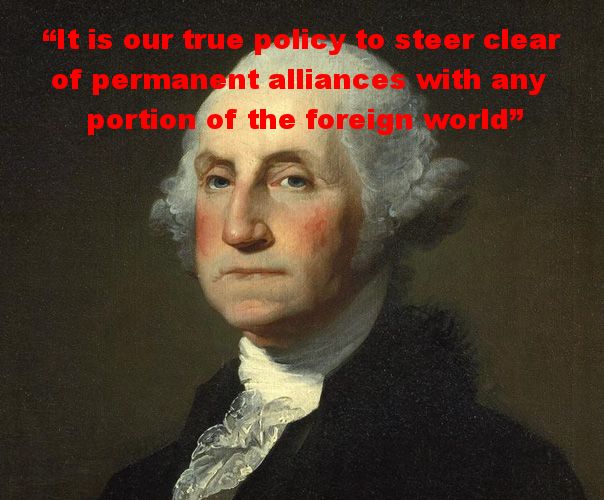
What Ron Paul and other Libertarians like myself are talking about is non-interference. This dates back to George Washington in his Farewell Address when he suggests avoiding foreign entanglements. The United States long avoided such alliances.

What does Non-Interference Mean

It’s a broad definition and it means different things to different people. Largely non-interference means not having alliances with foreign nations. Not interfering in their internal politics, and not going to war on foreign soil. It is important to consider that times have changed as far as the ability of a nation to extend their force. When Washington was president the United States was physically isolated from Europe and its bickering. It was difficult for European powers to extend their influence into the American region. This has changed with the advent  of intercontinental ballistic missiles and connected economies.

What non-interference does not mean, in my opinion, is that we should stay completely out of the affairs of the world. This is isolationism and in the modern world is a dangerous policy. Newt Gingrich is correct when he talks about the dangers of an air burst nuclear weapon and the modern communication grid. We cannot isolate ourselves from the world because the world has the ability to touch us both militarily and economically. We must engage the powers of the world but that doesn’t mean we need to police them or dictate to them.

History

If we look back on American history I think our worst moments came from meddling in the affairs of foreign nation, in regime change policies, in propping up totalitarian regimes that supported us, at least in words if not deeds.

There are Libertarians who support a stricter version of non-interference that borders on isolationism. They might well quibble with some of my characterizations here. I don’t think the United States should disengage completely from countries like Pakistan. Such policies in regard to Cuba are a mistake. I think we should always attempt to talk with other nations, supply them with help if they ask for it, but we should minimize our attempts to influence their policy decisions.

It is in our interest if Pakistan helps hunt down people trying to hurt the United States but I don’t think we should be trying to purchase that cooperation with what amounts to bribery. If Pakistan wants to cooperate we should engage with them but cautiously. George Washington warned us to be wary not only of our international enemies but of our allies as well and with good reason. They are interested, rightly so, in what is best for their nation.

Conclusions

The waters of international politics are rife with danger and caution is a good ally. Engage but don’t interfere. A fine line.

Tom Liberman

Rise of Islam

I’m of the opinion that one of the largest blunders in United States history was the handling of the Iranian Revolution of 1979. I’m looking at with thirty plus years of hindsight but it’s clear that the moment was a key point in the history of the world.

Before the revolution Iran was ruled by the Shah of Iran. The Shah was in many ways not that bad of a man in that he was largely secular and helped women’s rights but he nationalized the oil industry and suppressed dissent ruthlessly. He was viewed as a puppet for the west who wanted oil.

The Shah’s reputation is actually undergoing a revival in Iran but this is largely because of the oppressive nature of the regime that took power. I talk about all of this merely as background for my main argument.

The Iranian Revolution was the first signal of modern Islamic power, fueled by oil money, that is largely responsible for much of the war and horror we see in the world today. While the Ayatollah and his revolutionary cohorts did promulgate a theocratic state they were largely a popular uprising of the people. Certainly the communist Soviet Union provided agitation but, by and large, it was a revolt of the people.

The revolutionaries took American hostages and we’ve had an adversarial relationship with them ever since. Iran has used its money and religious fervor to influence the rise of Islamic states and terrorism all over the world. What would have happened if President Carter had pushed back from an initial knee-jerk reaction to the revolution?

What if we had told the Iranian leaders: You were right. We shouldn’t have meddled in your country’s affairs. Welcome to the world of nations. We don’t like the idea of a theocracy but we’re willing to work with you.

Would the world be better today? I think so. Perhaps Iran wouldn’t have become so radicalized and other Arabic nations would have looked to us a guiding light rather than an enemy to be destroyed.

It’s all speculation of course. There are so many other variables involved and what happened, happened.

But, I think it is an object lesson of sorts. When situations like this arise in the future, how should we as a nation handle them?

One of the leading causes for the Iranian hatred of the U.S. that continues to this day was our meddling in their affairs after World War II. This leads me to the Libertarian idea of non-interventionism. I’ll talk more about that and how it is different than isolationism tomorrow.

As always, Like, Tweet, Stumble, and otherwise share my ideas if you think they are worthwhile.

Tom Liberman
Sword and Sorcery fantasy with a Libertarian Twist