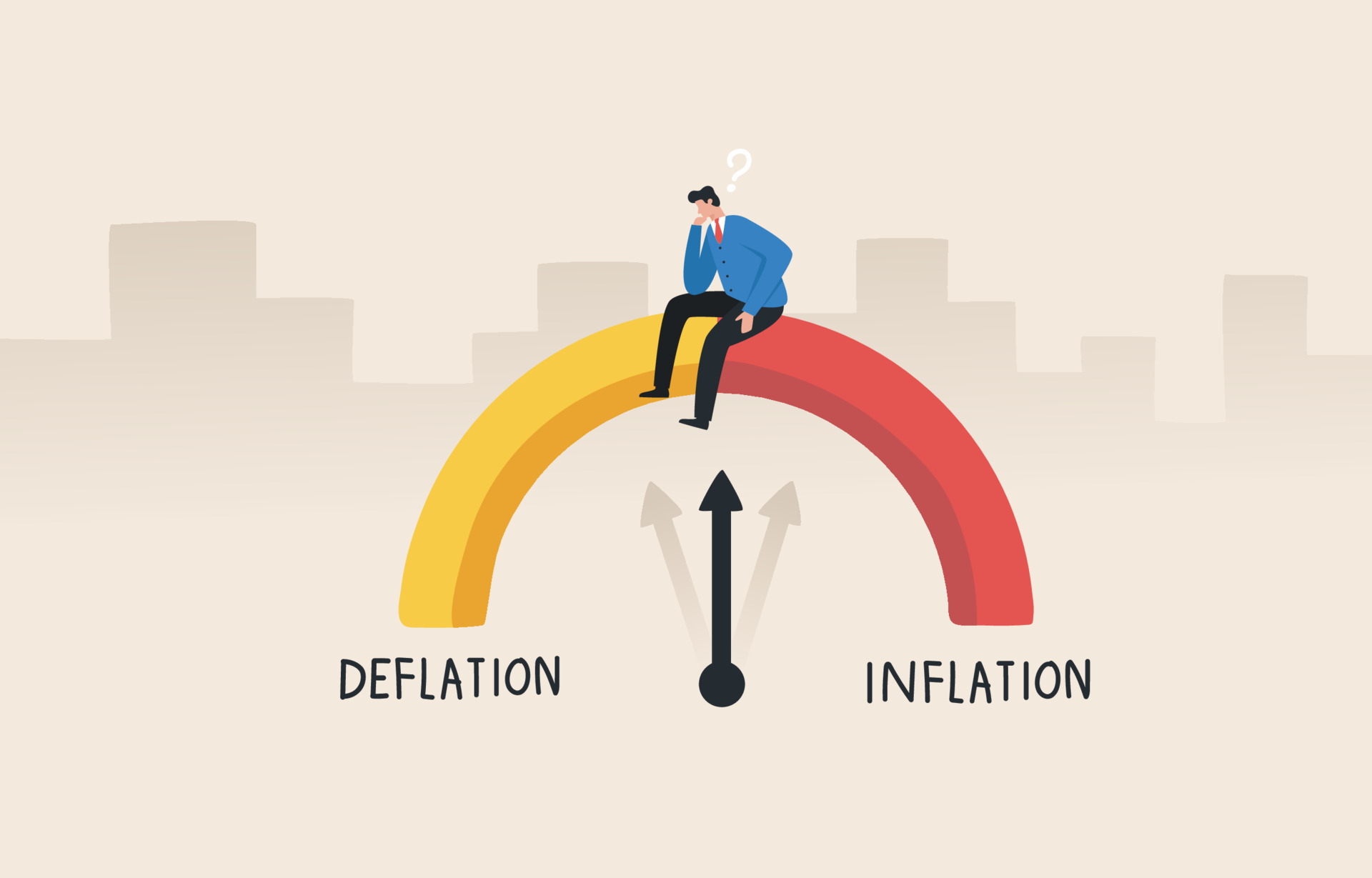
The modern economic world has long been fighting a battle between too much inflation and deflation. Some inflation is the goal and deflation is the enemy. I’m no economists and everything that follows is simply my observation and opinion.
Inflation is when prices go up and deflation is when prices go down. The competing factors are real wages and nominal GDP. What is best for the average consumers of a nation? Growth combined with inflation or shrinkage combined with deflation? That’s my question.
Why I’m thinking about Deflation
The reason all this comes to my mind is some YouTube videos in which the content creator visits small and moderate sized restaurants in Japan. Many of these places are absolutely tiny, the equivalent of which either does not exist in the United States are is so rare that I don’t encounter it.
They have seats for maybe a dozen people, generally around a long counter, and the staff is anywhere from one person to perhaps four. They have small menus and some even offer a single entrée. The prices are insanely low, low beyond comprehension. An entire sushi meal for seven dollars. That kind of low. Prices that seem impossible to my tainted, GDP brainwashed mind.
Lost Decades
The reason for this is complex to say the least and well beyond my economic ability to understand. That being said, Japan has suffered something called the Lost Decades. A long period of deflation. During this period, 1995 to today, Japan’s nominal GDP fell from $5.55 trillion to $4.27 trillion. This is an economic disaster according to modern theory.
Yet, a fantastic meal of sushi with beverage, made by an artist right in front of you, in a hole-in-the-wall restaurant, costs seven dollars. A plate of a dozen ludicrously delicious dumplings, filled, folded, and steamed before you very eyes, costs three dollars. Am I the only one thinks that deflation might be a good thing?
Fantastic GDP
In the same period of time the GDP of the United States rose from $7.64 to $30.49 trillion. This is fantastic growth according to economic theory. This is the goal our economists and politicians create policy to accomplish.
And yet, the price of a burger at restaurant down the street is seventeen dollars. Our main political conversation is about something called affordability. An increasingly large percentage of people literally cannot afford to live in the United States. Food, housing, transportation, healthcare, and other basic needs cost more than we make.
Conclusion
As I stated earlier, I’m not an economist, these things are well beyond my primitive understanding, but I am a human being, and I have eyes. I see. If I my wealth is reduced by fifty percent but the cost of living decreases sixty-six percent, am I not wealthier?
Are we chasing the wrong carrot? Do we fear the wrong stick? Or, to put it more crudely, have the billionaires sold us a pile of manure while doing our backsides wrong?
Tom Liberman