
The AIDS Hypothesis on Shitty Entertainment

Shitty Entertainment

In a sequence of events only possible in the internet age I heard a hypothesis about why the AIDS epidemic created the shitty entertainment industry we see today. To be clear, I think there’s a lot of fantastic entertainment coming out but there is some truth to criticisms of the blockbuster orientated industry today.

So, onto the AIDS Hypothesis on Shitty Entertainment.

The Sequence of Events

I’m working on my role-playing games, writing a novel, and watching YouTube, my usual daily activities in retirement when I see a long sequence about Judge Janice Goldberg on Law and Order played by Fran Lebowitz. She’s funny, I say to myself. In the comments I see people know her from her writing. Writer? Off to Wikipedia.

She’s an interesting character indeed. I read the article and see her talking about the tragic effect of AIDS on the theater scene in New York. I think to myself, what? AIDS wrecked the theater scene, what’s that about?

I start thinking. Always dangerous. The more I ponder, the more I think she’s onto something but not just about the theater scene in New York; about the entirety of the plethora of shitty entertainment we see these days.

Why AIDS Created Shitty Entertainment

Who did AIDS kill? Gay men. What do gay men do? They go to the theater. The go to musicals. The go to artsy movies. They love the arts. Now, to be clear, I’m firm in my conviction that stereotypes don’t apply to individuals but we’re not talking about a single person here, we’re talking about group dynamics.

An entire generation of young gay men died of AIDS. Men a bit older than I was at the time, teen and twenties. All of a sudden, theaters are selling fewer tickets, particularly to artsy type shows. Creative shows. What’s left are straight men who like things that go boom and curvy women.

These deaths certainly didn’t destroy the theater or creativity in general but it caused some shows to fail where they might have succeeded. Some shows to never make it to the stage. These shows are written, produced, and financed by older gay men with money. There are fewer opportunities in the industry for young gay men to thrive.

Fewer young, theater loving, gay men to become old gay men with money today. I think you follow my reasoning here.

It’s Not all AIDS of Course

Our current cookie cutter, boom bang, Mary Sue, virtue signaling, generic rut of shitty entertainment isn’t completely driven by the fact there are fewer artsy gay men in the industry but if you don’t think it’s a factor, well, we disagree.

The next time you decide to bitch about Hollywood and shitty entertainment, take a moment to mourn the lost.

Tom Liberman
The Hays Code and its Effect on Strong Women in Hollywood

Strong Women in Hollywood

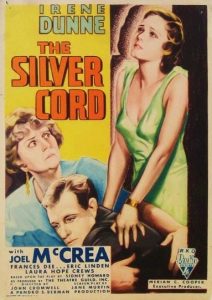
Way back in 1934 Hollywood Instituted the Hays Code which had a deleterious effect on the portrayal of Strong Women in Hollywood that seems to have lasted almost to present times. A while back, I wrote about the demise of the Hays Code but I didn’t examine its long-lasting negative impact on strong women at that time. My thoughts on the Hays Code and its correlation with the lack of strong women in Hollywood came to my attention last night when I was watched a Pre-Code movie called The Silver Cord.

In the Silver Cord a woman scientist, portrayed magnificently by Irene Dunn, is married to a young architect. He is offered a job at a prestigious New York architectural firm. She is, from the first moments of the film, a strong woman. She is a biologist working in a lab and clearly skilled and intelligent. When she makes it clear she will accompany her husband to New York and take a position at a laboratory that offered her a position some time ago, her boss laments her leaving but tells her she is the sort of woman who must have both a career and a marriage, that it is not a choice of one or the other.

I don’t want to get too wrapped up in the plot of the movie and how Christine, Dunn’s character, proves time and time again to be not only a strong woman but also a woman. She likes being married and very much cherishes the idea of motherhood. This is the sort of character long absent in Hollywood. She is not just a stereotypical male protagonist being portrayed by a female actor but she is a strong woman in every sense of the word.

Did the Hays Code destroy this sort of portrayal of women? It’s hard to argue against the idea. In 1933 a woman was being portrayed as a scientist, a wife, and a potential mother. She stands up to her husband and tells him if he cannot cut the Silver Cord of his overbearing mother, she will move on without him. That she cannot stand to see his career and life stifled, that is not the sort of man she can tolerate. Her soliloquy is bold, strong, and independent.

It was claimed the Hays Code was implemented to protect We the People from the degenerate influence of movies but one suspects it was fashioned, part and parcel, from the fear of white men that ideas, good ideas, were promulgating and influencing us. How often do we see that same mantra when it comes to censorship? We must be protected, like children, by the politicians.

If the Hays Code had not existed, how many movies portraying strong women might have been made in the ensuing eighty years? We will never know. We can only see the damage such paternalistic rules engender.

The Hays Code did far more damage than anyone can really calculate. Generations of strong women were not shown examples that might have fundamentally altered their lives. Generations of men did not learn of the sort of woman who makes a perfect and equal companion. What a terrible crime.

Tom Liberman