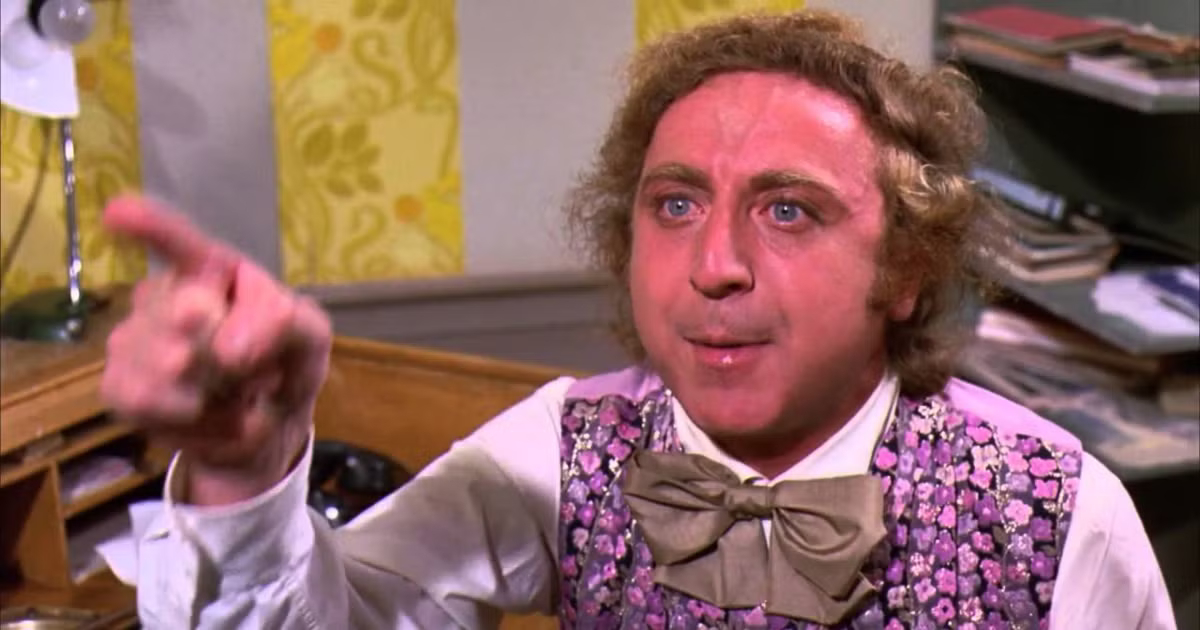
For some reason I’ve been thinking about the movie Willy Wonka & the Chocolate factory and the jaded despair Gene Wilder brought to the character of Willy Wonka. The movie is based on the book, Charlie and the Chocolate Factory although author Roald Dahl disliked the movie enough to disown it. That being said, I found the book and movie both delightful when I read and watched them both as a young lad.
That doesn’t have much to do with what I wanted to discuss today. Willy Wonka, the titular character from the movie although more of a side-character in the book, is played by Wilder in what is widely recognized as a masterful performance. Why was his performance so great? Why does it resonate with me, and apparently many others?
Willy Wonka was clearly a man of Jaded Despair
The way Wilder chooses to play Wonka as a deceitful, angry, jaded, and despairing character. This is not the formula for a heroic character and yet it works wonderfully. I think Wilder got to the essence of Wonka. How did Wonka end up as a man filled with jaded despair? Both the movie and the book go over it fairly quickly but I think the reality is quite fascinating.
We see Wonka’s despair, his jaded outlook, in virtually every scene. He is a man of deceit and Wilder brings this out in his first scene as he pretends to be crippled as he approaches the locked gates.
When the children and their parents misbehave, he admonishes them in a desultory fashion, clearly knowing they are rotten to the core. They are beyond redemption. He doesn’t see the good an anything other than his own works. He is a man who has largely given up but is willing to have one last throw of the dice although he knows it will result in nothing.
How did Wonka get to this Point?
Young Wonka is a capitalist but not a modern capitalist. He is a capitalist of a forgotten era. Wonka wants to make a great product at a price point consumers can afford. This is the sort of capitalism that built the modern world. Wonka is the sort of man who those extolling the virtues of capitalism want us to admire.
Modern capitalism is not this. It is corporate espionage, lawsuits against rivals, bribery of government officials to pass regulations to benefit your company, misleading advertising, cheap products using the lowest cost labor and components possible while producing the bare minimum of acceptability.
This is the version of capitalism that destroyed Wonka and his idealistic goals. This is the form of capitalism that drove him to shut the factory down entirely until he found a way to produce quality products at a fair price without outside interference.
Conclusion
In modern times his rivals would have bribed politicians to look into his, admittedly questionable, labor practices. His potentially unsanitary factory conditions. His experimental designs. In the modern world, Willy would not have survived and his factory would have been shut down. In the modern world, the Wonka Factory does not exist. There are no delightful candies, just corporate garbage.
It’s no wonder Wonka became a jaded man filled with despair. In the modern world Charlie wouldn’t have been offered ten thousand dollars but ten million and he would have kept the Everlasting Gobstopper because money rules the modern world. The untethered accumulation of wealth is extolled as the ideal goal.
Yay.
Tom Liberman