The United States is becoming a Democracy

Focus GroupOne of the areas I find people have a great deal of confusion about is the idea that the United States is a democracy. The U.S. is a representative republic which I spoke about in a previous post. The issue I want to take on today is the idea that we are slowly becoming a democracy.

When the Founding Fathers established the political system of the United States they broke authority into three branches of government. The Federal Convention is where the Founding Fathers gathered to draft the wording for the new constitution. There was much consternation about how the people in these branches would get their jobs. There was also a great deal of concern about how much power should rest in the hands of the federal government but I’ll save that conversation for a future blog. For now I want to talk about how our representatives get their jobs and their duty therein.

The Federal Convention ended with a system, after much debate, where the lower house, The House of Representatives was elected directly by a vote of the people, an upper house, the Senate, appointed by state officials, the executive, the President, who was elected through a mechanism called the Electoral College, and a Judicial, Judges, who were appointed by the executive.

The Senate and House of Representatives make laws, the Executive signs them, and the Judicial determines their meaning in individual cases. The important factor here is that it is Congress (the collective term for the Senate and House of Representatives) makes the laws. The laws are not voted on by the people. The founding fathers did this for a specific reason that I will talk about tomorrow.

Most state governments operate the same way.

Things have changed to a large degree. The main culprit in this change, I think, is the proliferation and immediacy of polling and voter outrage. By this I mean that the people can almost instantly respond to any proposed legislation before it becomes law and organize opposition. Also, with sophisticated polling, the politicians are aware of the will of the people before they cast their vote. This has the effect of pushing politicians in the direction of the majority of the population. Not just in their legislative duties but in their campaign promises and party platforms.

Focus Group

We’ve seen massive vote swings based on popular opinion quite recently with the SOPA act but that is only the tip of the iceberg. Politicians regularly hold focus groups in order to weigh the popularity of a particular plan. They fear getting removed from office if they make decisions that are unpopular with their constituency.

This is not the system envisioned by the Founding Fathers. The original plan was that the representatives made the laws and the people redressed that situation once every two, four, or six years with elections. Even then only the House of Representatives faced direct election by the people. The Senators were appointed and the President elected via the Electoral College. So, the drift towards democracy is something that was not originally planned.

Now, there are quite a few people out there who consider this movement towards democracy a good thing and they have some interesting points. I’ll talk about what this change means for the future of the United States tomorrow.

Stay tuned!

Tom Liberman
Sword and Sorcery fantasy with a Libertarian Twist

Susan Komen – Planned Parenthood – Loyalty

I’m going to talk about the trait of loyalty in this post. It comes to my mind because of the recent stories about the Susan Komen Foundation and their contributions to Planned Parenthood. I don’t want to talk about the merit of cutting off their donations, the reasons behind the decision, or the reasons behind their reversal. These are all interesting topics but I’m going to write about loyalty.

There are two reasons this topic comes to mind today. One is that it is a theme of my first book, The Staff of Naught. The character of Oliver is supremely loyal to another character. I discuss this in length in this video.

I think most of us consider loyalty a good trait. The world is filled with people who have their own agenda and this is natural and normal. When we make friend, allies, business associates, and the like it is through loyalty that we succeed. There are other factors in success but it is difficult to get anywhere in life if you don’t have friends who watch your back. We all make mistakes and we all need friends who don’t betray us because it might make them some money or get them on the local news.

Now, there are limits to loyalty. While being a loyal person is ostensibly a good thing there are people who can use that against you. This is often called misplaced loyalty. They can demand your loyalty while essentially throwing you into the pit to be devoured by the beasts. But, by and large, I think being loyal to your friends and family is a great trait.

My best friends watch my back when I’m out and about. They try to talk me up to women who might interest me. At work my associates don’t wait for me to make a mistake and then badmouth me to the boss. There are people like that, people who want to get ahead at your expense, and it is your friends who help you time and again against them, often you don’t even know it has happened.

If we give no loyalty then we are diminished. Without loyal friends our lives are not full.

What I saw in the Komen/Planned Parenthood situation absolutely sickened me. An executive for the Komen Foundation is a foe of abortion and her influence was raised as a possibility for the original funding drop. The President and Founder of the Komen Foundation, Nancy Brinker, protected her friend. She said, no, that’s not the case, the decision was made because of legal issues that Planned Parenthood is facing. Nancy was a good friend. She protected her friend, tried to do what was right. That’s loyalty. That’s a good thing. Kudos to Nancy.

To repay Nancy, said executive immediately jumped on the self-promotion, live television bandwagon and proclaimed her a liar. She stabbed Nancy in the back to get ahead and to attack her enemy, Planned Parenthood. Disgusting. Vile. Disloyal. Here you go Nancy, I’ll tell the world you lied about me and about our reason for cutting off the funding so that I can get a little publicity and maybe pick up a high-paying job.

Well, anybody that hires said executive is getting a disloyal, self-serving, traitorous, bag of excrement. You’ve been warned.

Now, the second reason this topic comes to mind for me today is that my sister is having breast cancer surgery this morning. My thoughts are with her. My sister and I have never been all that close. We have different ways of looking at the world. If you say something bad about her I’ll pop you in the mouth.

Tom Liberman
Sword and Sorcery fantasy with a Libertarian Twist.

I blame you … and me

VotingOne of the common themes I see in politics is frustration with our representatives in Washington. They are perceived to be partially if not fully responsible for the woes of our nation. Personally, I don’t find fault with them. I blame me and and I blame you.

In the United States we live in what is called a Representative Republic. This basically means that the voters elect representatives who make the decisions. Now, we are slowly becoming a democracy but I’ll save my opinion on that development for a future post.

One argument here is that if we don’t like what our representatives are doing in Washington, in our State, or in our home town, then we have a simple remedy. Vote for someone who makes better decisions.

However, this is not my main argument. In a representative Republic the politicians are representative of the voters. So, if we don’t like the politicians then our problem is with ourselves. What has happened to the United States? Or has anything happened? Have we always be selfish, bickering, and out to gratify our immediate needs regardless of future consequences?

I think the evidence suggests that there was a time when Americans cared about something besides themselves. Certainly the Founding Fathers were trying to build a nation that would change the world, not just their circumstances with England.

I realize there are many wonderful people in this country but the we must look to our politicians because they are a reflection of who we are. Our votes, our values, our desires. That’s what we see in Washington, us. I see men and women who desire election more than governance, whose decisions are based on what will grant them immediate gratification (election victory, donor money) and no stomach for painful solutions. Why do I see this? Because this is us. We vote for them, we, apparently, want them.

Don’t get me wrong here. I’m still an Objectivist of the Ayn Rand school. People need to do what is in their self-interest. But, it is in our self-interest to have a strong country.

Your next question is, and should be, so Tom, complain away but what do you offer as a solution? Stop telling me what’s wrong and start telling me how to fix it.

Here it is. Teach people to think critically.

Write blogs on how to make good decisions. Think everything through so as to be a shining example for your friends and your family. Listen to the political pundits and then research their words. Read articles, come to an informed, critical decision. If the majority of people can do this, and it’s not easy, then we will elect politicians who do the same thing. Then, well, anything is possible.

Tom Liberman
Sword and Sorcery fantasy with a Libertarian Twist

Clint Eastwood – Advertising – Politics

Clint EastwoodLike many people in this country, I watched the Super Bowl this Sunday. Great game. What I want to discuss today is the Clint Eastwood commercial.

To get in the mood you might want to listen to this or this.

First a little background about Mr. Eastwood. His politics are a mix of ideas that appears largely Libertarian and he has supported both Republicans, John McCain, and Democrats over the years.

When the commercial started I thought to myself, “Oh no, a stupid political ad that tries to pull all the notions of patriotism into support of one politician or another.” As the commercial went on … and on … I began to realize this was more of a heartfelt appeal to put our differences aside and do what is in the best interest of the country. From what I know about Mr. Eastwood; if he says he meant that, then I believe him. I was inclined to believe it before Mr. Eastwood was forced to issue explanations.

Parse that, Mr. Eastwood was forced to issue an explanations because he sent out a message of hope trying to bring the United States together. Forced to issue an explanation! Does that tell you something is wrong with our political process?

Now, I do realize at its heart the commercial was an advertisement for Chrysler and, because it has us all talking, it certainly did its job. But, let’s leave that aside and talk about the political thinking, rather than critical thinking, that seems to drive this country today.

One political pundit, who is now dead to me, was “personally offended” by the commercial. Personally offended by an appeal to come together and make the country better? Personally offended by something that had nothing to do with this person. I’m personally offended when my mother tells me I come across as a know-it-all (she might be right). I’m personally offended when I’m compared to Miles Raymond in Sideways (there might just be some truth to that). I’m not personally offended when someone criticizes Ron Paul. I might disagree with the criticsm but I’m not personally offended. It’s not about me and I don’t have such a colossal ego that I think everything is about me (just most things).

This was a commercial about getting together, working together, overcoming adversity, making your community, the country, the world, a better place. Mr. Eastwood, I salute you, sir.

The voters today, and I’m going to talk about the blame the voters have in this problem tomorrow, seem largely to judge the merit of an idea based on the “D” or “R” in front of the name of the person making the proposal. Is that you? Do you not bother to think about the issue once you hear who is talking? Do you vote for the party and not the person? Do you let other people tell you who to vote for and against?

Are you one of those people who finds it easier to vote by party affiliation rather than spend time critically examining the candidates?

If so, I have one suggestion:

Stop voting. You’re hurting this great country.

Share, Like, Comment, Stumble, Tweet, and all the rest of you think someone you know might find this interesting. Tell me if you disagree!

Tom Liberman
Sword and Sorcery fantasy with a Libertarian Twist

Non-interference versus Isolationism

non-interference

Much of the criticism I hear about my Libertarian politics concerns the idea of non-interference and often it is because there is confusion between that concept and isolationism.

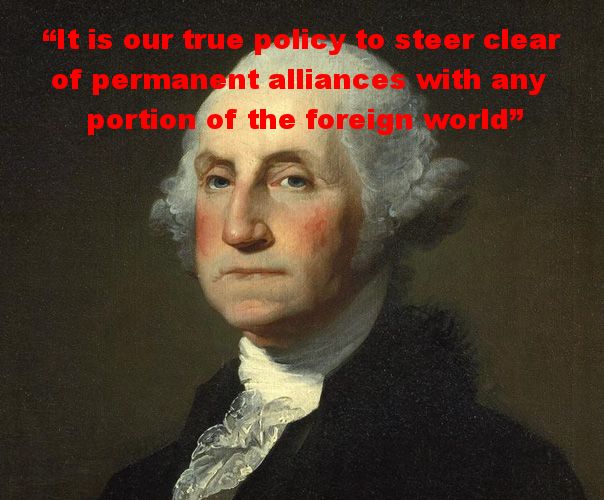
What Ron Paul and other Libertarians like myself are talking about is non-interference. This dates back to George Washington in his Farewell Address when he suggests avoiding foreign entanglements. The United States long avoided such alliances.

What does Non-Interference Mean

It’s a broad definition and it means different things to different people. Largely non-interference means not having alliances with foreign nations. Not interfering in their internal politics, and not going to war on foreign soil. It is important to consider that times have changed as far as the ability of a nation to extend their force. When Washington was president the United States was physically isolated from Europe and its bickering. It was difficult for European powers to extend their influence into the American region. This has changed with the advent  of intercontinental ballistic missiles and connected economies.

What non-interference does not mean, in my opinion, is that we should stay completely out of the affairs of the world. This is isolationism and in the modern world is a dangerous policy. Newt Gingrich is correct when he talks about the dangers of an air burst nuclear weapon and the modern communication grid. We cannot isolate ourselves from the world because the world has the ability to touch us both militarily and economically. We must engage the powers of the world but that doesn’t mean we need to police them or dictate to them.

History

If we look back on American history I think our worst moments came from meddling in the affairs of foreign nation, in regime change policies, in propping up totalitarian regimes that supported us, at least in words if not deeds.

There are Libertarians who support a stricter version of non-interference that borders on isolationism. They might well quibble with some of my characterizations here. I don’t think the United States should disengage completely from countries like Pakistan. Such policies in regard to Cuba are a mistake. I think we should always attempt to talk with other nations, supply them with help if they ask for it, but we should minimize our attempts to influence their policy decisions.

It is in our interest if Pakistan helps hunt down people trying to hurt the United States but I don’t think we should be trying to purchase that cooperation with what amounts to bribery. If Pakistan wants to cooperate we should engage with them but cautiously. George Washington warned us to be wary not only of our international enemies but of our allies as well and with good reason. They are interested, rightly so, in what is best for their nation.

Conclusions

The waters of international politics are rife with danger and caution is a good ally. Engage but don’t interfere. A fine line.

Tom Liberman

Super Bowl … Saturday?!

Super Bowl 2012

It’s Super Bowl Sunday and I’m going to use the occasion to examine the question of moving the game day to Saturday. This is an idea I’ve been a proponent of for quite some time and when talking about it with friends I always complained that the NFL was foolish not to adopt it.

For many years I stood by this argument without bothering to further examine why the Super Bowl remained on a Sunday. This demonstrated a fallacy called Ought-Is or Wishful Thinking. Simply put it is the idea that we want something to be true so we therefore believe it is true without critical analysis. The Ought-Is is a pretty common reason why we fail to fully examine situations and make mistakes.

So, let’s put on our Critical Thinking caps and get to work!

The benefits of a Saturday game are fairly self-evident. Parties could occur on Saturday night instead of Sunday night. Bars, hotels, and other venues would get a boost in revenue because the revelry could go on all evening. The game itself would air in the evening rather than late afternoon. People could stay up late without having to go to work the next morning.

Our critical thinking skills come into play to determine why the game, with all these tangible benefits, hasn’t been moved. One of the important aspects of critical thinking is determining who stands to gain and who stands to lose by a particular proposition. In this case the thing I chose to ignore was the idea of who loses with a Saturday game. Can you think of the answer? Take a moment.

Two parties lose by moving the game to Saturday, the NFL and the host city. The process by which the NFL determines the host city does not involve, to my knowledge, a direct cash payment. However, the host city is generally chosen by their “ability to host”. Well, let’s parse that phrase. What the NFL means by “ability to host” is really how much money can they extract from people who come to see the game.

While the NFL benefits from direct ticket sales and certainly from advertising I would imagine that the events surrounding the Super Bowl, including specially built venues to entertain the visitors in around the host city, provide a hefty boost to that income. Most of these special events take place on Saturday with a continuation onto game day. This revenue would certainly decrease with only half a day on Saturday to run before the game.

Likewise, the host city gets more hotel revenue and more tourist revenue by having the game on Sunday. Tourists arrive either late on Friday or early on Saturday and spend the rest of their time spending money. If the game were played on Saturday this would eliminate a full day of tourist revenue. Now, certainly many tourists would stay through Sunday in any case but the loss of revenue would certainly be significant.

Ok, now we’ve uncovered the reason for the game staying on Sunday, can we come up with a solution to the problem? The only real solution that I can think of is to have some sort of national holiday on the Friday before the Super Bowl (if the game is on Saturday) or the Monday after (if the game remains on Sunday). The NFL has proposed such solutions but it seems unlikely that the government will get involved and even if they do, some companies would ignore the holiday and this might curtail some of the revenue generation.

So, for all our critical thinking we don’t have an easy solution. That’s the way of it sometimes but at least I have some peace of mind as to why the game continues to be played on a Sunday.

I would suggest that we all try to use our critical thinking skills when faced with a seemingly absurd situation. Oftentimes you will find that Wishful Thinking has blinded you to the reality of a dilemma.

Tweet, Link, Like, Comment, and all the rest if you think other people might like to read this!

Tom Liberman
Sword and Sorcery fantasy with a Libertarian Twist

Rise of Islam

I’m of the opinion that one of the largest blunders in United States history was the handling of the Iranian Revolution of 1979. I’m looking at with thirty plus years of hindsight but it’s clear that the moment was a key point in the history of the world.

Before the revolution Iran was ruled by the Shah of Iran. The Shah was in many ways not that bad of a man in that he was largely secular and helped women’s rights but he nationalized the oil industry and suppressed dissent ruthlessly. He was viewed as a puppet for the west who wanted oil.

The Shah’s reputation is actually undergoing a revival in Iran but this is largely because of the oppressive nature of the regime that took power. I talk about all of this merely as background for my main argument.

The Iranian Revolution was the first signal of modern Islamic power, fueled by oil money, that is largely responsible for much of the war and horror we see in the world today. While the Ayatollah and his revolutionary cohorts did promulgate a theocratic state they were largely a popular uprising of the people. Certainly the communist Soviet Union provided agitation but, by and large, it was a revolt of the people.

The revolutionaries took American hostages and we’ve had an adversarial relationship with them ever since. Iran has used its money and religious fervor to influence the rise of Islamic states and terrorism all over the world. What would have happened if President Carter had pushed back from an initial knee-jerk reaction to the revolution?

What if we had told the Iranian leaders: You were right. We shouldn’t have meddled in your country’s affairs. Welcome to the world of nations. We don’t like the idea of a theocracy but we’re willing to work with you.

Would the world be better today? I think so. Perhaps Iran wouldn’t have become so radicalized and other Arabic nations would have looked to us a guiding light rather than an enemy to be destroyed.

It’s all speculation of course. There are so many other variables involved and what happened, happened.

But, I think it is an object lesson of sorts. When situations like this arise in the future, how should we as a nation handle them?

One of the leading causes for the Iranian hatred of the U.S. that continues to this day was our meddling in their affairs after World War II. This leads me to the Libertarian idea of non-interventionism. I’ll talk more about that and how it is different than isolationism tomorrow.

As always, Like, Tweet, Stumble, and otherwise share my ideas if you think they are worthwhile.

Tom Liberman
Sword and Sorcery fantasy with a Libertarian Twist

Mob Mentality … Individually

There was a recent story about mob craziness that caught my eye and I want to talk about how that same crowd psychology effects individuals when communicating on the internet.

Sigmund Freud said, people who are in a crowd act differently towards people from those who are thinking individually.

I think it’s safe to say that what he means is that people will do things, bad things, that they would not do if dealing with others on a one-on-one basis. It’s fairly self-evident that this is true and I’m not going to devote time in this post to why it happens. What I would like to look at is how the internet engenders mob mentality even when we are sitting alone at a computer.

I don’t know how many of you read the comment section at the bottom of a story but it’s an ugly world. Every voice of reason is sandwiched by layers of vileness. A lot of times these comments come from the same individual who has multiple accounts but the effect is generally the same. A group of people say something vile, often with little or no merit, and it is amplified many times, so much so that other, more rational people, begin to give the ideas credence.

More than once people I know, decent, intelligent people, have repeated something they heard from friends or read in a comment section that was patently false. You can see my previous post about our obligation to correct those sorts of mistakes but that’s not my point here today.

The internet allows us the glory of exploring so many thoughts, so many ideas. There are many voices out there with new, and generally awful, ideas. Just because most of the ideas are bad doesn’t mean there aren’t good things available.

The voices of insanity are drowning out the reasonable. This is dangerous to our society. Good thinkers become discouraged and go into a little corner not to be heard from again.

My point here today is that you can blunt the mob!

Use your Critical Thinking cap when you read a story and even more so when you peruse the comments below. Sign up so that you can comment. Reply with rational arguments. Promulgate reasonable ideas. We can change this country by changing the way people think. Make the internet a force of good. Join in! One comment a day, that’s all I ask.

Like, Tweet, and Stumble with the buttons below and comment, comment, comment!

Tom Liberman
Sword and Sorcery fantasy with a Libertarian Twist

Censorship by Country

The recent trend towards selective censorship on Twitter and Blogging is an interesting phenomenon that has many people quite upset. I don’t think it’s such a simple thing to parse but I’ll give it try today.

I don’t want to talk about the various pieces of legislation moving through the United States Congress but instead the self-imposed censorship that internet providers are putting in place because various countries are trying to suppress freedom of speech.

It’s an interesting problem because the internet spans national borders and there is obviously no way to conform to everyone’s laws. There are oppressive regimes out there that find free speech to be dangerous. Let’s face facts, free speech is dangerous. You just have to listen to a virulent racist, religious fundamentalist, or misogynist to understand that there are people out there with ideas that are violent and terrible.

You can probably guess that I’m all for freedom of speech. I think that it is important to understand all ideas, even the awful ones, so that you can come to an informed decision. But, as a Libertarian, I also respect the laws of a nation. If China or Iran or Syria doesn’t want to allow it citizens to blog their thoughts then who is the one to change that? Me? Bing? Google? Twitter?

In these cases I try to take the long view. I think trying to impose your will upon another person rarely works. I was against the U.S. led invasion of Iraq from the beginning for this very reason. I think one of the biggest mistakes the U.S. ever made was to not support the Iranian Revolution. I’ll talk about that in a future post but the point here is that trying to force something down someone’s throat rarely succeeds.

So, if the various internet entities tell China, Syrian, Iran, and any other nation; We don’t care about your laws. We’ll just pipe in internet. That just radicalizes those wayward countries.

I think a western style, representative Republic is the best form of government yet devised. One main reason so much of the world has turned to this style of government since the industrial revolution is the shining EXAMPLE of the United States. We fail when we try to impose our values on other nations. Then we succumb to the dangers of ImperialismTotalitarianism and alienate those who most desperately look to us for hope.

So, I say let nations make their own laws because it will anger their citizens enough to force change. I cannot change you, you cannot change me. We must wait for Syria and Iran and China and the rest of those countries find the power within to  join the rest of world. Maybe then people can stop killing each other and we can get to the business of greatness.

Tell me what you think in the comments.

Like, Tweet, Stumble, and all the rest if you think these ideas are worth sharing.

Tom Liberman
Sword and Sorcery fantasy with a Libertarian Twist

NFL Pro Bowl – Effort

The NFL Pro Bowl was a sorry affair according to all who saw it. The idea I want to explore today is exactly what sort of effort was required from the players to make it an entertaining event and how this sort of obligation effects our own lives.

Let’s look at some of the reasons the players would choose not to play hard.

  1. Professional Football is a particularly violent sport and injuries are common.
  2. The game has no effect on the standings of the teams.
  3. Football is a team sport and the players are unfamiliar with one another and have had little time to practice.

I think we can all see the power of the first argument and the fact that players don’t want to risk career ending injuries in a game of this nature. The baseball All Star game fell prey to this same malaise, so much so that a new rule was created to enliven the game. The NHL All Star game has long been a showcase for offense with defense taking a back seat and the normal fierce body checking all but eliminated.  The NBA All Star game is such that pregame events are more exciting than the game itself.

The other two arguments resonate with me as well and I do see good reason to, at least, play a bit more easily and let the offensive stars showcase their talent.

Now let’s see what motivations the players have to play hard football.

  1. It’s entertaining for the fans.
  2. Professional pride in doing their job.

The first argument is a tough one to nail down because not all fans are entertained by the same thing. Some fans love a defensive struggle while others like an high scoring, high flying game. It’s fair to say that most fans came away from this year’s Pro Bowl feeling dissatisfied.

I think it is also accurate that interest in the various All Star game has declined, probably because of the exposure the players get on multiple media outlets. Twenty years ago All Star games were a chance for people to see the stars of other teams for the first time. Now, we can see them pretty much as often as we desire.

Professional pride is an interesting argument as well. I’m all about professional pride but when the outcome of my efforts make no difference, or very little difference, it does become hard to put forward maximum effort. I think the world would be a better place if we all gave it our best but it is unrealistic to expect people to work their hardest under every circumstance.

I suppose, in conclusion, the lesson to be learned is that when the value of an event is reduced it is only natural to expect  people to put forward less effort and there are probably few artificial ways around this fact. We can try to assign value to something but people generally see through such subterfuge.

If you want people to put forward their best effort then there has to be good reason for them to want to do so. This goes for business projects, school, sport, and most aspects of life.

So get out there and give people good reason to shine and you might be surprised by the result.

Tom Liberman
Sword and Sorcery fantasy with a Libertarian Twist

Twitter and your Future

I read a recent story about how a pair of British students were stopped at the United States border by Homeland Security because of a couple of harmless tweets. We don’t know the full story because there might have been other reasons for the detainment but that’s not really what this post will be about.

What I think it is quite fascinating is the potential of twitter and social media as a whole to effect our future as a country.

We’ve seen quite a number of stories, like this, where someone’s future was effected by social media. A youthful indescretion captured forever on Facebook, a silly statement made in the heat of the moment forever preserved in a tweet, all of these things have an effect. My question is not the effect on the individual but on the society.

One of Ayn Rand‘s constant themes is that those who are exceptional must be allowed to succeed in society for that society to, in turn, succeed itself. Social media seems to be a double edged sword in this regard. People who are bold, daring, speak their mind are weeded out because they offend. On the other hand, the same sort of behavior often catapults people into the spotlight and success.

Anyone who knows me is aware that I think the increased scrutiny on politicians and their personal lives is a negative. It discourages the best and brightest from participating because they don’t want to subject their families and friends to that sort of media pressure. I’m of the opinion, at this moment at least, that the quickness to judge one tweet or one Facebook photo as a weapon to hold back a person is a net negative on society. We lose the bold and we also chill open exchanges of thoughts and ideas.

I don’t think Twitter, Social Media, mainstream media, blogs, or any of the other methods of modern communication are going away and I personal benefit from the ability to publish my own books, post my thoughts, and in other ways interact with the world.

What I would suggest is that we reward those bold enough to state their opinions even if we disagree with them. We want strong, active people in the positions of power in our society. Instead of calling for someone to be fired or step-down from an election, reply with your own ideas, encourage the exchange of thoughts, the dialectic as it were.

Tell me what you think in the comments, subscribe, like, you know what I’m saying!

Tom Liberman
Sword and sorcery fantasy with a Libertarian Twist

Half Dome at Yosemite

I recently read an article that explained how the parks department wants to curtail activity at the Half Dome in Yosemite National Park.

There are various reasons for the closing and you can read the entire article if you are interested in that debate but I’d like to talk about the solution to the problem.

Ok, my legion of followers, get ready to put on your Critical Thinking cap.

First, let’s cover the proposed solution which is to limit the amount of people who can use the pulley system up to the top of  Half Dome to 300 a day. Basically the parks department is creating a terrible headache for itself. What will likely happen is that there will be a mad rush to be one of the first 300 people in the line to get the tickets. This will eventually become so ugly they go to some sort of lottery system like they do for big game ticket sales. Anyone at the site before x-hour gets a lottery ticket and then 300 are picked.

This whole process takes time, effort, and management from a parks department that probably already has a lot to do. Now, with our Critical Thinking hat firmly in place let’s try to find a better solution.

Hmmm, you have a product that is so in demand that supply can’t keep up with it, what do you do? Is it really that difficult? Set a price point. If you want to go to the top of Half Dome it will cost $50 a person. If that price tag results in too few or too many visitors after the first year then adjust the price. It’s simple, easy to enforce, and people know what they are getting. Likely it’s a floating price that adjust seasonally. They can then use the money for other parks projects!

Now, the main objection is going to be that the National Parks are there for everyone to enjoy and this is making it a venture only for the wealthy. Now we put on another hat, wait a second, where is it, there we go, my pragmatist hat.

Here’s the deal, the number of people is going to be limited one way or another. So, if the parks department has it their way you could show up with your family, get up a 5:00 a.m. so you can get in line for a chance of getting one of the tickets and get nothing. In fact, that’s what most people would get, nothing. Or, you can decide if you want to pay the fee and then be assured of going.

As for wealthy people getting more, well, that’s capitalism. Getting to Yosemite is not something everyone can afford and the park charges to get in, to hike, and to stay in the lodges. All of these things price out certain groups of people.

In conclusion, I implore you to keep your Critical Thinking hats on for as much of the day as you can and keep that pragmatist cap handy as well!

Tell me what you think!

Tom Liberman
Sword and Sorcery Fantasy with a Libertarian Twist

Oxygen and Life

There is a fairly angry debate going on about the ideas of human produced greenhouse gases effecting the long-term weather patterns on the planet. I’ll probably eventually blog about that sometime in the future but I thought I’d take on the role of oxygen and life forms. The reason I do this is because several people have told me, rightly so, that it is natural for the earth to have a much higher concentration of carbon dioxide in its atmosphere and it has in the past. But, do we want a world with those levels?

I’m going with the theory that the earth is somewhere around 4.5 billion years old and if you have strong religious beliefs that go counter to this concept then this blog probably doesn’t hold much of interest for you.

So, the earth formed about 4.5 billion years ago and oxygen was basically absent and so was life. At about 3 billion years ago there is some evidence for life although this debatable. There was still no oxygen around. For a long while only simple, anaerobic forms of life existed.

About 2.4 billion years ago there was what is called the Oxygen Catastrophe. This essential destroyed most of the anaerobic life forms. The simple reason it occurred is that the iron that previously absorbed all the oxygen became saturated and then excess oxygen spread into the atmosphere. This combined with methane and made carbon dioxide which greatly reduced the amount of greenhouse gases in the atmosphere. Still, greenhouse gases were in much higher concentrations than we see today.

About 300 million years later, in this still relatively low oxygen environment, we see the first emergence of multicellular animals. It seems relatively clear to me that as greenhouse gases decline and oxygen goes up so too does life increase.

We then see smallish life-forms until about 500 millions ago when there is a period called the Cambrian Explosion. It’s a relatively debatable “explosion” but one of the causes of the increase and diversification of animal species seems to be an increase in the amount of oxygen in the atmosphere. There are arguments that it was not the major cause but simply one of many that happened to coincide at about the same time.

Since then there have been a number of catastrophic events wherein most of the species on earth were wiped out. There is again debate about the cause of these events but oxygen seems to be pretty clearly related. Less oxygen, less life. Which makes an awful lot of sense.

This blog isn’t about whether or not climate change is real or if so, caused by the industrial age, but I simply hope to point out that having the atmosphere gain levels of carbon dioxide and methane and lose oxygen is … to coin a phrase … bad.

So, let’s do what we can to keep oxygen levels stable. Whether or not you believe mankind is contributing to the measurable increase in carbon dioxide in the atmosphere; it seems reasonable to try to reduce the emissions we can control.

Tell me what you think!

Tom Liberman
Sword and Sorcery fantasy with a Libertarian Twist

What is the “Gold Standard”?

I’ve been reading economic articles and this based with personal conversations leads me to believe that the vast majority of people do not know what the Gold Standard is or, even worse, think they know but are mistaken.

I’m not going to try to explain the entire thing here and I’d suggest a lengthy perusal of the Gold Standard article at Wikipedia if you have more than a casual interest. Nor will I offer my opinion on whether returning to one form or another of the standard is a good idea. This blog is just to explain the standard in modern terms.

The most common misconception I see is that the Gold Standard is a rigid system wherein the total amount of money available for a nation to spend is equal to the market value of the gold they have in reserve. This is fairly close to the original gold specie standard which proved an unsustainable model for a variety of reasons that I won’t discuss today. Suffice it to say that almost no economist considers it a sustainable model.

What Congressman Ron Paul and other Libertarians generally reference as the gold standard is something called the Bretton Woods System. In this system, which took effect in 1945, other countries fixed their exchange rate to the United States and we promised to maintain the price of gold at $35 an ounce. Thus gold was no longer a commodity to be bought and sold which would inevitable lead to price fluctuations. Gold was largely never a commodity but simply money itself. I always cringe when someone talks about the intrinsic value of gold. It has little.

But at its heart the Bretton Woods System merely fixes the price of gold at $35 an ounce and other nations agree to keep their own exchange rate equal to that of the United States.

There are good arguments as to advantages and disadvantages of the Bretton Woods system.

President Nixon abolished the already faltering Bretton Woods system in 1971. There were good reasons for this and a lengthy perusal of the Bretton Woods article is worthwhile.

Looking back with the knowledge of the current economic crisis it seems that one of the best things the system did was prevent huge deficit spending. In 1970 the U.S. debt was about 370 billion dollars. In 2010 it stood at 13.5 trillion dollars. There are a lot of ways to parse that including as a percentage of the Gross Domestic Product but I won’t delve into that little debate. What is clear, I think, is that the departure from the Bretton Woods System clearly precipitated vast deficit expenditures.

One of the major negatives with gold as an economic standard is its relatively fixed quantity. Thus, as a nation needs more money, for whatever reason, there is none to spend. This crimps economic growth and limits the ability of lending institutions. How many of you would have a house, a car, or much of anything without loans in one form or another?

So, I hope this makes a murky subject slightly more clear. As always, let me know what you think in the comments section!

Tom Liberman
Sword and Sorcery fantasy with a Libertarian Twist

What is the "Gold Standard"?

I’ve been reading economic articles and this based with personal conversations leads me to believe that the vast majority of people do not know what the Gold Standard is or, even worse, think they know but are mistaken.

I’m not going to try to explain the entire thing here and I’d suggest a lengthy perusal of the Gold Standard article at Wikipedia if you have more than a casual interest. Nor will I offer my opinion on whether returning to one form or another of the standard is a good idea. This blog is just to explain the standard in modern terms.

The most common misconception I see is that the Gold Standard is a rigid system wherein the total amount of money available for a nation to spend is equal to the market value of the gold they have in reserve. This is fairly close to the original gold specie standard which proved an unsustainable model for a variety of reasons that I won’t discuss today. Suffice it to say that almost no economist considers it a sustainable model.

What Congressman Ron Paul and other Libertarians generally reference as the gold standard is something called the Bretton Woods System. In this system, which took effect in 1945, other countries fixed their exchange rate to the United States and we promised to maintain the price of gold at $35 an ounce. Thus gold was no longer a commodity to be bought and sold which would inevitable lead to price fluctuations. Gold was largely never a commodity but simply money itself. I always cringe when someone talks about the intrinsic value of gold. It has little.

But at its heart the Bretton Woods System merely fixes the price of gold at $35 an ounce and other nations agree to keep their own exchange rate equal to that of the United States.

There are good arguments as to advantages and disadvantages of the Bretton Woods system.

President Nixon abolished the already faltering Bretton Woods system in 1971. There were good reasons for this and a lengthy perusal of the Bretton Woods article is worthwhile.

Looking back with the knowledge of the current economic crisis it seems that one of the best things the system did was prevent huge deficit spending. In 1970 the U.S. debt was about 370 billion dollars. In 2010 it stood at 13.5 trillion dollars. There are a lot of ways to parse that including as a percentage of the Gross Domestic Product but I won’t delve into that little debate. What is clear, I think, is that the departure from the Bretton Woods System clearly precipitated vast deficit expenditures.

One of the major negatives with gold as an economic standard is its relatively fixed quantity. Thus, as a nation needs more money, for whatever reason, there is none to spend. This crimps economic growth and limits the ability of lending institutions. How many of you would have a house, a car, or much of anything without loans in one form or another?

So, I hope this makes a murky subject slightly more clear. As always, let me know what you think in the comments section!

Tom Liberman
Sword and Sorcery fantasy with a Libertarian Twist

Five Star Reviews … Maybe

I just finished reading a fascinating article about marketing in the internet age. Lately, I’ve been doing a lot of work for my company about internet marketing and the article caught my eye.

Basically the idea is that a retailer gives you an online credit for your purchase if you give the product a good review. As companies learn the power of the internet and positive reviews this sort of thing was inevitable and it’s actually been going on in one form or another a for quite a while already.

There are a variety of methods including writers offering their services for positive reviews and companies aggressively reposting positive reviews. Unethical marketing practices date back to the beginning of time, most likely, and people will always look to tilt the scale in their favor.

The reason I bring this up today is to talk about the government’s role in protecting us from such tactics. I think it’s fair to say that unethical marketing can have an extremely negative effect on the market and work to erode capitalism from within. Let’s say a group of companies price-fix products or a price-war drives out the competition leaving a sole provider of a product who can then set the price as they choose.

So, I’m not a fundamentalist libertarian that thinks the government should have no role in this matter and it is up to the people to figure out for themselves what is best. But, I’m also of the opinion that there is no possible way to make every deceptive marketing practice illegal. That just creates a maze of regulation and hurdles for companies to overcome that in the long run can hurt the free market as much as the activities they are designed to prevent.

Where does that leave me then? Well, we have to write a good law that broadly prohibits unfair marketing practices and then arm the regulators with investigative power and punishments with teeth. Easier said than done but I think it’s the only method to allow a fair playing field where everyone has an equal opportunity to market their product. This allows the consumers to pick the product they want the most which is the driving force that allows capitalism to be successful. When unfair practices pervert the field then capitalism is subverted. I could talk more about how the government has become a purveyor of promoting the businesses that contribute the most to their campaigns but I’ll save that for another blog.

So, what sort of law would I write to make the internet marketing field fair?

Something like this: “No one shall promote a product by whose sale they benefit, nor pay or otherwise recompense anyone else to do so, without noting their relationship with the aforementioned product.”

Probably not perfect and I could do better if I spent more than five minutes on it but basically it just prevents anyone from promoting something they stand to profit by without noting it. You can’t post a positive review or encourage anyone else to do so without noting it. You want to give five-star reviewers a discount, fine, you have to mention the discount in the product description. A little burdensome but I don’t think too much.

Tell me where I’ve slipped up!

Tom
Sword and Sorcery fantasy with a Libertarian Twist

St. Louis Rams Football Fortunes

I’ve been blogging about critical thinking, disasters, personal responsibility, and other topics the last couple of days so I thought I’d take on something important this time … my beloved St. Louis Rams!

You can stop laughing now … no … I’m serious … this isn’t a joke … that is to say the blog isn’t a joke … the Rams … we’ll I’ve heard them called worse than a joke.

We fired yet another coach and now in St. Louis the debate begins. Is the new coach any good? Are the coordinators any good? Who will they draft with the second pick? Should they trade it for more picks?

I love sports and I truly enjoy the endless speculation that it engenders. Did the manager make the right move? Who is to blame for the loss? The only thing I don’t like this the mean spirited attacks against a particular coach or player but I’ll save that for a blog about why some people enjoy being filled with hate. For this blog I’ll stick to the topic at hand.

We’ve had a bad run of it here with the Rams the last five years with only the memories of the Greatest Show on Turf years to sustain us through the dark days. Coach Vermeil retired after the Super Bowl year and things were okay for a while under Coach Martz but soon everything fell apart in an ugly way.

So, what do I think about the new hire and our prospects for the future. I’m optimistic. I think the team was better than they played last year but a brutal schedule (most difficult in the NFL, six games more difficult than the next most) and a good number of injuries really piled up on them. No excuses, we weren’t a good team.

I think that’s what I love most about sports. We can spin why were good or how we got unlucky but the bottom line is the result. No one gives us a win because our father runs the company, no one puts a few more points on the board because of a little misfortune. You win and you lose and that’s determined in a quantitative fashion. If you have more points you win. If you don’t, you lose. So, we got more yards than our opponents, held the ball longer, outplayed them, none of it matters and that is one of brutal beauties of sport.

I hope for the best with my Rams, yes, “my Rams”, that’s the way I feel about it. They are my team, rain or shine, and I’ll root for them unless they move to Los Angeles or London. As I said, I’m optimistic and I think we’re going to win some games next year, maybe even 9 – 7 or 10 – 6. Call me a fool, a hopeless dreamer, but I’m not the only one.

Go Rams!

Tom Liberman
Sword and sorcery fantasy with a Libertarian Twist

Foul Language

My friend Dora recently undertook a scientific poll (she posted on Facebook) about whether or not women are offended by being called “gal”. For some reason this brought to my mind the power of words or at least the power that we give them. Be warned, the post is going to contain some pretty vile words so if you’re easily offended, read no more.

Why are words so hurtful to us? They are just words after all, not fists and feet. First, I think we need to dismiss the idea that words are not hurtful, because they most certainly are and it is not just us “letting” them hurt us. “I hate you”, “I don’t love you anymore”, “I just used you to get what I wanted”, these are all examples of words that can be devastatingly painful and I’m sure we’ve all experienced anguish because of words in the past.

So, words can cause pain.

Words are our way of expressing ideas. The words themselves are just conglomerations of sounds but we give them meaning. So, when someone says “Go fuck yourself” it isn’t the same as “I’m a little busy right now, could you get back to me with that later.”

The person expressing the words is trying to convey meaning and foul words convey meaning quite strongly. That’s why they are so prevalent.

Nigger, Spick, Hymie, Wop, Mick, Chink, these are words used to convey hatred and they are effective. I think it’s pointless to pretend that they don’t have meaning.

Now I’m going to get to the point of this blog. I’m tired of people pretending that they are not saying vile words by using euphemisms for those words.

How many times do we hear someone say “the f-word”. Fucking hell. If you want to say “Fuck” then say “Fuck”. Don’t pretend you’re not saying “Fuck” by saying “the f-word”. It’s a way that people get to say what they want to say while pretending that they are too good to actually say it. Fuck that.

The “n-word”. It’s vile, its derogatory, it’s cruel, it harkens back to a time when one group of people enslaved another.  But, don’t say, “I never say the n-word”. Say, “Nigger is a vile term. I don’t use it except to denounce its use.”

I don’t think hiding something is a good way to educate people. Bring it into the light of day. Show what it means. Tell people what it means.

I tend not use vile words except as part of a joke. I’ll refer to myself as a Kike or Hymie not because I think it’s true but to illustrate the stupidity of the word and the idiocy of the people who use it in its proper, vile, context.

My point, I guess, we can’t pretend words don’t have meaning nor we can we be so afraid of them that we hide them away. They have meaning and strong meaning at that. Use the proper words to convey what you mean. If you mean “Fuck you” then say it. If your parents taught you manners, then say, “I’m sorry but I can’t deal with that right now.”

Tell me what you think.

Tom
Sword and sorcery fantasy with a Libertarian twist

Correcting Errors

There was an interesting, from my perspective, moment during the presidential primaries the other day that I thought was worth a more in-depth analysis. During one of Rick Santorum’s town-hall meetings a woman shouted out that President Obama was an “avowed muslim”. Who knows, the president might be a closet muslim although there seems no evidence to support this, but the statement that he is an avowed muslim is clearly false.

When asked why he let the statement go without challenging it Santorum said, “Why do you guys ask these ‘Gotcha’ questions like it’s my job to go out and correct everybody who says something I don’t agree with?”

The inference is that it is not his responsibility to correct everyone who shouts out during one of his speeches. Certainly, there are a lot of people out there who think things are true that are not and is it somehow our responsibility to correct them?

I’d like to start the discussion with a more localized examination. How many times during an average week does someone say something in a conversation that you know to be inaccurate? What percentage of the time do you correct them? Now, we’re not talking about something that might be false but something you absolutely know to be inaccurate.

I’m not sure if I’m the best judge of this because when someone says something incorrect around me I pounce like a cheetah on a wounded gazelle, it’s not pretty. I’ve been known to anger a few people over the years, just ask anyone who knows me.

It is particularly galling to me when someone who agrees with my general position says something that is factually inaccurate. I pissed off a Facebook friend under these circumstances just a few days ago. I haven’t heard from her since. Should I have stayed silent?

What do you do in those situations? What is our personal responsibility in those cases?

I think it is important that we correct the person if not immediately then shortly thereafter, privately if possible. If we don’t make the correction then they are likely to continue to spout their claims and might even convince other people of the veracity of the argument. Often they don’t know they are wrong but are simply repeating what they heard someone else say.

Now, let’s examine the situation from the position of a person running for the presidency. If I have a responsibility to correct people for relatively minor mistakes in private conversations it seems to me that is vitally important that the men and women who vie for power must be held to an even higher standard.

This topic quickly leads to the question of why politicians tell us only things we want to hear. The simple reason is that it gets them elected. That’s another conversation.

My conclusion, we must strive to be as accurate as possible in all things. I now eagerly await my mother’s grammar corrections.

Tom Liberman
Sword and sorcery fantasy with a Libertarian twist