What Went Wrong in Cyprus?

Cyprus Bank CrisisOne of the biggest financial stories in recent weeks is the bankruptcy of several large banking institutions in Cyprus and the methods needed to bail them out. I don’t want to talk about the methods for solving the financial crisis but analyze the reasons behind it. It’s an interesting case and in the United States you don’t see too many Democrats or Republicans lining up to blame each other, there’s a reason for that.

Cyprus has a long and complex history but the parts that pertain to our story have to do with its politics and economics. Politically it is split between a Turkish faction and a Greek faction dating back to the 1974 when the country reunited after an invasion by Turkey split the region. The Turkish part of the island is allocated seats in the government but refuses to take them because they will not acknowledge a Greek government.

The country is what we would call socialist or liberal in many regards but not in a special few. As of 2002 Cyprus has the lowest corporate tax rate in Europe and is considered very business friendly. It has become a hub for foreign investment because of few restrictions. Many Russians and other eastern tycoons placed huge sums of money in its banking system because of the tax friendly status. Thus it is an odd mix of what people call Conservative and Liberal.

They have also recently had an energy boom thanks to deposits of natural gas found offshore. They have little other than that as a natural resource and derive much of their income from tourism.

So, with all this business friendly, low-tax conservative money policy, why are they bankrupt?

Much of the money that was coming in was given back out in what eventually became bad loans. Thus the banks went bankrupt much as they did in the United States. They also have a public debt of 84% of the GDP which is one way to determine, with modest accuracy, how much they owe. This means despite lots of economic growth prior to 2012, when the crisis hit, they were still in debt.

The reason we don’t see an uproar among conservatives to raiding the savings accounts of citizens to bail out the banks is that a lot of very wealthy people have their money in Cyprus banks and they don’t want to lose it. The reason we don’t see liberals decrying the situation is that even with excellent economic growth a liberal government was still in debt. Neither system worked.

My point here is that the economic system as it stands is unsustainable with any model. We insist on growth with flattening populations and when we don’t get it, make it happen through stimulus packages. We loan money to aid growth and count on being paid back with interest. There is currently so much debt that much of that money will never be repaid. The few countries not in debt will be driven into it because the money they supposedly are owed will not be repaid. If everyone is in debt then no-one can make payments. It’s that simple. There is no money.

I don’t want to devolve into a conversation about how to solve the situation, I just wanted to point out an instructive event currently taking place in Cyprus. If you are a Democrat or a Republican I urge you to look at the situation closely and make a particularly hard examination of the policies you endorse. We must stop bickering over which failed policy we want to pursue, it gets us deeper into trouble.

Tom Liberman
Sword and Sorcery fantasy with a Libertarian Twist
Current Release: The Sword of Water
Next Release: The Spear of the Hunt

The best laid schemes of Dongles and Men

Twitter FiringThe tech world is currently in an uproar because of this.

In a nutshell there was a conference for developers using an open-source programming language called Python in which two male attendees were supposedly making crude jokes about dongles and forking. Both are legitimate computer terms rich with humor potential. Use your imagination. A female attendee grew disgusted with the jokes and snapped a picture of the men and tweeted about it.

The result is that one of the men telling the jokes was fired as was the woman.

To give some clarity I’d like to elaborate on the male dominated culture of IT. It’s male dominated. It’s nerd dominated. Nerdy males sometimes don’t have the best social skills. Ask anyone who knows me. However, it can also be misogynistic. Really, really misogynistic. I’ve seen some things. My job as a technical trainer takes me to many different companies and I’m often immersed in the backroom getting things setup before class. I’ve seen women IT staffers treated like garbage. I’m talking, “Go get us coffee” type behavior. Crude jokes about body parts. I’ve seen women employees who needed help from the IT staff treated in humiliating fashion, forced to almost beg. I’m not saying it’s common, I’m not even saying I’ve seen it frequently, but I’ve seen it.

It’s quite likely that the women who tweeted the message was just fed-up after being immersed in that atmosphere. It’s quite likely that the men meant no harm or even knew they were being offensive. I don’t know, I can’t say for sure. Maybe she lied and there were no crude jokes? Maybe the guys were intentionally trying to humiliate her? It’s impossible to say.

What is clear is that two people have lost their jobs. Why?

I’ll take it at face value. They told some off-color jokes. She was a little peeved and tweeted it. That’s the end of their part in this. What happened next has to do with the companies that employed them. One company decided to fire the jokester. When the internet storm began to slam the other company because of the tweet-instigated firing, they fired the tweeter.

In the end a company can generally fire people for any reason other than one protected by the government; age, sex, race, religion, etc. If they want to fire, they can fire. The publicity from the tweet was bad for both companies although the old adage that there is no such thing as bad publicity isn’t without merit. Both companies were afraid and that’s the crux of the issue.

Ok, I’ll finally get to my opinion. What is happening to the United States? We have become a nation of cowards. Our politicians tell us to be afraid, our media tells us to watch out what we say, our employers fire us for the least sin. We eagerly attack anyone who makes a mistake and roast them on the spit of public opinion. Fear is not our friend. Fear is the enemy. When we embrace fear, and that is all the two firings represent, we destroy freedom.

My most recent novel, the Sword of Water addresses the concept of fear directly. There are two characters who embody the opposite ideas of how to treat fear. I’m going to include an excerpt here from both of them.

*********************************

High Priest Amalagaz talking to his son:

“Do you see what a little fear injects into the relationship?” said Amalagaz with a smile as he leaned back on the cushions, a satisfied smile on his face. “As I have told you many times, you must befriend fear, you must take it close to your heart and understand it completely, fully, intimately. Without fear you cannot rule. Without fear your subjects will overthrow your throne and burn you on a pyre. They will rape your wife and they will murder your children. You must instill fear in their hearts and then they are yours. You must make them afraid of you. Your enemies must fear you and they will react to your moves. Your allies must fear you and they will do as you say. If your enemies don’t fear you then they will take the initiative, they will deploy their forces with vigor and energy. If they fear you they will hide in their citadels and await your approach hiding behind useless defenses, slowly sapping their will to fight, waiting for you to conquer them.”

Taragaz stared raptly at his father, “Fear.”

“Yes, my son. It is not limited to your enemies; it is your most potent weapon in driving your people. Tell them the enemy is plotting against them, tell them the enemy is waiting to destroy them, tell them that the enemy is lurking behind every shadow and they will do anything to stay safe. They will throw their own children onto the flames to keep the fear at bay. Lie to your people to inflame them. Wipe out a little village on your border and claim it was your neighbor’s rapacious armies. Tell them that an unknown enemy is building a fleet, arming ten thousand soldiers for an invasion and they will jump up and shout your name as they kill anyone who speaks against you. The voice of reason is the first casualty to the blade of fear.”

*********************************

Jon Gray to Silenia:

“There’s always reason to fear,” said Jon waving his hands to both sides. “The world is a dangerous place. Someone might be lurking around every corner, waiting to stick a dirk in your ear. You could fall off a horse, you might slip on the ice and break your leg, get an infection, die. You might fall out of a tree because you climbed too high and smash your brains on a rock.”

“So, you’re telling us to just do anything without thinking about the dangers?” said Sorus. “Come now, Jon. These are children. Do you mean to frighten them?”

“She is already afraid. Fear is the great enemy,” said Jon. “Fear can destroy a man or an entire nation.”

“Or a little girl,” said Silenia trembling but standing firm before Jon.

Jon nodded his head and smiled narrowly at the girl, “Exactly. I say that there is much to fear. Sorus suggests we must use caution because of those dangers. He is not far wrong, but we must never succumb to fear. Fear is the tool of evil. Fear is the tool of the despot. The first time you hid from your siblings you did so because of fear. Did that help you?”

“No,” said Silenia, blinking back tears as the memories flooded into her mind with such vividness that she suddenly felt back in that place, hiding, always hiding. “Eventually I had to come out and they used the flat of the knife on me,” she sniffled.

“Yet was it ever easier to hide the next time and the time after, wasn’t it?”

Silenia nodded her head, pursed her lips together, and stifled another sob, “It got easier each time.”

“Fear is the enemy,” repeated Jon. “Sorus, when you were a boy and the others were being chosen as squires did you stand up, did you shout out?”

Sorus shook his head, “I was smaller, sickly.”

“Did not standing up serve you well, each time you failed to say something was it easier to remain silent the next?”

Sorus nodded his head, “Yes, each time was easier, but it did work out in the long run though. You arrived in Elekargul and now I’m here.”

“True enough,” said Jon. “But would you rely on luck, on coincidence, to drive your life?”

“No,” said Sorus, Jerichi, and Silenia in the same whispered tone.

“When your father first murdered an innocent in front of you, Silenia. Did you say anything?”

Now the girl was crying, “No, I didn’t say anything.”

“Why?”

“I was afraid.”

“Fear destroys nations,” said Jon. “People think that it’s fine to say nothing when they see an atrocity, when they see evil. It’s easier to let it be than to get involved, it’s dangerous to try to stop something like that. When you let evil have its way, when you stand idly by, then people who do evil are emboldened. They think they can do more evil and no one will stop them. A petty man with a petty life sabotages a good man to get ahead. An inferior warrior gets an ally to weigh down his opponent’s armor and gains a promotion. Then he becomes a captain, then a general and he promotes his equally unethical companion. Then the battle is lost, the war is lost. All because the person that saw it happening was afraid to step in and do something.”

“But they might die if they step in,” said Jerichi his hands now at his side and his voice barely audible.

“They might,” said Jon. “They often do.”

“What good does it do if they die?” said Jerichi.

“What you are asking me is, ‘What good does it do to conquer your fear and act?” said Jon with a snort. “It makes a nation strong. It inspires those around you to do the same.”

*********************************

Would you take the advice of Amalagaz or of Jon?

Make no mistake, the firings were based on fear. So many other options were available. I’m not going to discuss them today. Fear won again.

Tom Liberman
Sword and Sorcery fantasy with a Libertarian Twist
Current Release: The Sword of Water
Next Release: The Spear of the Hunt

Rise of the Mexican Drug Trade

Foreign EntanglementsI’ve posted on numerous occasions why I think the so-called War on Drugs actually promotes criminal activity and engenders huge amounts of violence. I’ve also talked about how my Libertarian philosophy suggests that the United States should not be involved in the internal affairs of foreign countries; even those that are our enemies.

Those two ideas came to a surprising conjunction when I happened to be watching a Hulu show called Bordertown: Laredo and did a little research. It’s a story that is so incredible it can only be true. No one can make this stuff up.

In the 1980’s the most profitable drug was cocaine and the production and distribution of this came primarily from a Columbian drug organization called the Medellin Cartel headed by a fellow named Pablo Escobar. At this time Mexico was not a significant drug supplier to the United States.

Meanwhile, in the country of Nicaragua a fellow named Daniel Ortega and his Sandinista government supported Cuba and their communist agenda. President Reagan decided that we would fund a guerilla organization called the Contras in an attempt to overthrow this government. The Sandinistas and Ortega came into power in 1979 and President Carter agreed to allow the government to pursue its agenda without sanctions. Reagan reversed this policy.

Following so far?

Impartial organizations claimed that the elections in Nicaragua were fair and free although the Reagan administration disputed this and provided financial aid and military training to the Contras. In 1983 the U.S. Congress forbid any more funding on the Contras. The Reagan administration refused to admit defeat and began to channel funds to the rebels through outside sources including selling Hawk anti-aircraft missiles to Iran which led the Iran-Contra scandal although this is outside the scope of today’s post.

Meanwhile, it turns out there was a fellow in Mexico who was helping fund the Contras. His name was Miguel Ángel Félix Gallardo. Gallardo was a high-level security official in the government of Mexico and, because of his generous donations to the Contras, immune to interdiction from the CIA. In addition to helping President Reagan fund the Contras he was also working directly with the Medellin Cartel to bring cocaine to the United States.

Gallardo essentially created the entire Mexican drug cartel organization that exists today. This is the organization that is behind the vast majority of drugs that are shipped into the U.S. and commits much of the horrific violence that pervades Mexico. The violence funded by the massive appetite for illegal drugs in the U.S. and carried out largely with guns manufactured in the U.S. and smuggled into Mexico. Gallardo’s activities were apparently known to the CIA and other U.S. agencies but allowed to continue because he was giving large amounts of money to the Contras.

Gallardo ordered the capture, torture, and murder of U.S. DEA agent Enrique Carmarena. For this he was arrested and eventually convicted. This led to the splintering of his organization and the Mexican drug wars we see today.

As an aside, a fellow named Oliver North in addition to helping funnel money from Iran weapon sales to the Contras was also in contact with Panamanian strong-man Manuel Noriega who was eventually brought to trial in the United States. There is some evidence to suggest that North was at least aware of the distribution of cocaine into the United States from Panama and allowed it to happen because some of this money was also given to the Contras.

Meanwhile the funding for the Contras to overthrow the apparently fairly elected government of Nicaragua was eventually stopped by the Iran-Contra scandal. However, we continued to support anti-Sandinista efforts and achieved election “victory” as Ortega was defeated in 1996. To this day the United States is trying to influence politics in Nicaragua against the Sandinista government which came back into power in 2006.

I don’t mean to suggest that President Reagan wanted to create the drug situation we now face but I strongly argue that his policies led directly to it. The best intentions often lead to horrible results. No one can say that the Mexican drug cartels would not have arisen even without U.S. policies towards Nicaragua but the results of that meddling are undeniable.

We should stay out of the internal affairs of other nations even if those nations are our enemies. Our meddling does us no good and often results in real harm. Oh, and we should make all drugs legal; manufacture, distribute, and tax them in the same way we do any of our legal drugs.

Tom Liberman
Sword and Sorcery fantasy with a Libertarian Twist
Current Release: The Sword of Water
Next Release: The Spear of the Hunt

PokerStars vs the US Casino Trade Group

GamblingThere is an interesting situation developing in regards to gambling in the United States that in some ways epitomizes one of the things that Crony Capitalism does to destroy true capitalism. It’s a complex situation and I’m certain that I don’t fully understand all the legal technicalities but I thought it was a story worth exploring.

What is happening is that the state of New Jersey, and several other states, have legalized online gambling. A company called PokerStars is hoping to leap back into that market. Yes, back into that market. For a number of years online gambling was legal and then in 2006 Congress passed a law making it illegal. PokerStars was one of two companies that were market leaders in the industry. Congress passed that law largely not to keep American citizens safe from the awful scourge of making a bet of their own free will but because the gambling industry wanted Americans to only be allowed to make such wagers in their casinos. Crony Capitalism at its finest.

If, horror or horrors, someone comes up with a business model that beats my business model, I can always bribe Congress to pass a law putting my rival out of business. Hooray for the American entrepreneurial spirit. In this case PokerStars created out of country sites and continued to take bets from U.S. citizens. This of course led the gaming industry to convince Congress in 2011 to seize the assets of these companies (essentially stealing money from gamblers who had made wagers but not yet collected their winnings).

This drove PokerStars main rival out of business and PokerStars stayed around by agreeing to pay a $771 million bribe … er settlement to the U.S. government so as to avoid further prosecution. Capitalism as it is now practiced in the United States in full bloom.

So, back to now. With New Jersey and other states legalizing what the U.S. government made illegal in 2006; companies like PokerStars are now ready to resume their former operations. The gambling industry is represented by the American Gaming Association. This group wants to institute their own online gambling business in New Jersey and the other states. They have now asked the state governments to ban PokerStars from being allowed to participate because of their supposed past crimes; continuing to take bets offshore after it was made illegal to bet in the U.S.

Basically it comes down to the idea that a company bribes government officials into passing laws that make it difficult, impossible, or illegal for their rivals to do business. This is what capitalism has come to mean in the United States. This is not an isolated case. Large businesses routinely bribe, I mean contribute to elections hoping to get laws passed that favor them. This sort of crony capitalism is destroying small business, it has essentially eliminated what used to be called the family farm. It is skewing the wealth of this country towards an increasingly unfavorable distribution with a steadily declining middle class.

This sort of unfair business field in which people with good ideas, energy, and drive are prevented from succeeding not only destroys true capitalism but it deprives the citizens of this country great products at a reasonable price.

Anyone remember Tanya Harding hiring a thug to kneecap Nancy Kerrigan? Was that right? That is a microcosm of new capitalism in the United States. We are becoming Tanya Harding. So afraid of losing that we beat up our opponents rather than working hard to make a better product. Nice.

Tom Liberman
Sword and Sorcery fantasy with a Libertarian Twist
Current Release: The Sword of Water (It’s awesome! Buy it now!)
Next Release: The Spear of the Hunt

Mike Trout vs Albert Pujols – Salary Wars

Albert Pujols Mike TroutThere is an interesting story occurring in Major League Baseball in regards to the Los Angeles Angels baseball team. The reason I find it fascinating is because it parallels quite nicely with a situation we had here in St. Louis with my beloved Cardinals. I think it is instructive from a human resources point of view.

Essentially the story is that the Angels have a player by the name of Mike Trout who had a spectacular rookie season and won the Rookie of the Year award. Because of the way baseball salaries are structured, players with less than a certain number of years of major league experience have very little power to bargain over their pay. After they reach a certain point these restrictions are removed and the players are free to seek a rate of pay their play deserves.

I’m not here to argue  the benefits and drawbacks of such a system but merely to compare how the St. Louis Cardinals handled a very similar situation with Albert Pujols after his own astounding rookie campaign.

In the year 2000 the rookie minimum wage was $200,000 and Pujols was given this salary. He had an astounding season hitting .329 with 37 home runs, 130 RBI, a slugging percentage of .606 and an OPS of 1.013. You don’t really need to be a statistical guru to understand that he had a spectacular year. One of the most useful modern statistics is something called Wins Above Replacement which shows how many games the Cardinals won because Pujols was better than the average player at his position. His WAR in 2000 was 6.3

In the year 2012 the rookie minimum wage was $480,000 and Mike Trout was paid $490,000. He also had an astounding season hitting .326 with 30 home runs, 83 RBI, a slugging percentage of .567, OPS of .963, and a WAR of 10.7. Trout missed the first few weeks of the season before being called up so played about twenty fewer games than Pujols and is better than him in most defensive comparisons although they play different positions.

Major league teams are not obligated to give second year players any particular percent raise for their second season. The Angels agreed to give Trout a $20,000 pay raise so that he will make $510,00 this season. The Cardinals voluntarily gave Pujols a $400,000 raise to give him a second year salary of $600,000.

That’s what I find interesting. This was not just a one time thing. The Cardinals gave Adam Wainwright an $80,000 raise in his second year and a further $260,000 raise for his third when they were under no obligation to do so.

From a human resources perspective the question becomes what is it worth to make a valued employee happy. If you are under no legal obligation to give a larger raise then why would any company do so? I’d love to hear from HR people out there on the topic!

Personally, I’m of the opinion the Cardinals did the correct thing although Pujols eventually did leave to join the Angels. He played for eleven seasons in St. Louis when the reality is that after his sixth season he could have simply taken a much larger contract from a wealthier team like the Yankees. Instead he stayed in St. Louis and the Cardinals won the 2006 and 2011 World Series and made the playoffs almost every year.

Now, it’s entirely possible Trout will remain with the Angels for many years. They are a large market team with a great deal of money although much of that is tied up in the lucrative contract they gave Pujols to entice him away from St. Louis. The future is unpredictable. Still, I think that spending a smaller amount to make a key employee happy is almost always a good idea. Good employees, be they baseball players or computer software programmers, are not easy to find.

I think most people enjoy a good working environment where they are valued. Certainly for a talented individual there will be offers of more money and at some point they cannot be refused. But, a little proactive generosity can go a long way.

In any case, I’m glad the Cardinals were generous with Pujols in the early years because I got to see him play and lead us to two World Series victories. It’s impossible to say what would have happened if we hadn’t given him those early pay raises but I stand by my opinion that it was not only a nice thing to do, but the right thing to do. What do you think?

Tom Liberman
Sword and Sorcery fantasy with a Libertarian Twist
Current Release: The Sword of Water (it’s really good, I promise!)
Next Release: The Spear of the Hunt

Sequester Doom – Not so Much

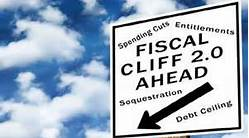
SequesterOver the last few years we’ve seen politicians decrying the danger that will befall this great union we call the United States because of the awful, horrific, terrible, mindless, stupid, dastardly, evil, other side’s fault, sequester. If the evil Republicans allow this to happen the nation is doomed! If the nasty Democrats force this upon us all is lost! Flee, weep, hide your children!

Ok, well, this round didn’t have that effect but we promise that when the March 27th deadline arrives it will be disaster! Trust us. You cannot allow these budget cuts to occur or our nation will face destruction. All because those evil people on the other side hate America! They hate it!

The United States currently owes $16 trillion to its creditors. The western world is largely bankrupt because of current economic policies. Don’t fool yourself. We’ve had Republicans and Democrats in the White House, controlling Congress, we’ve had all combinations and the debt keeps going up. There is only one final solution. Default. The end result is the same as the sequester. The government will not meet its financial obligations. The armed forces will be reduced, social security will be reduced, farm subsidies will be reduced, aid to the poor will be reduced. It’s inevitable but, contrary to what your trusted politicians are telling you; it’s not the end of the world.

Will it mean hardship for many? Probably. Will businesses go bankrupt because they existed solely thanks to government funding? Likely. Will people lose their jobs? Most likely. When the colossal bust of this massive boom cycle hits it will be painful. We’ve been running up debt pretty much since the day President Reagan took office in order to sustain an unsustainable economic model. We’ll have to pay for that. But what happens then? When the chips fall where they may and the government no longer supports the country but merely governs it.

New business will arise. New companies will fill the void. Hopefully they will work with a sustainable business model. The idea of business ownership should be to create a quality product, to provide a useful service, to employ good people, to make some money. With western style republics spreading women’s rights and lowering birth rates we will eventually go back to this model instead of expecting growth, growth, growth. It will be good. Maybe very good. Maybe a real utopia with a steady population, where energy is cheap and abundant, where people are allowed to do their job well and go on freely about their lives.

Of course, maybe I’m an idiot and you should keep listening to the politicians.

Tom Liberman
Sword and Sorcery fantasy with a Libertarian Twist
Current Release: The Sword of Water (it’s a really good book, honestly, buy it today!)
Next Release: The Spear of the Hunt

2018 Mission to Mars – Crazy or not?

MarsA fellow by the name of Dennis Tito is making news in my little corner of the space-geek world with a plan to send a manned mission to Mars. One of my favorite bloggers, Alan Boyle of Cosmic Blog, wrote up an interesting summation of events so far.

I’ve long been a proponent of robotic missions over manned missions for a variety of reasons that I don’t want to get into today. What I do want to discuss is the nature of this particular plan and whether it is sheer madness, a great idea, or something in-between.

The broad plan itself is simply to send two astronauts to Mars on a trip that would circle the red planet and return to earth in a total of 501 days. As Earth and Mars rotate around the sun there are only certain times when the round-trip can be accomplished so quickly. The next such alignment occurs in January of 2018. This means the technology has to be ready to launch at that time. Five years is a remarkably short period to make this happen.

The detailed plan is extremely sketchy but the basic technology is understood and certainly not impossible. They would have to use a rocket that is currently incomplete but scheduled to be finished by that time. A major stumbling block is the speed at which the returning vessel would enter Earth’s atmosphere. There are other pressing problems that currently have no solution but the entire concept is possible.

The funding for the operation is to come largely from donations and Tito’s own personal wealth.

Is the plan a worthwhile endeavor?

As I stated earlier, I’m of the fairly strong opinion that robotic exploration is the most useful method for finding out information from Mars, the moon, and other places within the solar system. Humans are just too frail and concerns about radiation exposure, food and water, waste disposal and other barriers make human space exploration a waste of time and money. We’ve already sent plenty of robots into orbit of Mars. Landed them on Mars. In this case we’d be spending billions of dollars to send two people on a round trip to Mars for no good scientific purpose.

So, at this point you probably think you’ve got my final conclusion all figured out. You’d be wrong.

If Tito wants to raise the money and make this a reality, I say go for it. It’s his money and his donor’s money. The astounding publicity of the event will certainly make millions of people as big a proponent of space exploration as am I. In the end it might create more money and science dedicated to robotic exploration.

Personally, I’d prefer that he use his considerable charisma and effort to help NASA fund missions that have been cancelled because of lack of funds. To that Tito might tell me to do what I want when I’ve made a few billion of my own, and he’d be right!

I applaud Tito’s spirit and wish him well. Although I would offer one major criticism. Don’t say The Right Stuff times ten ever again. Such a thing is impossible. Thank you for your courage and sacrifice Alan Shepard, Gus Grissom, John Glenn, Scott Carpenter, Wally Schirra, Gordon Cooper, and Deke Slayton.

Now, if only I could get a few million people to purchase my books maybe I could fund one of those cancelled missions!

Tom Liberman
Sword and Sorcery fantasy with a Libertarian Twist
Current Release: The Sword of Water
Next Release: The Spear of the Hunt

Bullied out of Tennis?

Rebecca MarinoThere’s an interesting story hitting the news today about a woman tennis player who is quitting at least partially because of the trolling attacks on her social media site. I find a number of things discouraging about this story and, of course, I’ll tell you all about it. First, let’s recap the facts.

Rebecca Marino is a largely unsuccessful 22-year old Canadian tennis player who made it to one final in her eight year professional career. Her top ranking was 38th in the world and she has since fallen out of the top 100. She suffered an injury late last year and lost in the first round of the Australian Open this year before withdrawing from future tournaments. It’s fairly safe to say that she was never going to be a top-ranked player in the Women’s Tennis Association. I’m not trying to be cruel here, I’m just giving background information. To be in the top 100 players in the world means she is an astonishingly good tennis player, just not good enough to be among the elite.

Her stated reason for retiring from the game is that she has been prone to depression for most of her life and that the constant barrage of negativity on her social networking pages contributed significantly enough to that depression that she felt quitting was a better choice for her mental health. It’s also possible that she realized her career was going nowhere and used this an excuse.

Looking at the comments to the story I think the initial reaction to this announcement is that people will tell her to just ignore the negative things and move on with life. I think ignoring the comments and moving on with life is great advice but when you are prone to depression it’s not as easy to follow as many might imagine. To begin with I’m not sure that everyone is fully acquainted with the lengths, depths, and disgusting depravity to which trollers stoop. I don’t want this blog to be about the problems associated with internet bullying and trolling but they are significant and I don’t want people to underestimate their power.

While I respect Rebecca’s decision I think it is a mistake. She should work hard on ignoring such attacks because giving in is the worst decision. Easier said than done but worth the effort. It’s not an easy road but I think she will be best served if she gets some help to learn how to deal with such vicious attacks. There is still plenty of time for her to change her mind and I hope that she does so.

There are many trollers out there who do it more for amusement than to cause pain. A troller who posts on a political story to get a reaction is not really making a horrific personal attack but it can get out-of-hand quickly. Civil discourse is a good thing for you and for this nation.

I’m of the opinion that when a troller makes vile posts they are really hurting their own sense of self-worth in the long run. It’s not worth it. Making a positive contribution is the best feeling you will ever have. Give it a try.

In summation I guess I’d say there is no final answer. There will always be those who hide behind anonymity to say awful things and words do hurt. I hope Rebecca decides to return to tennis and I hope that some trollers out there decide they’d rather do something positive with their free time. That is their decision. In the end we are only responsible for ourselves.

Tom Liberman

Drugs in the Water Supply

Clean WaterThere was an interesting study performed by a group of Swedish scientists involving fish living in waters contaminated by pharmaceutical drugs. While the study itself is fascinating it’s the implications of the study that are most worth examining.

It turns out that much of the water we drink here in the United States and in Europe is contaminated by tiny amounts of pharmaceutical residue. By tiny we are talking about parts per billion. This is truly a small amount but it also means that every sip of water, every bite of food soaked in water, or every drink that uses water as it’s base most likely has tiny amounts of pharmaceutical drugs like oxazepam in it. Oxazepam is an ingredient in most benzodiazepines drugs like Valium and Librium. These are commonly prescribed medications and people get rid of them in various ways including flushing expired pills and defecating and urinating unprocessed drugs.

One of the problems is that water processing plants do not even attempt to filter out these impurities; they go directly into the system. A group of studies is now underway to determine the contamination level and if it is detrimental to our health.

I do not want to be an alarmist. The amount of drugs we are talking about is extremely small and there isn’t any evidence yet as to its affect on humans. However, it is affecting the behavior of fish. These drugs are designed to interact with the human body in certain ways and apparently everyone is on a prescription, whether they knew it or not.

We have been pouring pollutants of one kind or another into the air and water in vast quantities. These include greenhouse gases along with toxic substances. All of this cannot be good or right. On the other hand, the results of all these chemicals is the modern world. The very basics of what we consider a comfortable life are largely thanks to plastics, metallurgy, electronics, chemistry. The question becomes at what point are we creating such a toxic environment that we are actually killing ourselves?

This is a question that has been in the public eye since the beginning of the industrial revolution and one that largely remains unanswered.

We continue to pump chemicals into our air and water but we enjoy a lifestyle of tremendous wealth because of these scientific advances. Is there a solution? Can we simply turn off the spigot when billions of dollars in profits are at stake, jobs, livelihoods, comfort, luxury, transportation, energy?

We are moving towards greater awareness of these problems and trying to green our processes. I think almost everyone who reads this will agree that both of these are noble goals. Will we look back at this time and rue our shocking disregard for our own health, the health of our species? Or will we solve all these problems and remember it as a necessary albeit dark part of what will be a golden future?

I’m encouraged that such studies are taking place. I’m encouraged by the apparent majority that want clean energy, clean food, and good water. I’m optimistic but I can’t help but see the naysayers, the angry voices against science, the ever-present lethargy defined by fear of change.

What’s the future? I can’t say. I imagine a utopia where we have defeated disease, death, and toxicity on this beautiful planet. Where every person lives eternally with their life dedicated to achievement. Where the view from space is a beautiful blue marble, perfect and clean. That’s my dream. What’s yours?

Tom Liberman
Sword and Sorcery fantasy with a Libertarian Twist
Current Release: The Sword of Water
Next Release: The Spear of the Hunt

Goodbye Wrestling

Olympic WrestlingThere was an interesting decision by the International Olympic Committee this past week although I doubt many of my readers will be as fascinated with it as am I.

The IOC decides what sports will be in the Olympics each year and decided for the 2020 Olympics that wrestling will not be included. As I suggested, it’s probably not that big an injustice from most people’s perspective but I think it further evidence of the utter dismantling of the very spirit of the Olympics. I wrote a blog post on the subject here but let me recap quickly both this decision and my problems with the IOC.

The modern Olympics were originally created as a place to showcase sportsmanship and bring nations together. This is a different although somewhat related agenda to the ancient Olympics held in Greece. If you want a full explanation of my thoughts on this please see linked post.

Wrestling has been part of the modern Olympics since their institution in 1896 and was also part of the ancient Greek Olympics. It is, in my opinion, one of the most pure sports of all. Simply one person in the ring battling against another judged by a set of stringent rules. The best wrestler that day wins. If you get a chance to watch NCAA wrestling, which they show on ESPN3, I would encourage you to watch. It is true sport in its most pure form.

The criteria the Olympic committee considers when choosing what sport to include in the Olympics are as follows: The IOC program commission report analyzed more than three dozen criteria, including television ratings, ticket sales, anti-doping policy and global participation and popularity.

My read between the lines analysis is that they thought another sport would generate more revenue than wrestling. That’s certainly their decision to make but it further confirms my opinion that the Olympics are no longer about sport but about making money. That’s exactly the idea they were founded to combat. The idea was that there would be a place for sportsmanship, where the attempt to win was far more important than the winning itself. That spirit is gone, dead. I think we are all the worse for it. I think an athlete that strives to be the best but loses is just as much a winner as the athlete or team that wins.

Is the U.S. Postal team and Lance Armstrong the real winner or the real loser? Is Barry Bonds a winner or a loser? This win at all costs mentality is destroying the United States of America. The ends do not justify the means. When we elevate winning above trying our honest best we create a culture of criminality where people will do anything to win. The people who will do anything to win generally defeat the honorable. This attitude carries over into politics, into business, into the very fabric of our society, we the people.

I realize I’m drifting rather far afield from the loss of wrestling as an Olympic sport but, by golly, this one makes me sad. Wrestling not an Olympic sport? Next you’ll tell me that warm apple pie with vanilla ice cream isn’t a dessert.

Tom Liberman
Sword and Sorcery fantasy with a Libertarian Twist
Current Release: The Sword of Water
Next Release: The Spear of the Hunt

Foamy Beer is the Key to Happiness

Foamy BeerYou probably won’t believe me when I tell you that a good head on your beer is the key to happiness in life, even if you don’t drink beer. I had a conversation with a co-worker the other day about taking pleasure in life and how to best achieve that. The more I think about that conversation the more I realize that the consumer driven model in the United States is contributing to our misery. Beer is merely an example of my theory but I think a pertinent one.

We would all like to happy. No one is ever going to be happy all the time so the idea is to have as many moments of happiness as possible. How do we achieve this?

Foamy beer!

Traditional beer steins have a fill line an inch or so below the rim of the cup because beer tastes better when consumed through a foamy head. However, people want more so they insist on the glass being filled to the brim. They gave up joy and pleasure for more. I think that’s a prevalent theme in our culture.

Do you put a little hot water in your coffee mug in the morning to heat it up before putting in the coffee? The coffee or tea is better that way but it takes longer.

Do you warm a cold soup spoon for a few second before plunging into your bowl of piping hot soup? Do you use a hot towel on your face before you shave? People used to do these things. Why? Because it gave them pleasure. Do we eat fresh grown vegetables? Do we use spices grown in our windowsill garden? Do we eat freshly baked bread and smell the odor wafting through our houses? No, no, no. Why not? Because it takes time and effort. I’m not suggesting that I’m immune to this syndrome or that I’ve got all the answers. I don’t bake bread or grow vegetables. I’m just saying that if I were to do so it would provide me with moments of happiness.

The big happiness that we strive for is also good. Vacations, a comfortable house, a car. I don’t think consumerism is all bad, I just think we’ve gone too far. We work too much to buy things and skip out on simple pleasures.

A bowl of soup and a few freshly made rolls to dunk? Count me in. A bowl of soup down at BreadCo (Panera Bread to everyone who doesn’t live in St. Louis) and rolls made that morning is pretty good. I’ll take it. But, if I choose to spend a little time I could have more. It’s my fault I don’t. Consumerism has some blame in all of this but in the end I need to make sure I get pleasure and happiness out of life.

I’m not even suggestion you grow a vegetable garden or cut back on your hours of work, I’m merely proposing that you have the bartender pour that beer with a head even it means you lose a small amount of the total beer. Take pleasure when you can, there will be time when there is no more.

Tom Liberman
Sword and Sorcery fantasy with a Libertarian Twist
Now Available! The Sword of Water
Next Release: The Spear of the Hunt

Air Force Software Development – $1 billion wasted

OverbudgetThere was an interesting and still developing story in the news recently about money paid by the government for a piece of software that, to date, doesn’t work.

The reason it caught my attention was not really the dollar amount assigned to the waste but the fact that it was a software development project. That’s something my company does and I’ve been taking an increasing part in that process myself. I helped formulate my first bid recently and am beginning to get a more personal understanding of the concepts involved.

In this case the Air Force contracted for a complex piece of software that would do the job of many other pieces of software in a sort of unified system. There aren’t many details in the story and the contractor in question claims the software largely works. The Air Force spokesman says it does not.

What I want to talk about today is not necessarily the failure of this software but the entire idea of making the bidding process work.

My company is currently working on a piece of software that we seriously underbid. It’s an undertaking that has been going on for years. The thing that’s important to understand is that everyone loses. The company doesn’t have its software and we continue to throw man-hours at the problem without any extra pay. The problem largely arises from poor bidding practices. If the contract had been bid appropriately maybe the company would have said, no way, too expensive. They would have saved money and so would my company for we have spent for more in man-hours than we received in payment.

I see the bidding process with government agencies to be a mixed bag. Some agencies seem to be able to accept appropriate bids while others, particularly the defense department, seem willing to accept artificially low bids only to see projects fail to complete on time and arrive hugely over-budget.

This doesn’t work for anyone. The company that makes the low-bid ends up with the contract certainly but the amount of work they do is not commiserate with the pay and can turn into a losing situation for everyone, see the F35 debacle. The government does not get the equipment or at least only receives some substandard version of the equipment.

In this case what bothers me most is that the company that made the bad bid originally is still being contracted for a number of other government software programs. At the very end of the video they mention another $8 billion in software bids that apparently returned little or nothing.

As with my own company, this kind of thing can happen. People can underestimate bids, things can prove more complex than originally imagined. However, a company that fails this miserably should not get any more money. I don’t think that is the case with some government contracts. They are largely so rife with corruption that a fair and reasonable bid has no chance of getting the contract. I do think this is department dependent. Some departments manage their bids better than others.

The question becomes, how do we manage the bidding process to get the best product at a fair price? With billions and even trillions of dollars at stake the idea that we can remove corruption entirely from the process is naive. With that much money at stake unsavory sorts are going to be drawn in.

Capitalism means that the company making the bid should make money. The contract should then be fulfilled within a reasonable percentage of the original bid and a quality product delivered.

Sadly, I’m of the opinion that the money is so immense and the corruption so entrenched that there are no easy answers. An independent agency with the sole job of evaluating bids seems like a good idea but that adds complexity and cost because you have to pay those people. Possibly some sort of metric based system in which the quality of the final product and the proximity to the original bid are assigned numeric values. These values are accumulated over time to favor bidders with good track records. I’m generally in favor of such metric based systems although corruption in assigning values is still possible.

It’s a huge problem, not so much from the wasted billions, but the idea that if a company regularly fails to properly fulfill bids, said business should not continue to prosper. The very heart of capitalism, of Randian Objectivism, is rewarding success.

I’ve spoken about this many times. If we reward failure the system rots from the inside. This is not capitalism, however, it certainly is what we seem to have today.

Sword and Sorcery fantasy with a Libertarian Twist
Current Release: The Sword of Water
Next Release: The Spear of the Hunt

Bad TV wins – why?

Don't trust the B in Apt 23I don’t watch a tremendous amount of television but there are a few shows on Hulu that I watch with regularity and something recently happened that, once again, caused me to question the rationality of television executives. Over the years we’ve all seen great shows get cancelled while shows not as good continue on. Sometimes it’s purely a ratings decision but I’m going to examine the situation a little more closely today.

Why is a good show cancelled and what is it that we call good?

The incident that brought about this examination was the cancellation of the show Don’t Trust the B* in Apt 23 while a somewhat similar sitcom called New Girl continues on. Apt 23 was regularly hilarious, generally funny, and occasionally stupid as cutting edge comedies often are. New Girl is almost always stupid punctuated by moments of funny. Apt 23 is well written and well acted. New Girl is poorly written with nonsensical situations highlighted by overacting and tired jokes. Yet, Apt 23 is gone and New Girl is highly touted by the network. Why?

The network spokespeople will suggest it is all about ratings but I’m not so sure that’s the case. See Firefly or American Gothic and even now Community for examples of a network mishandling a show with time slot changes, episodes shown out-of-order, lack of promotional activity, and other seemingly destructive policies.

As I try to be a rational thinker I want to examine some possibilities on the cancellation that don’t have to do with ratings. Perhaps a rational television executive crunched the numbers, the show production cost, distribution, long-term salaries, and weighed that against revenue, media sales of episodes already finished, and other factors. Is it possible that Apt 23 will make more money in DVD sales than it would have made if it continued in production for four more seasons? I don’t know the answer but it’s possible I suppose. Did the executive try to pick up Krysten Ritter in a bar and was shot down in humiliating fashion? It’s possible. Does the executive’s son hate James Van der beek? I don’t know, maybe?

Next we have to examine the idea of good. Is good a completely relative term? Just because I think Apt 23 hilarious and New Girl painfully bad; is this objectively true? Certainly there are those who think New Girl is hilarious and those who probably didn’t like Apt 23. I like to think there is an objective good. One joke is funny and another is not. Any comedian will tell you that certain jokes get laughs and others don’t.

What are the factors that make a television show good or entertaining? Funny jokes, a plot that is logically accurate to itself even if far-fetched and fantastic, see Big Trouble in Little China. Actors who effectively convince you that they are the character they are portraying. Sometimes called good acting. Good camera work. A thematic structure to each episode and the show in general. Dialog that is crisp. Characters that are consistent. I think all these things objectively define good even if people don’t always come to that conclusion. I think we can define Apt 23 as good and New Girl as bad.

That being my opinion I’m deeply saddened by the cancellation of Apt 23. I think about all the episodes of Firefly that were never made. I’m the loser because of this, I’m less entertained. I would argue that our society is the loser when bad wins out over good. Maybe it’s not a big a deal when it comes to entertainment but maybe it is. Maybe every time bad wins out over good we are all diminished.

Of course, there’s the possibility that New Girl is a great show and I’m just deluding myself.

Wouldn’t it be great if better always won out over worse? What would your world be like if everything that was better succeeded? That’s the ultimate goal of the Randian objectivist. I’m sure it’s not possible but I won’t stop striving. I hope you don’t either. And I hope a young network employee reads this and goes on to become an important executive.

What do you think?

Tom Liberman
Sword and Sorcery fantasy with a Libertarian Twist
Current Release: The Sword of Water
Next Release: The Spear of the Hunt

Super Bowl – Breaking Rules to Win

Holding on SafetyThere was an interesting incident at the Super Bowl this year when the Baltimore Ravens intentionally broke a rule to help them win the game.

In this case the Ravens were winning by five points with eleven seconds left in the game. They decided to run a play in which the punter just moved around in the end zone running as much clock as possible and then taking a safety which is worth two points. The idea here was that if they punted there was a chance of a punt return or a punt block but that’s not where the rule breaking comes in. On the play the Ravens players blatantly held the 49er players which is normally a ten yard penalty and a repeat of the down. Well, a repeat of the down would have meant that Baltimore could have done the exact same thing but this time run the clock to zero. So, by blatantly holding the players for the other team they were allowed to dither more time from the clock, essentially, they gained a competitive advantage by breaking the rules.

My plan isn’t to talk about this particular rule or how it was broken to gain an advantage but the incident just got me thinking about the point of rules and the point of laws in general. It goes to an Ayn Rand’s quotes of which I’m quite fond; The  only power any government has is the power to crack down on criminals. Well,  when there aren’t enough criminals, one makes them. One declares so many things  to be a crime that it becomes impossible for men to live without breaking  laws.

Let me give an example of what I’m trying to suggest here by using the Socratic Method.

What is the purpose of laws against driving your car too fast?

The obvious answer is that the law is to protect innocents from out of control drivers crashing into them. At first glance this seems readily apparent and true. But, let me offer another option, the law is designed to generate money for the police force. Which one do you think is true? In my opinion both are true but only one should be true. We have so many laws that are designed not for the safety of the general public but to enforce ethical codes, to generate revenue, to punish those we dislike, and on and on. A law or a rule should be designed so that it serves the purpose of society or the game.

In the case of the Super Bowl the rule is fundamentally flawed because it was broken to gain an advantage. I’m not saying it’s an intentionally bad rule, I’m just staying that it’s flawed and doesn’t serve the purpose for which it was designed. This happens not infrequently. When a law doesn’t serve society or a rule doesn’t serve the game then it should be altered or eliminated.

Does regulating individual’s use of marijuana serve society? Does regulating sexual behavior serve society? Does restricting gun ownership serve society? I’m for an open and critical examination of all the laws that we have, this ever-growing prison population, this revenue driven police force, this moral self-righteousness. I think we need to purge the system of many, many laws but I’m willing to listen to those who think otherwise.

The NFL will address their rule. Can we as a society apply the same logic to our laws? Can we discuss them rationally with one another and listen to arguments on both sides? I’d like to think so.

What do you think?

Tom Liberman
Sword and Sorcery fantasy with a Libertarian Twist
Current Release: The Sword of Water
Next Release: The Spear of the Hunt

Throw me the ball – god

Prayer and the Big GameA recent poll suggests that 27% of US citizens believe that god plays a role in the outcome of a sporting event.

Another poll suggests that 77% of people believe prayer works in general.

The question I am going to ask about these statistics might not be the one you think.

So, here’s my question for the apparent 50% of people who believe prayer works but don’t believe that god helps win or lose a football game. Why not? If you believe that praying to god will cause god to change one thing, then why not believe god would change a sporting event’s outcome?

For the record, I want to be clear here, if you believe prayer works then you believe that god is fallible. That the master plan for your life changes as you pray. That the original plan of god got changed. If you believe god is infallible then prayer must be useless. The plan is at it was and cannot change. No amount of prayer can alter the course of the plan. But, getting away from logic for a moment I want to examine the psychology of those 50%.

I think the reason for the disparity in those who believe prayer works and those who believe prayer works for sporting events is quite simple. If god is willing to alter something as simple as a sporting event then god is capricious. God is willing to cause someone to lose a largely meaningless game because the other side prayed more earnestly. This makes god petty. That’s why most people who believe in the power of prayer don’t believe that it changes sporting events. Does god changes the outcome of the kickball game at recess? Where does it end? Those who believe in the power of prayer at some point realize it’s a ridiculous proposition and bail.

I believe in prayer they say, but not for silly things. God is above that.

If god is watching and making countless changes to the master plan at all times, saving a life here, ending a life there, picking which children in Sandy Hook to live, then god is a capricious prick. I want no part of such a god. If that god were to come to me right now and say, ‘I am God, worship me’. I would say no, never.

There is one other possibility and the most rational of my religious friends argue it. That god doesn’t alter the master plan for a prayer. That people pray to make themselves and others feel better about the troubles they are suffering. Prayer is merely a conduit of hope. To that I say, dispense with the prayer and get on with the hope. Don’t pray for my sister to fully recover from breast cancer, tell me that you hope she does, that you are thinking of her, that you care for me as a friend, and for her by extension.

I’m not militant about this. When friends tell me they are praying for a loved one I say, ‘thank you. That’s kind of you’. I know they are praying because they think it will help. That’s their business. Go on praying, just be aware of the logic behind your prayer. If you believe prayer works on any level you must believe it works at every level, even sporting events.

Tom Liberman
Sword and Sorcery fantasy with a Libertarian Twist
Current Release: The Sword of Water
Next Release: The Spear of the Hunt

Zimbabwe Economic Woes

ZimbabweThere is a lot of chatter about the economic condition of Zimbabwe in the news these days and I think it’s a very interesting situation.

The history of the country is fairly fascinating and plays into those condition. I’m going to go over that quickly before I get onto the pertinent economic issues. Like most African nations prior to the arrival of Europeans it was a tribal state for most of its history. The region was rich in gemstones and a fellow named Cecil Rhodes recognized this and largely created the country. Current day Zimbabwe is a major of diamond exporter and Rhodes, a mining expert, saw that potential. He is also the  founder of the De Beers diamond company.

The country was eventually named Rhodesia in his honor and prospered when Europeans (read whites) immigrated and began both mining and farming in earnest. During what is called the Colonial era these European subdued native (read black) rebellions and forged a self-governing British colony. This colony prospered thanks to both the diamond mines and burgeoning agricultural industry lead by tobacco and cotton. The farming industry once contributed as much as 40% of the country’s exports and was also self-sustaining in the production of maize to feed its own people. However, gemstones were and remain the main economic money-maker in the region.

Eventually the British colony fell under scrutiny for their racial inequalities and sanctions followed. The British themselves, who outlawed slavery long before the United States, were proponents of majority rule rather the status quo of minority rule. The natives eventually waged a war of independence and gained the control of the country in 1979 instituting a relatively equitable system. Whites kept their property and control of the police, civil service, and judiciary while blacks took control of the government. Clashes between enemy tribes then ensued and many blacks were slaughtered by other blacks.

On an economic front there was general despotic rule in which unions were suppressed and socialist government take-over of universities was at least attempted. This mix of socialism with crony capitalism is worth noting. We tend to lump socialists in one camp and capitalists in another but under totalitarian rule the two intermingle quite nicely. A small minority gets rich using monopolistic policies coupled with socialist takeover of industry. A mix of two bad policies leading to … disaster.

The totalitarian regime seized farmland from prosperous white farmers who controlled about 70% of the arable land despite policies designed to encourage blacks to purchase that land. This redistribution failed miserable, as might be predicted. Without experienced farmers, capital outlays, and a long-term strategy the farming community collapses. A drought didn’t help.

Meanwhile the powerful regime grew rich off the gemstone mines virtually enslaving the population. Western horror at the conditions in the mines resulted in sanctions driving the country further in bankruptcy. Hyperinflation like that in Germany after World War I plagued the country and they even created a one trillion note at one point.

Elections remain largely fraudulent. Disease, mainly AIDS, is rampant and life expectancy is currently 39 years, the lowest in the world.

There are some encouraging signs for the country but the despotic regime continues.

What’s the lesson in all this? If you read my blog frequently you know the answer. Let the best succeed. Reward achievement. If the early white settlers had been fair-minded objectivist instead of vicious racists then blacks might have joined in the economic boom times and the wealth of the country naturally distributed to those most capable. If the blacks who came to power had been fair-minded objectivist they would have rewarded those whites who stayed and worked hard it would have resulted in equitable wealth distribution and a prosperous nation.

Instead, racism, greed, and hate won. That’s what those three things will get you. Disaster. Every time.

Tom Liberman
Sword and Sorcery fantasy with a Libertarian Twist
Current Release: The Sword of Water
Next Release: The Spear of the Hunt

Raiders Coach Intentionally Lost Super Bowl?

Oakland RaidersThere is an absolutely astonishing story making the rounds in the weeks before this year’s Super Bowl and it is so crazy that I’m not sure what to believe. I’ll give you the details but I think it’s going to be weeks before we can sort this out, if ever.

A former wide receiver for the Raiders, Tim Brown, has accused the coach of taking intentionally damaging actions in the hopes of losing the 2002 Super Bowl. What, what, what? That’s crazy. Intentionally losing the Super Bowl? What possible reason could there be for something like that? It boggles the mind. Extraordinary claims require extraordinary evidence. As a rational thinker, my first reaction is: That can’t possibly be accurate.

To the evidence!

Super Bowl XXXVII (37, I do wish they’d just quit with the roman numerals already) took place in January of 2003 with the Oakland Raiders facing off against the Tampa Bay Buccaneers. Tampa Bay’s coach was John Gruden who left those self-same Raiders just a year before to take the job. He had been the Raider’s coach for four season and left in, amazingly enough, a trade with Tampa Bay. The Raider’s got two first-round picks, two second-round picks, and $8 million in cash for their coach!

In any case, the man who replaced Gruden was Bill Callahan and the two teams met in the 2002 Super Bowl only a year after the trade. It is the suggestion of Brown that Callahan despised the Raiders and wanted to lose the game. His main piece of evidence of this is that the team practiced a running attack in the week before the game but on Friday, two days before the game and with no full-speed practices left, Callahan completely changed the game-plan.

This change resulted in the already unstable center of the Raiders, Barret Robbins, freaking out and begging Callahan not to make such a radical change without a single practice to work on the new scheme. It is an absolute fact that Robbins disappeared before the Super Bowl and was only found later in Mexico. Barret had alcohol and drug problems but this does seem to jibe with Brown’s story.

Jerry Rice, yes, the Jerry Rice, confirms that the game-plan was completely changed on the Friday before the game. Certainly in the game the Raiders relied heavily on their top-rated pass offense and barely ran the ball at all, eleven times which includes two passes where quarterback Rich Gannon was chased out of the pocket and forced to run. However, the Buccaneers took an early lead in the game and this might have forced the Raiders into a passing game. Still, if Jerry Rice tells me the entire game-plan was changed on Friday then I’m going to believe him.

Now, another Raider, fullback Zach Crockett remembers that the game-plan only changed after Robbins fled the team and couldn’t be found. It does seem clear that almost everyone agrees the game-plan changed dramatically two days before the game and with no time to practice. This is something that’s hard to fathom. Crockett’s explanation makes no sense to me. If you lost the starting center it’s even crazier to change the plan. The backup is less likely to be able to adjust than the starter.

Brown also claims that Callahan hated the Raiders. He hated the team he coached? Is that possible? There is no evidence so far that I’ve seen as to why Callahan would hate his own team although there is a suggestion that he was loyal to Gruden and wanted his old coach to win. That seems seriously far-fetched and I’ve seen little evidence to support this.

Later in Callahan’s tenure with the Raiders, Charles Woodson had some harsh words for the coach.

Certainly Callahan is not well-liked in Nebraska where he coached for four moderately successful seasons. For those of you unfamiliar with Nebraska football, moderately successful is pretty bad.

Meanwhile Raider’s quarterback Rich Gannon is more circumspect claiming that the game-plan change came not before the game but during the game when the running attack proved ineffective.

Another possibility is that the Raider’s mercurial owner, Al Davis, ordered the game-plan change and forced it on Callahan. No one  has any evidence to this being the case but it does have the ring of truth about it in regards to Davis.

Holy Cow! What’s a fellow to believe?

For the moment I’m going with the idea I stated earlier, that if you’re going to make astounding claims it requires hard evidence. I certainly see some evidence as to what Tim Brown is saying but not enough for me to believe that the coach intentionally sabotaged his own team. That’s just too much. I eagerly await further evidence from the players on the team in question.

I’m going to poll this one. Tell me what you think in the poll and in the comments!

[polldaddy poll=6848316]

Tom Liberman
Sword and Sorcery fantasy with a Libertarian Twist
Current Release: The Sword of Water
Next Release: The Spear of the Hunt

File Sharing and the Illegal Arrest of DotCom – The Saga Continues

DotComI know the world is fascinated with Lance Armstrong and Manti T’eo but today I’m going to post on a subject that I think is far more important to all of us. File Sharing. It’s not a sexy topic outside the geek world in which I reside but give this a read and see what you think.

About one year ago today the FBI asked the country of New Zealand to arrest a fellow named Kim Dotcom and his partners over his ownership of an internet file sharing site called Megaupload. It was a file sharing site where people could place files to be searched by others and downloaded. Some, if not many, of these files were copyrighted material. The movie industry, the recording industry, the publishing industry, and others consider people who purchase their material and then share it with others to be criminals. Because the site had this copyrighted material the FBI became involved most likely at the behest of the powerful music and movie industry.

The arrest itself used illegal warrants and Dotcom was illegally under surveillance; all of which has come out in court. He was subject to torture like tactics in prison, little food and water and deprived sleep. He was initially refused bail.  He is now free on bail and come up with an interesting way to start his company anew and be immune to prosecution. His new site will feature files encrypted so that the site administrator will not have access to the file contents. This means he will have no real knowledge of copyrighted material on his site. The FBI will have to go after those participating in file sharing rather than those simply providing a medium for others to carry on illegal activity. Because there are so many people fire sharing on such a vast scale it is all but impossible for authorities to arrest everyone involved and, if they did, would likely be subject to serious questions about their own families who are likely also sharing files illegally.

I’m an author of eBooks so this is a question that affect me directly. If people share my books without buying them then technically I lose money. But, the real losers, the ones who are pursuing this case, are the industries that profit off the artist’s work. Artists on their own will find a price point for their material that people are willing to pay instead of ridiculously inflated prices foisted on the public by the recording, movie, art, and publishing industries. I sell my books for $2.99. Almost everyone I know thinks that this is a reasonable price for a 300 page novel. If I went through traditional methods and got a publishing house to showcase my novel; the price to you would likely be $19.99. Now, in fairness, I went to agents and tried to get them to try to sell my books to the publishing houses and failed. So, maybe I’m just bitter. But as it stands now, I want nothing to do with the publishing industry. If people want to purchase my books for $2.99 then they will buy them. If my books are good, I will find an audience. If not, oh well.

That’s all beside the point to some degree. Digital media is here to stay and a real way to combat file sharing is for prices of such content to be lowered to a point where people won’t want to steal it. The other method is to put your content on Hulu and Pandora and other places where advertising pays per view. People watch what they want at the minor inconvenience of a few commercials. But, the illegal arrest of Dotcom and the continued prosecution of his case is nonsense. I have no doubt the movie, music, and publishing industries will try to stop his latest endeavor but I hope at some point they realize it’s hopeless.

File Sharing means that artists like myself can create and sell their work without an industry. That means you, the public, will have access to more material, better material, and at a better price. Sure, there are lots of horrible self-published books out there, and you might think mine are among them; but there is also amazing books, art, music, video, and other media out and available that would never have seen the light of day without file sharing and the internet.

Dotcom, you go! This eBook author applauds your efforts and prices his product so that even if someone does illegally download my books, they might enjoy them enough to go back and plunk down the $2.99 for legal copies.

I’d like to hear from other independent authors, artists, musicians, and the like to see what they think about this subject,

Tom Liberman
Sword and Sorcery fantasy with a Libertarian Twist
Current Release: The Sword of Water
Next Release: The Spear of the Hunt

Lance Armstrong – Hero or Villain?

Lance ArmstrongI’ve spoken about Performance Enhancing Drugs in a number of other posts but with Lance Armstrong apparently admitting to his own use of PEDs in an upcoming (or already passed depending on when you read this) interview, I thought I’d revisit the subject. The main focus of the post will be an assessment of his character, hero or villain.

I maintain now, and have said for years, that virtually all athletes are using or have used PEDs. The testing is, and has been, far behind the sophisticated masking techniques available to athletes in an industry that generates billions of dollars for players, coaches, owners, vendors, and countless others. The cheating likely extends down to grade-school level where students want to gain an unfair competitive advantage over their peers.

But, if everyone is cheating then does anyone have an unfair advantage? My answer is no, they don’t. I’m not going to take on the debate if all PEDs should be made legal or not. Today I want to talk about how divisive a figure Lance Armstrong has become. I’ve been listening to sports radio talk-shows in the morning and reading articles when I come home. There seem to be two vehemently opposed camps.

Armstrong is a cheater, a lair, and a scum-bag. A villain.

Armstrong raised huge amounts of money, gave hope to countless thousands, and his transgressions were minor compared to the good he has done. A hero.

My own opinion is quite simple and, for the life of me, I can’t figure out why anyone else is having trouble coming to the same conclusion.

  • Armstrong survived cancer and continued to play professional sports at the highest level.
  • Armstrong, like everyone else, used PEDs to gain an advantage.
  • Armstrong won the Tour de France seven times.
  • When people accused Armstrong of cheating he lied, he bullied, he attempted to ruin people’s reputation, and he sued for millions of dollars despite the fact that he knew he was using PEDs all along.
  • Armstrong’s foundation raised millions of dollars and helped countless thousands of people.

That’s it. Armstrong did some horrible, reprehensible things for which he should be rightly condemned. Armstrong did some astonishing, wonderful things for which he should be praised.

I think the problem is that those who put their faith in him are either horribly angry at this betrayal or in absolute denial because they don’t want to think they supported someone who could do the bad things that he has done. This is called Cognitive Dissonance and something everyone should know more about.

However, this isn’t a psychology class. Armstrong is a man who did very great things and very awful things. There is no more than that. Those who would absolve him of the evil he’s done because it was for the greater good are delusional. Those who would discount the good he’s done because of the miserable actions he took are just as deluded.

Can’t we look at facts and simply state the truth? He did awful things. He did good things. There is no balancing of one against the other. Both happened. If you choose to forgive him for the awful that’s fine, but don’t pretend it didn’t happen. That he didn’t set out to ruin the lives of those who, rightly, accused him. If you choose to hate him then don’t forget the amazing good he has done for those suffering from the awful scourge of cancer.

That is all. Have a great day!

Tom Liberman

Blindness a Cause for Euthanasia?

EuthanasiaA rather morbid case has played itself out in Belgium recently and it made me think about euthanasia.

The basics of the story is that identical twin brothers decided to commit suicide rather than face a life of blindness. The pair was born deaf and recently suffered degenerative eye disease that would have quickly left them blind had they not killed themselves. Belgium has relatively forward-thinking euthanasia laws that allows people to opt for suicide under certain circumstances. If a person has made their wishes clear and is suffering unbearable pain, according to an attending physician, then it is legal have someone kill you. Belgium is considering extending the law to those suffering dramatic loss of mental faculties as well but that’s not really the point.

I’m a proponent of euthanasia to alleviate end-of-life suffering. I’m of the opinion that people in the last stages of life and suffering horrible pain with no prospects except more pain are more than entitled to kill themselves, it is cruel and vicious to force them to continue to suffer. That doesn’t seem to be the case here. This is simply someone facing a terrible ordeal who decides not to go on. Now, this certainly happens all the time without help. People kill themselves under far less duress. I friend of mine in college suffered horrible injuries because a man, whose life was in a shambles, decided to kill himself by crossing the highway divide. My buddy was coming the other way. So, the idea of someone who is suffering, being allowed to kill themselves without endangering others has an appeal to me.

However, the idea that someone who is suffering from a non-lethal, non-painful illness being sanctioned to kill themselves is somewhat disturbing. I’m fairly certain the government shouldn’t be all that involved in this decision one way or the other. If a person wants to kill themselves then they should be allowed to do it but if someone helps them that’s when things get tricky. The person helping could and has been charged with murder. So, should the government allow people to kill other people who want to die, for moderately good reasons?

Tough questions.

Medical advances are changing the world but the thought of living deaf and blind, Helen Keller excepted, is not a pleasant thought. Even if there was hope that a cure might be forthcoming.

I think that I’m going to have to come down against the Belgium decision at this point. If a person is suffering from terrible pain and wants a physician to aid in their death, that’s more than fine by me. On the other hand, if a person is suffering from emotional trauma, a non-terminal, non-painful disease; then they can and should be allowed to kill themselves. But, they should figure out how to do it themselves. It’s not that hard. Admittedly they might stupidly choose to cross the highway at seventy mph and maim an innocent but I don’t think that’s reason enough to allow doctors to kill anybody that asks.

People get depressed but then overcome that depression. People suffer terrible losses but recover. If you want to kill yourself then go ahead, but don’t ask anyone to do it for you and expect them not to be charged with murder.

It’s a tough one. What does everyone else think?

Tom Liberman
Sword and Sorcery fantasy with a Libertarian Twist
Current Release: The Sword of Water
Next Release: The Spear of the Hunt