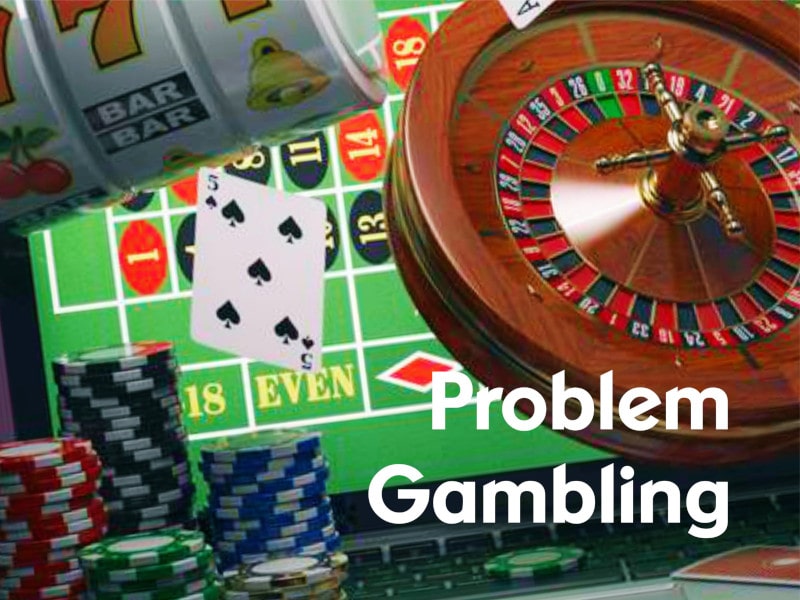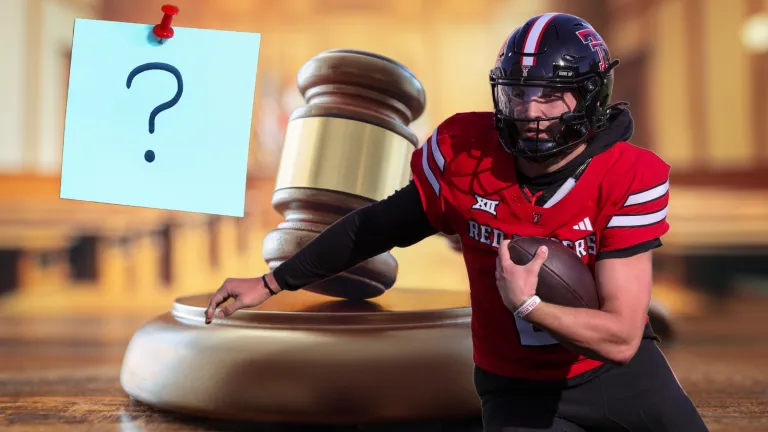
There’s an absolutely fascinating story unfolding in the NCAA regarding what I’ll call the Sorsby Situation. A young athlete named Branden Sorsby is a gambling addict by his own admission. He wagered tens of thousands on various games including some on his own team. Athletic organizations in general have long-standing rules against people involved in the games gambling at all, let alone on their teams.
The gambling situation is bordering on out-of-control in the United States and I’ve written about that a number of times before but it’s not really the focus of the Sorsby Situation. The issue here is that he was suspended for his gambling by the NCAA but the courts have now issued an injunction, potentially allowing him to continue his career at Texas Tech.
The Sorsby Situation in a Nutshell
Sorsby admitted to his problem when he entered a gambling rehabilitation center. Unlike the Pete Rose or Shoeless Joe Jackson cases, there is no dispute about his gambling. He fully admits his bets. Like in those other cases, the governing body ruled the player ineligible.
In the Sorsby situation he went to court to argue that while the trial to determine if the NCAA has the power to suspend him is pending, he should be allowed to play. The court agreed and he is now eligible to play this season. The trial isn’t scheduled until after football season, meaning he could play the entire year before judgment is rendered.
Will Sorsby Play if the Injunction Stands
The Sorsby Situation isn’t, in my opinion, really a matter of will he or won’t he. The other teams in the conference are already talking about refusing to play Texas Tech. The Big 12 is talking about their own suspension thus superseding the NCAA. There are any number of ways pressure can be applied to force Sorsby out and I suspect that pressure will be applied.
If I was a betting man, like Sorsby, I’d guess he won’t play a single game this season. The pressure will force him or the team to voluntarily drop out. That, however, isn’t really the issue here.
What’s the Proper Course of Action?
To me, the interesting part of all of this is the nature of the legal case. It is written in the bylaws that the NCAA has the power to suspend a player for conduct detrimental to the league. The question is if Sorsby has the right to play until the matter is formerly adjudicated in court.
Was his conduct detrimental to the NCAA? It is certainly apparent to almost everyone this is, in fact, the case. The NCAA made the correct decision but it hasn’t been proven in a court of law. The matter is still undetermined from a legal point of view. That’s what I find fascinating.
Let’s imagine you were charged with acting morally reprehensibly and your employers suspended you from work before the actual trial. Would that suspension be legal before judgment?
I don’t have any answers today, I find the Sorsby Situation interesting. What do you think?
Tom Liberman