Personal Responsibility – The Libertarian Ideal

ResponsibilityEarlier today I posted about a law recently passed here in a suburb of St. Louis, Missouri in which a person caught texting and driving will face maximum penalties of $10,000 in fines and ninety days in prison.

I immediately got into several discussions, both social media and face-to-face, about the merits of my ideas. My theory was that the real problem was Inattentive Driving and that texting while driving was only one example. That by passing a law very specifically aimed at this one kind of Inattentive Driving the municipality was opening itself to some trouble.

The idea is that an officer would be responsible for upholding the law. If a person was texting but the car wasn’t moving; they would be in violation of the law. Also, an officer would be obligated to write a citation for a less-distracted driver texting and not so obligated for a more distracted driver who say, had a wasp fly in the window and land in his lap (I speak from experience).

I argued that a law against Inattentive Drive was broader in reach and would allow law enforcement officers to use their judgment and common sense in handing out citations.

The thrust of most of the arguments against my method were two-fold. One was that of all the events that distract a driver it was texting that was the most likely to cause an accident and therefore the best bang for the buck. The other was that my law against Inattentive Driving left far too much discretion in the hands of the officer of the law. That laws needed to written so that there could be no confusion carrying them out.

In particular the second objection speaks to the very heart of the Libertarian ideal.

It is the bad apple spoils the barrel philosophy, the zero-tolerance philosophy, the mandatory minimum sentencing strategy. The idea is that we cannot trust individuals to make decisions therefore we must pass restrictions narrowly and take power away from the individual. Your daughter was thrown out of school for having a Tylenol? Not my fault, zero-tolerance. You were ticketed for texting while stopped in a traffic jam? Not my fault, just upholding the ordinance. You were given ten years for having a small amount of marijuana? Not my fault, it’s the law.

These kinds of laws are made with the best intentions but largely take us into a Libertarian nightmare. It seems self-evident to me that as we give people less and less responsibility they will be less and less responsible.

I suggest we give people more responsibility and if, and only if, they prove untrustworthy should we take it away. If there’s a bad apple in the barrel, then throw that one apple away. If an officer hands out a ridiculous Inattentive Driving citation using my broad law then bring in the officer for more training. If the officer persists, fire them.

Libertarianism works when people are responsible. People become responsible in one way. By being given responsibility and being held accountable for their actions with that responsibility. If they handle it well they deserve promotions, upwards movement into management where they will train others such responsibility. If they don’t; they will be trained, disciplined, and eventually fired.

The heart of my argument is that by passing Bad Apple laws we are lessening the likelihood for just outcomes by increasing the number of people in the world who do not know how to behave responsibly. I freely admit that passing broad laws opens them to possible misuse. However, I argue that narrow laws designed around the Bad Apple principle eventually result in a far more unjust society.

In the ideal Libertarian world everyone does what is right because doing what is right is in their long-term best interest. You don’t have to tell me that this world will never be. I realize this.

It just seems to me that if we want a more fair world, a more just world, a world wherein people behave responsibly and ethically; the path is not to micromanage people’s lives. It is to give people an understanding of what it takes to succeed and of how ethical behavior benefits all society in the long run.

If you want a strong society then give people responsibility, don’t take it away.

Tom Liberman
Sword and Sorcery fantasy with a Libertarian Ideology
Current Release: The Spear of the Hunt
Next Release: The Broken Throne
Texting While Driving – the Legal Issue

Inattentive DrivingOne of the municipalities here in my home state of Missouri just passed a law that would incarcerate people for up to 90 days if they are found guilty of texting and driving. Such texting laws have sprung up over the last few years in many states. I find this to be an example of legislation with the right idea but poor implementation. The problems are that the law covers a specific act and also doesn’t take into account various mitigating circumstances.

The entire state of Missouri bans texting while driving for everyone under the age of 21 although not for anyone older.

Here are my issues. The act covers specifically texting while driving but not anything else that could easily be a distraction. Eating, drinking, swatting unruly kids in the back seat, putting on your makeup, or jamming out on air guitar when Don’t Stop Believing plays on the radio (guilty). The other problem that my friend Lisa pointed out with a Facebook post was the idea of texting while the car is stopped in a traffic jam or at a long light.

This leads me into a Libertarian rant on the objective of a law and the actual legislation that is passed in an attempt to bring that law to the people. This is where everything often falls apart.

In this case what we want to stop is people not paying attention while the car is in motion, what is often called Inattentive Driving. Our legislatures, elected by us, often pass laws that do little to stop the underlying problem and end up causing more harm than good. I’m not opposed to laws against texting while driving; I just find it to be an exercise in futility. People will be inattentive in ways not covered by the law. It seems fairly simple to me that if you want to pass a law wherein people can be punished for driving in an inattentive fashion that going after the activity piecemeal is a bad strategy. Why not just make a law against inattentive driving?

An officer sees you driving inattentively for whatever reason and tickets you. You can take the case to court and argue with a judge or pay the fine because you were actually in violation. This is an example of a simple law with each case adjudicated by the individuals involved. Naturally we must take precautions against overly eager police officers but that is the case with the texting law. It’s certainly possible to cite a driver for the violation even if the driver isn’t actually driving at that moment, stopped at a light for example. Or to charge a texting driver while ignoring someone else being even more inattentive for a non-texting reason.

I find that more general laws are often more effective and more fairly applied. Laws that target very specific actions tend to be easily circumvented.

It won’t be long before people are driving fully automated cars and they should certainly be allowed to text, watch TV, take a nap, or just about anything else while the car is in motion.

One of the ways to lead a productive life is to determine the nature of the obstacle that confronts you before beginning to try to find a solution. If you do not understand the problem your attempts at a resolution are often doomed to failure.

In this case, the problem is Inattentive Driving, not Texting. Make a law that addresses the problem.

Tom Liberman
Sword and Sorcery fantasy with a Libertarian Ideology
Current Release: The Spear of the Hunt
Next Release: The Broken Throne

Garden of Eden, to Stay or Leave?

Garden of EdenI wrote a post about the nature of Satanists not long ago and in it I discussed their belief that Satan offered humans a real life outside the Garden of Eden when he suggested that Adam and Eve eat of the Tree of Knowledge. I wanted to explore the idea of Garden of Eden as it is understood from a religious perspective.

In the spirit of full disclosure: I am an Atheist. I don’t believe the Garden of Eden existed. I don’t believe God exists. I don’t believe Satan exists. I don’t believe that mankind started with Adam and Eve or that they had to make a decision about eating of the Tree of Knowledge. However, there are a lot of people who do believe that particularly story and this is what I want to discuss.

If you believe the story of Adam and Eve is true, then, facing a similar circumstance what choice would you make?

In the Garden of Eden man was created and tends the garden. For this duty man is granted a life of eternal ease, free of both good and evil. Man has everything provided for him. He is immortal. Adam and Eve frolic throughout the Garden of Eden in what those of a religious mind will tell is a Utopia.

God forbids Adam and Eve to eat of the Tree of Knowledge telling them that if they do so, they are doomed to die. He does not also tell them that all their children will be bathed in this sin and forever tainted and evil unless they ask forgiveness from God, Original Sin.

So, that’s the scene. You are living in a beautiful and fertile garden. Everything you want is there and you are not troubled by danger, death, disease, or wild animal. You are immortal. You will live forever and your one duty is to tend the garden. There are no books to read because knowledge is evil. You are a pet.

Satan comes along and tells you that the Tree of Knowledge, which has been forbidden to you by the master of the house, will free your mind to experience life but that this experience is not all good. There are many bad things outside the garden. That in order to experience the good in life beyond the garden you must be willing to accept the bad as well.

If you eat of the Tree of Knowledge you will know good and be able to enjoy it fully but also know evil and feel its pain.

What would you choose?

Herein rests one of my major problems with Judeo-Christian-Islamic philosophy. Not only has God created a couple of mindless pets so that he can enjoy watching them but he has placed the ability to become much more in their midst and forbid them from partaking in it. Any parent who place a toy in a room and tells their child not to play with that toy knows the result of such foolish behavior.

Even worse, because Adam and Eve make the right choice, they choose to live life fully rather than as pets of God, he punishes all of their children for eternity. This is not a God I would want to worship even if I thought for a moment he existed. This is a vindictive god who little understands his creation and merely wants slavering love with no actual thought behind it.

This is a vile creature. This is the thing that so many religious people worship. Not only do I not believe in your God but if he were to come forward and show me his existence I would tell him to go crawl back into his hole. I will eat of the Tree of Knowledge. I will suffer pain. I will lead my life on my terms, fully and completely. I reject your Garden. I reject your damnation. I reject your philosophy.

Tom Liberman

This Week in Stupid Headlines

Stupid HeadlineOnce again Motley Fool rises to the occasion. They are truly the King of Misleading and Stupid headlines. It’s interesting as they purport to be sound financial advisers. Would you take financial advice from someone who posts misleading information? I wouldn’t.

What is the story really about? Do I really need to explain the stupidity that is the headline? Why, yes I do!

The military is decommissioning about 350 Kiowa scout helicopters. They military thinks the upkeep on the machines and the training required for mechanics is not necessary. The article mentions other helicopters doing the job in its place and the cost associated with this; but conveniently forgets drone technology.

The article advises investing in defense companies that don’t make the Kiowa because someone else will have to provide the military with hardware that does this job.

There are reasonable points in the article. The helicopter is being decommissioned. There will have to be a replacement but to categorize it as a “Huge Mistake” and a way that investors can profit from it is utter nonsense.

This week in Stupid and Misleading Headlines brought to you, as usual, by Motley Fool.

Tom Liberman
Sword and Sorcery fantasy with a Libertarian Ideology
Current Release: The Spear of the Hunt
Next Release: The Broken Throne
The Dilemma of a North Korean Diplomat Abroad

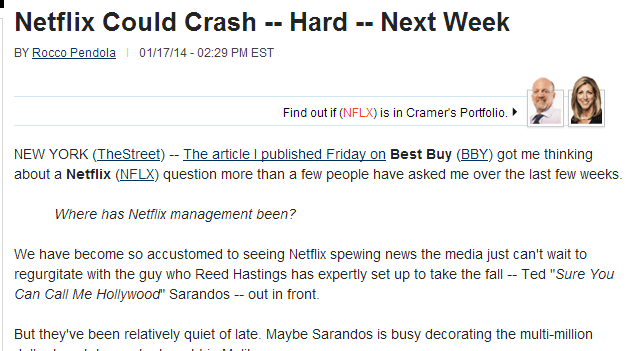
South Korea ExecutionI’ve been following events in North Korea although not particularly closely and came across this story today. My immediate reaction was echoed in the comments below the story and it brought forth some ideas I think worth examining.

I’ll recap for those who have not been watching closely. North Korea is probably the closest thing to a Totalitarian state that exists in the world today. This is a state where the government controls everything from the big to the small. The historical examples of this sort of government include the prominent Fascist states of Nazi Germany and Italy in the late 1920’s through the end of World War II. Stalinist Russia after the war also applies.

This need to control every aspect of life generally leads to horrific persecution of anyone who disagrees with the regime that wields power. Much of the Constitution of the United States attempts to prevent such a government from arising here.

In any case, the situation in North Korea is that the new ruler has consolidated his power by removing one of the most powerful men in the nation. This man was executed along with several of his allies. Other allies are currently serving as ambassadors elsewhere in the world and have been recalled to North Korea.

This recall got me thinking. My immediate reaction was that the diplomats should refuse the recall and stay wherever they are assigned. Several people in the comments thought the same thing although the immediate objection was that those diplomats, if they refused the recall, were sentencing their family and friends to certain death.

It’s true that the family and friends of the diplomats might be executed anyway. Even if the diplomats return to North Korea they might be subject to horrific torture along with their families. However, if they don’t return they are essentially abandoning their family, their friends, and their country.

I started to think about people like Erwin Rommel who was forced to commit suicide so that his family would not be arrested and tortured. I started to think about the way despotic regimes use the concept of honor and loyalty against good men, good women. What choices do we have in life against those who understand what it means to be honorable but who do not make any pretenses of being so themselves?

Anyone who has read my novel the Sword of Water, knows how Jon Gray handled such a situation but perhaps his methods are not always available in real life. I won’t spoil the book, you’ll have to read it yourself, but Jon has a certain style when it comes to things like that.

I’m not even really asking what you would do, just contemplating my own life. My own reaction if faced with such a terrible decision. Abandon your friends and family to certain horrors or go back and face them yourself knowing you probably won’t save your family anyway. What would the remaining years of my life be like if I fled, saved myself? Would I ever be able to forgive myself?

It’s a shame there are people like Kim Jung Un and nations like North Korea. I yearn for a world where people are allowed to simply achieve without strings pulling them. Where we’re not so concerned with everyone else. Where nations and people want what is best for everyone.

I guess that’s all I have to say about that.

Tom Liberman
Sword and Sorcery fantasy with a Libertarian Ideology
Current Release: The Spear of the Hunt
Next Release: The Broken Throne
Was the Biblical Satan a Libertarian?

Ten Commandments StatueI came across an article about how a group of Satanists want to put up a monument outside the Capitol Grounds in Oklahoma City. The Oklahoma legislature placed a Ten Commandments statue on the grounds in 2012 and now the Satanists want equal representation.

This comes as no surprise to me. It’s only natural that when one religious group gets to build a monument on public grounds that everyone else will want to join in on the party. The article did lead me into an investigation of Satanism as a whole and I was particularly struck by the beliefs of what are called Theistic Satanists.

There are other forms of Satanism but Theistic is the commonly associated ideology.

They believe that Satan is an actual entity to be worshiped. This is somewhat in lines with Christianity where Satan is certainly a real figure although to be loathed rather than loved.

A Theistic Satanist believes strongly in the power of self and the pursuit of knowledge. The biblical story of Satan has him exhorting Adam and Eve to eat of the Fruit of Knowledge so that they can fully understand and pursue their lives rather than live sheltered half-lives in the Garden of Eden. Very Libertarian indeed. They do not know evil and therefore cannot truly understand the nature of their lives.

They also tend to think that Satan encourages self-improvement. That Good and Evil are defined as ideas that benefit or harm mankind. This contrasts with the more biblical view in which Good and Evil are defined by submission or rebellion from God’s will. This also is line with ideals promulgated by Ayn Rand who wants us to do our best in everything and that by achieving we make life better for our society and those around us. They argue devotion to God’s will is meaningless to the true definition of Good or Evil. That defining Good as being submissive to God undermines individuality and a person’s best interests.

The Bible often equates evil that happens to people as being inflicted by Satan and Satanists view these as tests which make them stronger. That overcoming adversity is the fire that makes us strong and these challenges are brought on by Satan.

Many Satanists believe in magic and some in animal sacrifice although I see no particular connection with a Libertarian in either regards.

Of course, I think it’s all nonsense. I’m an Atheist. God is not real nor is Satan. Our lives are what we make them. Tests in life come through the natural course of events. Our parents will die, our friends and family will face illness and misfortune. Adversity is the price of life and not brought on by any outside agency.

As to the monument? I suppose if you allow one religion to mount something you’ve got to allow the rest.

I suppose this is what I get for reading so many news stories.

Tom Liberman
Sword and Sorcery fantasy with a Libertarian Ideology
Current Release: The Spear of the Hunt
Next Release: The Broken Throne
When Nostalgia is Stupid

NostalgiaThe Save button vexes me, or at least the icon for the Save button.Save Button

I turned on my computer at work this morning and was once again confronted by the diskette save button that seems ubiquitous on most software. I’m also annoyed by the designation of the C: drive.

Why is the image for the save button a diskette? (no, it’s not a floppy disk, that’s something else, go look it up, I’m too lazy to show you).

There was a good reason the save button was a diskette. The diskette was, for a short period of time, the way we saved files. It could hold up to 1.44 MB of data and every computer in the world had a B: drive which could read from the diskette. Yes, the B: drive. The reason it was the B: drive was because the aforementioned floppy disk was the A: drive. The internal drive eventually came along and was called the C: drive.

You may have noticed that there are no drives for floppy disks or diskettes anymore. That we now save files either on the network, the web, or a removable USB drive. The diskette no longer has a place in the world. There is no A: or B: drive on your computer but there is certainly a strange little icon we use for saving things. I’ve often heard it referenced as “The little TV set button”.

People in this world have a fondness for something called nostalgia. We remember past events with what are called rose-colored glasses. This is something we see every day in the world and it’s not necessarily a good thing.

Wikipedia tells us: The term nostalgia describes a sentimentality for the past, typically for a period or place with happy personal associations.

I’m of the opinion that a over-reliance on nostalgia can be a negative influence on life. When we base our behavior on misconceptions about the past it is bound to make our lives worse.

As an example; there were good things about simpler times in the 19th century but there were also awful things as well. Women had few if any rights. Racism and anti-Semitism were the norms not the exceptions. If we yearn for a simpler time without understanding that we also give away the ability to travel long distances easily, eat oranges outside warm regions, have cold drinks, and many of the other things modern society offers us, we do a disservice to ourselves.

My point in all this? I want to end the Save button icon as a diskette. It makes no sense to the modern users and thus can cause confusion. It’s bad in general. Death to the Diskette!

P.S. Can someone please make the C: drive the A: drive and end that madness?

Tom Liberman
Sword and Sorcery fantasy with a Libertarian Ideology
Current Release: The Spear of the Hunt
Next Release: The Broken Throne
No Mistletoe Sales without a Permit – The Madison Root Story

Madison Root and her MistletoeAnother major news story just came down the pipe and I can’t stop myself from writing a blog even though it’s past my bedtime (10:00 p.m.).

Young Madison Root decided to set up shop in a Saturday Market in Portland, Oregon. She was selling her hand-picked mistletoe in the hopes of getting enough money to pay for her braces. She was told to pack her entrepreneurial spirit up and go home, she had no permit.

Judging by the comments I’m reading below the story most people think she was badly wronged. That she should be allowed to sell her wares in a public market. If beggars are allowed to beg why shouldn’t an adorable little eleven year old girl be allowed to sell her lovingly picked mistletoe?

Well, call me Dr. Curmudgeon (I didn’t spend four years in Curmudgeon school to be called Mr. Curmudgeon) but I think the security guards at the market did absolutely the right thing.

When the Girl Scouts setup their racketeering operation (you heard me right) at the local supermarket I’m quite confident they’ve done all the paperwork necessary to be there. The same for the Salvation Army and the Fire Department with their boots. I don’t like it, I don’t want to be disturbed and hit up for money when I’m tired and hungry but I put up with it because I know they’ve followed the rules.

Do we want unlicensed stands at every corner? Do we want anarchy? Do we Madison!? Well, do we?

I hate to be the bad guy (not really) but I don’t want an army of cute girls selling me bracelets, mistletoe, cookies, or anything else. If you need permission to set up shop in a market then go to the trouble of getting permission. Don’t just show up and go whining to the local television station about how unfair is life.

There are reasons we need permits to hawk our wares in markets. Legitimate vendors who go to the trouble of getting permission to sell their goods should not have to deal with some Madison-come lately who steals their business.

Call me what you will in the comments, I can take it!

Tom Liberman
Sword and Sorcery fantasy with a Libertarian Ideology
Current Release: The Spear of the Hunt
Next Release: The Broken Throne

Stealing Electricity in Georgia

Nissan-Leaf-Fast-ChargeI just read an interesting story about how the owner of a Nissan Leaf plugged his car into an outside outlet of the Middle School where his son was playing in a basketball game. He did not have permission from the school administrators to do so although he had not been denied either. There was no one around and he plugged in.

A police officer spotted the activity and took his information. Eleven days later an officer arrived at his door and arrested him. He was kept in jail overnight and released the next day.

The story didn’t indicate if the police did an investigation and if the school administration wished to press charges. It’s difficult for me to believe this was the case but it is possible. The school might have wanted to set a precedent.

Twenty minutes of electricity is the equivalent of about five cents. There are probably few among us who have not plugged in a device at an airport, a friend’s house, a coffee shop, or any other place where electrical outlets are available. The difference between the incidents is, I think, that the outlets at airports and restaurants are intended to be used by customers. That’s their purpose. The business places them there to be used by patrons. In this case that was not the intended purpose of the outlet.

That being said, I’m not convinced that arresting Mr. Kamooneh was the appropriate course of action. Perhaps a warning was in order. Stealing five cents doesn’t generally rise to level where the police would normally become involved. Stealing is stealing, I agree. I don’t think the officer was out of line to question Kamooneh.

Certainly the resources necessary to pick up Kamooneh, deliver him to prison, house and feed him overnight, and process him cost far more than the theft.

On the other hand I certainly wouldn’t want a neighbor plugging into one of my outside outlets to power their holiday lights.

This is the sort of case where I think everyone would have been a little better off with some common courtesy. Kamooneh should have gone in and asked someone if he could plug-in his car. I’m sure the answer would have been yes. The officer should have told Kamooneh to go get permission and unplug until he had done so.

A little decency, courtesy, and some manners can go a long way in life. I read a lot of stories looking to find fodder for my blog and it seems to me that more often than not if people had just shown a bit of decency and kindness at the first sign of trouble that the ensuing disasters could have easily been avoided.

What do you think? Criminal or not?

Tom Liberman
Sword and Sorcery fantasy with a Libertarian Ideology
Current Release: The Spear of the Hunt
Next Release: The Broken Throne

Star Trek Replicator – What it Means for Society

ReplicatorI wrote a post yesterday about how I thought unemployment was based upon money rather than there not being jobs to do. The idea being that there is plenty of actual work to be done, it is a matter of being willing to pay people to do that work. That if there were enough money to pay people, the only unemployment would be those who chose not to work.

In the Star Trek universe they have a device called a replicator. This device will fabricate what you want out of base elements. You want something to eat? The replicator provides. You want something off which to eat it? The replicator provides.

Today we are in the early stages of creating a replicator. We call it a 3D printer. This device uses base element to print layer after layer of an object until it is complete. These printers are soon going to be on space missions to print food, much in the same way the replicator worked on Star Trek.

I’m going to take a little leap ahead here. What if the material for these devices was incredibly cheap? What would that mean for society? For employment?

The Star Trek universe does not explore these ideas but I’ve thought about them quite a bit.

One of the arguments we hear against entitlements is that people who do not need to do anything, don’t do anything. If people are given things in life then they don’t understand what it is to work. This is a philosophy espoused to a certain degree by Ayn Rand and I largely agree with the principle of the matter.

If we give people food and shelter they will then be unmotivated to do anything. They will lay about getting fat and eventually they will die. They will be endlessly entertained by their Holodeck wasting their life away. That society will suffer from all these people doing nothing.

Another idea is that if people are freed from the massive effort of providing food and shelter they can use their lives in far more productive ways. They can get an education, learn an art, use their minds and their time to improve society.

So if the replicator is coming, if cheap food, cheap energy, and cheap shelter are soon to be available to all (and I think they will be), and if robotics will free us from mundane tasks; what is the looming future? Will we become a society of do nothing people or a society of great achievers?

I think it all depends on the individual. It all depends on how we choose to educate and motivate people. People who are motivated to achieve will do so at levels we cannot imagine. Productivity has skyrocketed and will continue to do so as automation increasingly enters our life. People who decide to lay around doing nothing will be allowed to do so because of amazing technology created by the achievers.

The most important thing to understand is the true meaning of life.

Happiness is derived from relationships with friends and family and achievement. Happiness is not derived from sitting around doing nothing all day. That only makes us feel miserable in the end. We are happy when we accomplish something, when we overcome a difficulty, when we achieve.

The joy in my life comes from teaching a good class, helping create a good website, helping a company improve their Search Engine results, finishing a session at the gym, running a good Dungeons and Dragons game for my friends.

Let us use Candy Crush as an example. This game taps into the human desire to achieve. Games that sell are those that allow us to achieve by overcoming obstacles. They are not too hard and not too easy. They have low-level, moderate level, and high level goals. When we achieve them we are happy.

This is life.

The Automation Age is coming. People will eventually be free from spending their lives finding food and shelter. If we help people understand that the real way to happiness is through achievement this will become a Utopia. Don’t be fooled though, we could also become an indolent society, trapped in holodecks, overweight, uneducated, feeding our base desires, and miserable because of it.

My advice, get out there and achieve!

Tom Liberman
Sword and Sorcery fantasy with a Libertarian Ideology
Current Release: The Spear of the Hunt
Next Release: The Broken Throne
Amazon Drones, Luddites, and John Maynard Keynes

Amazon DronesThe news story that is catching everyone’s eye this week is from an episodes of 60 Minutes where Amazon owner Jeff Bezos declared that the company is contemplating using drones to deliver packages to customers.

This idea is frightening to a number of people as explained by this article.

The theory is that technology will replace jobs and there will not be enough work to go around. The idea first came to the forefront in the early 19th Century when textile workers began protesting against labor-saving machines like stocking frames, spinning frames, and power looms. This movement eventually became known as the Luddite movement.

A famous economist by the name of John Maynard Keynes promulgated the idea of technological unemployment in the early 1930s. This idea has waxed and waned over the ensuing decades but usually comes to the front when unemployment is high.

Judging by the comments I read; it seems many people today are more than happy to embrace the Luddite argument of technological unemployment. I don’t and I’m going to tell you why.

It’s absolutely true that technology ends jobs, certain kinds of jobs. If tens of thousands of drones are delivering packages and mail all over the United States then we will not need people to drive trucks and deliver goods. What we will need is mechanics, electricians, engineers, and designers to envision, design, build, and maintain the drones.

There was a time when owning a stable was very profitable but the advent of the automobile changed all that. There was a time when being a Chandler (candle maker) was a necessary and important function in society. The same for a blacksmith. Technology ended these jobs but unemployment did not skyrocket. New jobs were created and often better jobs. Skilled jobs that required an education but paid well. Jobs that were interesting and fulfilling.

I think the biggest misconception is that there isn’t going to be any work to be done. Look around. Look at your house, your street, your lawn, your computer network, a nearby bridge, a park, a hiking trail, a power line! Look in any direction and tell me you don’t see work that needs to be done. There is far, far more work to be done than there are people to do it.

Why do we have unemployment? Money. There isn’t enough money to pay people to do the necessary work and things fall into disrepair.

When we free people from delivering packages we make them available to pour concrete, to create art out of lawns, to make beauty where ugliness currently resides.

Will there be a transition as we move into the Automated Age? Absolutely. People who don’t have an education will have an increasingly difficult time finding a job. As automation takes over there will be fewer and fewer unskilled labor positions available.

But the positions that are available will largely be more rewarding and make society a better place. With automated vehicles police officers will focus on crime rather than traffic control. Roadside accidents will vanish, thus reducing the need for emergency vehicles and services. This will lower taxes substantially and reduce the size of government. Car insurance will shrink to nothing. For every awful forecast a Luddite threatens I promise wonders.

I guess I’m saying you can fear the future, fight against it, rail against it, shake your fist in rage or you can revel in the amazing glory that it will bring. The freedom that it will bring. The beauty that it will bring.

A people freed from the mundane and able to create. Robots that make life safer, better, easier, and cheaper.

Not enough work? I don’t think so.

Tom Liberman
Sword and Sorcery fantasy with a Libertarian Ideology
Current Release: The Spear of the Hunt
Next Release: The Broken Throne
Correlation does not equal Causation – or how the Oarfish predicted an Earthquake

Correlation not equal to CausationI was reading a rather silly article today when I stumbled across a great comment about that story and the immediate and negative response that comment received.

The article cited an instance where a pair of rarely seen oarfish washed up along shore in southern California and how people took this to be a sign of impending disaster. The article cited a number of instances where animals exhibited unusual behavior immediately before some sort of natural disaster.

The comments on the article immediately began. Most of these were anecdotal stories about how pets have behaved strangely immediately before a disaster and how this had saved someone’s life. Among all these comments was a missive that was a fine example of laconic wit and which made me very, very happy.

Correlation does not imply causation.

The point of this phrase is that we as humans often see events that happen sequentially as being related to each other in a cause and effect manner. The reason we see this relationship is because there is often, in fact, such a relationship. When my finger pushes down the letter “p” on the keypad, said letter appears on the screen. This is an example of Cause and Effect.

It is vitally important to understand that Event A which occurs immediately before Event B is not necessarily the cause for Event B. Often the two events are completely unrelated.

The reason this is so important to understand is that if you mistake correlation with causation you are going to spend a great deal of time and effort futilely trying to make your life better. If you do not fully understand what it is that caused the thing you are trying to fix, your ability to resolve the problem is deeply inhibited.

This is one of the main ideas of Critical Thinking. The lack of critical thinking is what drives bad decisions in life. Bad decisions in life lead to less happiness for you and those around you.

We have all been victim of the idea that correlation equates to causation and we’ve all wasted time trying to fix a problem in completely the wrong way. What’s important is trying to assign accurate causation to the events of our lives.

The next time you encounter correlated events take a moment to examine them for causation. Get in the habit. It will make a difference in your life.

Each time you practice your Critical Thinking skills you will get better at doing it. Now, repeat after me: Correlation does not equal Causation.

Now, off you go.

Tom Liberman
Sword and Sorcery fantasy with a Libertarian Ideology
Current Release: The Spear of the Hunt
Next Release: The Broken Throne

Do You Support Presidential Term Limits?

Term LimitsI read an article just a moment ago that suggested it was time to repeal the 22nd Amendment and remove the two-term limit to the office of the President of the United States. The comments indicated that the vast majority of people not only opposed repealing the amendment but wanted to institute term limits on Congress and the Federal Judiciary.

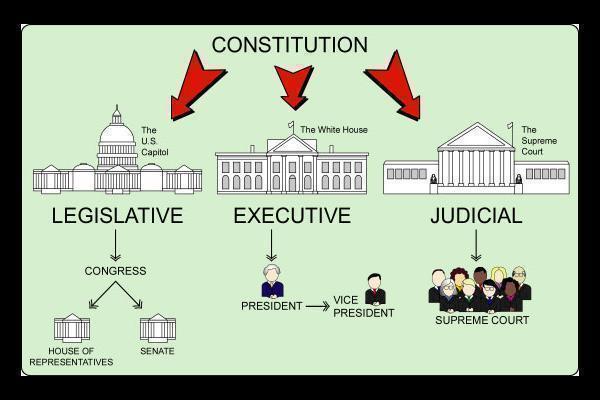
Besides the 22nd Amendment, which was ratified in 1951, there have never been restrictions in the Constitution of the United States that limit the amount of time a politician or judge can serve.

States have a variety of term limit laws with 36 states having gubernatorial limits while fifteen states limit the amount of time state representatives can serve. Additionally the 22nd Amendment was ratified by 41 states with 2 states rejecting the amendment and a further 5 states not considering it. As a bonus trivia question for my well-educated and thoughtful viewers, why does the total of states not reach 50?

Those who argue for term limits generally suggest that politicians become corrupted upon being repeatedly elected and garner a dangerous amount of power. That they do as they desire without regard to the electorate as would a tyrant.

Those who oppose term limits largely argue that voters are the ultimate factor in how long a president serves and often quote George Washington who said, “I can see no propriety in precluding ourselves from the service of any man who, in some great emergency, shall be deemed universally most capable of serving the public.”

They also argue that artificial term limits change the way a president governs. That last term office holders have a difficult time building coalitions and accomplishing anything. That last term office holders can effectively do whatever they want without worry of repercussions. That term limited and popular politicians will simply end up with a rotation system where allies are continually elected as proxies. This particular idea reached its highest level of absurdity when Lurleen Wallace was elected governor of Alabama in 1966.

Personally I am for repeal of the 22nd Amendment and the removal of term limits in general. In my opinion term limits are largely designed to correct the problem of elected officials accumulating too much power. That these limits are merely a substitution to our responsibilities as voters in a Representative Republic. That such artificial solutions solve nothing and, in many ways, make the situation worse by giving the illusion of security.

The duty of every voter is to cast their ballot for the most qualified candidate. The candidate that will best serve our nation, our state, and our community. If a politician fails to do so, we have recourse. If we fail to avail ourselves of said recourse then no law can save us.

What do you think?

Tom Liberman

Child Endangerment in Arizona and the Amish

Amish Hershberger Child EndangermentThere are two stories in the news that bring forward difficult questions about what responsibility the state has over children. In one case a couple imprisoned three young girls and in the other parents are refusing medical treatment for their daughter.

In both cases the state stepped into matters and the public reaction is relatively predictable. In the Arizona case almost everyone agrees that the mother and step-father needed to be arrested for keeping the girls locked in the house while in the Amish case the majority seem to think it is the right of the parents to deny potentially life-saving medical care to their daughter.

I’d imagine that almost all of my readers agree with the state interceding in the Arizona case but opinions will be more divided in the Amish case. Both situations involve parents behaving in ways that appear to be at odds with what is in the best interest of the child.

In one situation girls are apparently imprisoned and the other a girl is essentially being allowed to die when the medical community thinks she likely could be saved via chemotherapy.

The Amish case in particular is difficult because Sarah Hershberger might die even with treatment and there is a chance she could live without treatment. There are no guarantees either way.

I suppose Fernando and Sophia Richter might argue that they were protecting the girls from the dangers of the outside world, that they were home-schooling them, that the girls were locked into the house in punishment for particular misdeeds, that as parents they have the right to make these rules and enforce them.

The bigger question, from a Libertarian perspective, becomes: When does the government have the duty to step into a situation and protect children from their parents?

I think we can all agree that parents do no have absolute control over their children. We can also agree that a child does not have absolute control over their own decisions. Sarah doesn’t like chemotherapy but what if she doesn’t like going to bed at 10:00 p.m.? Perhaps a ridiculous comparison but the reality is that we frequently don’t allow children autonomy over their lives.

So, when do parents lose their rights? That’s the question.

What if the Hershberger case the medical community said there was a 99% chance of survival with chemotherapy and a 99% chance of death without? What if the odds were 50/50?

What if Andy Hershberger didn’t believe in antibiotics and Sarah got a cut. It became infected and against doctor’s advice antibiotic were not applied. What is sepsis set in and she died? Would that be endangerment? Should the state step in and apply antibiotics?

I don’t have any answers for you today. I think the courts must make these difficult decisions on a case-by-case basis. These decisions then go into effect. If we don’t like these decisions we can vote out the legislators that appointed the judges and in many cases the judges themselves.

One thing I don’t like is people pretending these are simple decisions. That the line is firmly drawn and that those that disagree are wrong or evil.

These cases involve children who are being abused and potentially being allowed to die unnecessarily. This brings out passionate debate and that’s a good thing. Try not to let your passion become anger and hate.

Tom Liberman
Sword and Sorcery fantasy with a Libertarian Ideology
Current Release: The Spear of the Hunt
Next Release: The Broken Throne

Instant News and the Issues it Creates

MistakesI just read an update on an ongoing crime story that reminded me that this instant news society we now live in thanks to the internet sometimes carries with it significant issues.

There is such a rush to get a particular news story distributed that the news outlets don’t wait to get a complete story. They immediately publish the story even with only partial information. Even if the main news outlets waited there are a plethora of bloggers like me who want to jump ahead with a story. More than once I’ve reported on news that later turned out to be at least partially inaccurate.

I do my best to immediately update any story which I’ve reported incorrectly but that doesn’t mean the people who read the story also read my correction. This is one price we pay for the luxury of getting immediate information.

People are clearly interested in news. That much is undeniable. People want to read about the story not as soon as it happened by while it is still happening. This being the case we can’t expect media outlets to wait on stories while their rivals go ahead. This, naturally, leads to errors. Stories are reported that are not true. Hoaxers take advantage of the immediacy of news to play games.

Sometimes honest mistakes happen. Sometimes people with agendas lie to reporters and mistakes make their way into the story. People like me unknowingly repeat those inaccuracies. People like you read the information and repeat it to your friends.

Where does that leave us?

It leaves us with a lot of misinformation out there. The amount of misinformation is growing and I don’t see any way to stem the tide. With so much misinformation out there the burden falls to each of us to verify the original the story as best as is possible. We must continue to follow the story and evaluate new information with a critical eye.

The tendency to leap to judgment must be tempered. I don’t think there’s anything wrong with looking at the facts as they are currently understood and making a decision based upon them. What’s important is a willingness to reexamine the situation when new facts arise or old facts prove to be false. This is what is difficult. People do not like to admit mistakes and will defend an original opinion in the face of facts that no longer indicate as much.

In short, we must avoid being defensive about our positions and listen to opposing opinions, evaluate facts with an open mind, be willing to admit errors, and not to gloat when we prove to be right and our opponent wrong.

Anyway, something I was thinking about.

Tom Liberman
Sword and Sorcery fantasy with a Libertarian Ideology
Current Release: The Spear of the Hunt
Next Release: The Broken Throne

Stadium Collapse or Misleading Headline?

Stadium Collapse BrazilI’m tempted to create a series of posts entitled “Misleading Headlines” as the practice of putting headlines on stories that sensationalize articles to the point where they are misleading is becoming all the more common. I could write a daily post about ridiculous, attention promoting headlines from the online financial adviser Motley Fool.

In this case there was a story about a stadium collapse that caught my eye because of a comment a friend made over lunch the other day.

I’m a football fan and by that I mean a soccer fan. The World Cup is approaching and it is being held in the football mad nation of Brazil. The Brazilians are arguably the most successful national team in the history of soccer and having the World Cup played in their nation is a matter of tremendous local pride.

Back to that lunch. My friend heard that there were pollution problems in Brazil associated with upcoming 2016 Olympics and a bit of research on my part showed that they do have considerable issues in regards to fecal matter in the various waterways that will serve as venues for some sports in the game.

When I read about the “Stadium Collapse” I thought to myself that this was another example of problems within Brazil associated with upcoming sporting events.

The article was updated and in reading it I learned that a construction crane fell. This then caused a chain reaction that tore down part of the roof and a scoreboard in the stadium. While the incident is horrible and two people were killed it’s hardly what I would call a “Stadium Collapse”.

A crane fell on a building and caused some damage. That’s what happened.

Anyway, for those of you who thought, as I did, that a stadium had actually collapses, that’s the real story.

Stay tuned for more misleading headlines!

Tom Liberman
Sword and Sorcery fantasy with a Libertarian Ideology
Current Release: The Spear of the Hunt
Next Release: The Broken Throne

Offended by a License Plate

Offensive License PlateI just read a story that isn’t that big of a deal except that it happens to have taken place here in my beloved Show Me state of Missouri. A woman was offended by her state issued license plate.

Take a look at the image and see if you can figure it out and then read on.

According to the offended Missourian it reads – Whore Eight Times.

I thought it read Who Rate X?

I’m on record as saying words have power and I will not deny that there are combinations of randomly generated letters and numbers that could and should cause offense. Not many people want a license plate that has truly offensive words on it. The state attempts to avoid this and even refuses to allow relatively innocuous license plates because they might be misconstrued.

In this case the woman could have paid $17 to get a replacement plate but instead, over the principle of the matter, took it to the local news station. The bad publicity eventually got the state to waive the fee and issue a new plate.

The woman claims that people were yelling offensive terms at her when they saw the plate and therefore it was up to the state to replace it. Again, I don’t think this is that big a deal but why should I have to pay for the cost of replacement over something that isn’t blatantly offensive? Someone’s $17 in taxes for the state of Missouri went to cover that replacement.

In addition I’d like to address people who make fun of other people over a license plate. It’s like when you’re a kid and someone makes fun of your name. It’s a state issued license plate. It’s the name you have. When I was ten years old a fellow who happened to have the name Lipschitz provided short-lived amusement. By the time I got to High School it was pretty clear to me and everyone I knew that making fun of a person’s name was juvenile.

So what can we take from all this? People who make fun of random letters on a license plate aren’t worth worrying about. People who tease you because of your name aren’t worth thinking about. They’ve got their own problems. In addition, people who worry about non-offensive things in their life have bigger problems.

Don’t sweat the small stuff.

Tom Liberman
Sword and Sorcery fantasy with a Libertarian Ideology
Current Release: The Spear of the Hunt
Next Release: The Broken Throne

Are you Still Paying for TV? Why?

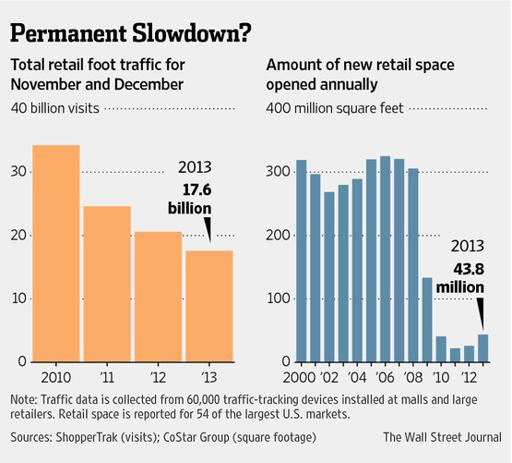
Cable TV SubscribersI just read an absolutely fascinating article from the financial world about how the television business is having a dismal year and the future looks bad.

The reason I found the article fascinating is that it completely agrees with everything I’ve been saying about those who make content and those who deliver it to the consumers. Here’s a hint for anyone that wants to be my friend, just tell me I’m amazingly smart and always right!

Massive ego aside, I did want to take a quick look at what the metrics from this article mean about our future consumption of content. What I think is happening is that there is a growing separation between those who create content and the companies that distribute it to us. In the past these two industries were often combined. The networks, studios, publishers, and labels created the content and delivered it to us.

With wireless internet becoming more universally available and with devices that can take advantage of that medium becoming almost ubiquitous we are seeing a trend where people consume content when they want and where the want. That content is no longer tied to a provider.

I’ve been hammering away for years that the major content creators should simply give up on delivering content. They should give their content away for free to the providers and get revenue each time someone consumes content.

Naturally there has been reluctance to accept this business model. The content creators had huge revenue streams through their delivery arms.

What is happening now is that people don’t want to pay for access and subscribers are falling. They want to pay for individual items they purchase. We don’t pay to have access to the grocery store, we pay for the items we buy. As times goes on fewer and fewer people will have dedicated television or internet devices. All media will be delivered electronically to whatever device we are viewing at that moment. We will pay for this by watching advertisements and possibly some monthly fee. Advertisers will pay the content providers a certain amount per view. The content providers will then pass along a share to the content creators.

As it stands, when I see my favorite shows being pulled from Hulu, my favorite sporting events being pulled from ESPN3 I get angry. However, I see a bright future for me and others who enjoy content. No longer will we be tied to a service. I will watch what I want, when I want. Those that provide popular content to the largest audience will get the lion’s share of the revenue.

The content creators will open their vast libraries to Hulu, Netflix, ESPN3, and other providers that will arise in the future.

New content creators will arise, regular people who write their own amazing Sword and Sorcery fantasy novels for example! People will consume what we want at a reasonable price.

There will be more success stories like Felicia Day. Regular people will be able to showcase their talents directly. More content, more creativity, more variety, more goodness!

Children will dance in the streets. Dogs and cats will live in harmony. The Cardinals will win the World Series every year (darn you and your beards; evil Red Sox).

Tom Liberman
Sword and Sorcery fantasy with a Libertarian Ideology
Current Release: The Spear of the Hunt
Next Release: The Broken Throne

Privately Funded Mars Mission from Dennis Tito – Not so Private

Inspiration MarsNot that long ago a fellow by the name of Dennis Tito proposed a privately financed mission to send a pair of travelers to Mars and back. I was opposed to the project in principle because I prefer robotic missions to manned missions for a number of reason.

My opposition stopped short of saying he shouldn’t go ahead with the project. I felt that if Tito wanted to spend his own money or raise said money from Crowd Sourcing then it was his to spend. That the publicity of the mission might do some good.

Well, the truth comes out. Tito now admits without NASA technology and government money the mission will not go forward. He tries to shame the government into funding his mission and pretty much tries to shift any blame for the mission not taking place to a reluctance by the government to spend your tax dollars.

Tito claims that without the government money he will go ahead with another plan that will launch in 2021. I’m not holding my breath.

The reason I’m posting this update is for those who were greatly enthusiastic about the original story but will not have followed subsequent events closely. It’s a good lesson for all of us. When we hear grandiose schemes we are naturally excited. The idea of doing great things, of participating in such events, is very attractive. I’m not opposed to dreamers and those who support them.

That being said, I’m a pragmatist at heart. It’s great to dream big but it’s vital to work out the details.

A vast quantity of our tax dollars were wasted when President George W. Bush laid out a scheme for a manned mission to Mars and a Lunar Base that was completely unrealistic. At least in this case it’s Tito’s money, not mine.

It seems to me that one of the major problems that we face in the United States is not lack of dreamers, we have more of those than ever, but lack of practical doers. Everyone offers up amazing plans to fix everything and no one does any of the real work necessary to make them happen, or even takes the time to come up with a realistic plan of action. It’s enough merely to promulgate an idea. If that idea doesn’t come to fruition then it’s easy enough to blame someone else.

The next time you hear some amazing story from Tito, Elon Musk, your neighbor, your representative in Congress, or your favorite talking news head, well, take a few minutes to do some research and find out what it will take to make such a plan become reality.

Just a suggestion.

Tom Liberman
Sword and Sorcery fantasy with a Libertarian Ideology
Current Release: The Spear of the Hunt
Next Release: The Broken Throne

Taxed by Miles Driven – An Oregon Proposal

Gasoline TaxThere’s an interesting idea being tested in the Beaver state of Oregon and it has the potential to have a negative impact on me. The state has started a pilot program wherein drivers will pay a tax of 1.5 cents per mile driven instead of the 49.5 cents/gallon they currently pay in taxes. This includes the 18.5 cents/gallon federal tax.

The reason for this idea is that cars have become significantly more fuel-efficient in the last twenty years and that has greatly reduced the revenue generated by gasoline taxes. Adjusting for inflation it seems as if the revenue stream has dropped by about 40%. The money from such taxes are supposed to be used to pay for both the upkeep on existing roads and bridges and any new construction.

According to most surveys, the roads and bridges in the United States are in abysmal condition and that is a dangerous situation for anyone who travels on them.

The reason this method of taxation has a negative effect on me is because I own a Prius and get about 45 miles to the gallon. This means I fill up my tank about half as much as someone getting 23 miles to the gallon. Thus I pay about half the Missouri gasoline tax (35.7 cents/gallon) as my fellow Show Me state brethren.

The new system means that I would pay exactly the same amount as someone who drove an equal number of miles in a year.

As a Libertarian I’m often criticized for not wanting any government but that is an over-generalization. I think roads are one of the most important services the government provides and I think it is only equitable that I pay for the use I get from them. Not only my own driving but that of goods that are shipped over them to the stores I frequent.

However, this new per mile method doesn’t take into account the weight of the car which is a hugely important factor in damage to the roads. Lighter cars do far less damage to the roads than do heavier vehicles, particularly trucks. Now, roads are damaged not only by heavy vehicles but also by weathering and even the government is going to be hard pressed to find  a way to tax the weather (although I wouldn’t put it past them).

So, what is an equitable solution? I think Oregon is going in the right direction but it could easily be a multiple of the miles driven by the weight of the car. It seems like a formula would not be difficult to derive.

We all like our roads and benefit from them in many ways. The lifestyle we lead is in no small part based upon the transportation system in the United States. It is in our best interest to maintain it at peak efficiency.

All taxes should be based upon the service that government provides. If my Prius does X amount of damage to the road then I should be taxed X with Y added for the general weathering damage. People who drive more, who use heavier vehicles, should be taxed more than those who drive less or not at all.

This is an important argument in the Libertarian arsenal. We are not against taxes but we think that taxes must be justified by expenses. If the gasoline taxes, if all taxes, are designed to generate exactly the revenue necessary to maintain that particular service I will gladly pay them.

I applaud Oregon’s effort, which faces a number of tests including how to determine the number of miles driven and miles driven by out-of-state visitors. The idea is a move in the right direction, let’s see how the implementation goes.

Tom Liberman
Sword and Sorcery fantasy with a Libertarian Ideology
Current Release: The Spear of the Hunt
Next Release: The Broken Throne