MOAB and the Right Tool for the Job

moab** ADDENDUM **

Since I wrote this article, sources in Afghanistan are claiming that three caves were destroyed and 94 militants killed. I’m rather skeptical of this total seeing as no one has yet to clear the area and United States sources are silent. That being said, it that is true, then what follows is apparently incorrect.

** END ADDENDUM **

The GBU-43/B is the wrong weapon to attack caves and people supporting its use are coming up with contrived arguments to prove the value of the strike. I think it’s important to use the right tool for the job and optimistic hope that a shovel can pound a nail still doesn’t mean the shovel was used properly. Do we really want our military running on hope and using the wrong tools?

I’ve been in a number of discussions on various social media outlets about the effectiveness of the GBU-43/B against protected fighters in Afghanistan. The issue has largely been the GBU-43/B is designed as an Air Blast weapon to clear soft targets from the surface and to explode mines over a large area. Its very name indicates as much, Massive Ordnance Air Blast (MOAB).

The United States military has a number of other weapon systems called Massive Ordnance Penetrators (MOP) which are designed to penetrate caves and bunkers to destroy their targets.

The problem here is the caves are not a single target but a massive complex and the MOP can only strike a small portion of them. Meanwhile, the MOAB does affect a much larger area but only on the surface, not caves.

What I’d like people to think about is the design purpose of the GBU-43/B, the way it was used in Afghanistan and, most importantly, why and how they are defending the strike.

It’s my opinion that people are defending the strike because they support aggressive action against enemies of the United States holed up in the caves of Afghanistan. I don’t begrudge them this attitude. What I’m suggesting is that we should pound a nail with a hammer, not a shovel. I’m also saying it’s counterproductive to support people pounding nails with shovels. Tell them they are doing it wrong. Give them a hammer.

If you saw your enemy spending considerable effort in making attacks that were useless would you be frightened by the inarguably massive power of the attack or emboldened by the sheer stupidity of the misused weapon?

Most of the arguments I’m getting from supporters is the concussion of the blast might destroy tunnels below ground. This is true. It’s unlikely, but possible the force of the air on the surface might collapse a small section of the tunnels directly below the blast. The vast majority of the force goes sideways and destroys targets on the surface, as is the design parameter of the ordnance.

Basically, people are arguing the shovel is a good pounder of nails when it clearly is not. This because they want to support the strike. Again, I get you support the attack. I’m just suggesting that we use the right tool for the job.

If you have to contrive an argument to support your point, well, your point might not be so valid. Something to consider.

Tom Liberman

Turn North Korea into a Parking Lot?

north_koreaA rather common refrain I hear from people is the idea of using nuclear weapons to completely destroy a particular enemy of the United States. I probably first heard this in regards to Iran not long after the revolution in that nation, today I mostly hear it in reference to North Korea.

The idea is that North Korea doesn’t have the ability to damage the United States in return and they do not have resources we’re much interested in acquiring. If we simply use nuclear weapons on them we don’t risk any soldiers’ lives and solve the problem.

But what does saying something like “Turn North Korea into a parking lot” indicate about the person saying it? I think it’s fairly important to examine this idea. I’m of the opinion that most people are saying it rather flippantly, they are not really thinking through the idea nor do they actually want the plan carried out. Still, it’s important to consider your words. When you say something, other people hear you. People who respect and trust you often repeat your sentiment. It’s one of the ways fake news gets legitimized. When someone you respect gives an opinion, you are prone to believe it and repeat it.

So, let’s examine the consequences of turning North Korea into a parking lot by using nuclear weapons.

North Korea is a nation of nearly twenty-five million people. It has a land mass of forty-six thousand square miles. It is adjacent to U.S. ally South Korea and important trade partner China. It is less than a thousand miles from central Japan.

In order to completely destroy North Korea, the U.S. would likely have to drop hundreds of nuclear bombs. We could destroy the major population centers and military institutions with fewer but it would require a considerable effort in either case. We could attempt to bomb when prevailing winds would minimize the drift of the nuclear cloud. Most likely we’d kill, maim, and radiate hundreds of thousands, if not millions, of people in Japan, China, and South Korea in collateral damage.

In addition, North Korea has considerable artillery assets which are well within range of Seoul. They would almost certainly bombard much of South Korea before the full effects of the nuclear attack could be achieved.

Obviously, we’d be killing the vast majority of the population in North Korea; man, woman, child, and unborn infant. For me that’s an issue of simple ethics, morality.

In addition, we would be establishing a pattern of behavior where we are willing to completely destroy an enemy. This has a two-fold effect. Proponents argue it would frighten our enemies, who would immediately come into line with our desires. There might be some truth to that but the reality is our enemies would simply plan to completely destroy us before we could do the same to them.

I’m not saying you should or shouldn’t want to flatten North Korea. I’m just suggesting you consider the consequences of such actions before you advocate them. What doing so would infer about your own humanity and decency, the effects your spoken and written sentiments have on those around you.

Tom Liberman

Little Carmine Lupertazzi Really was an Idiot

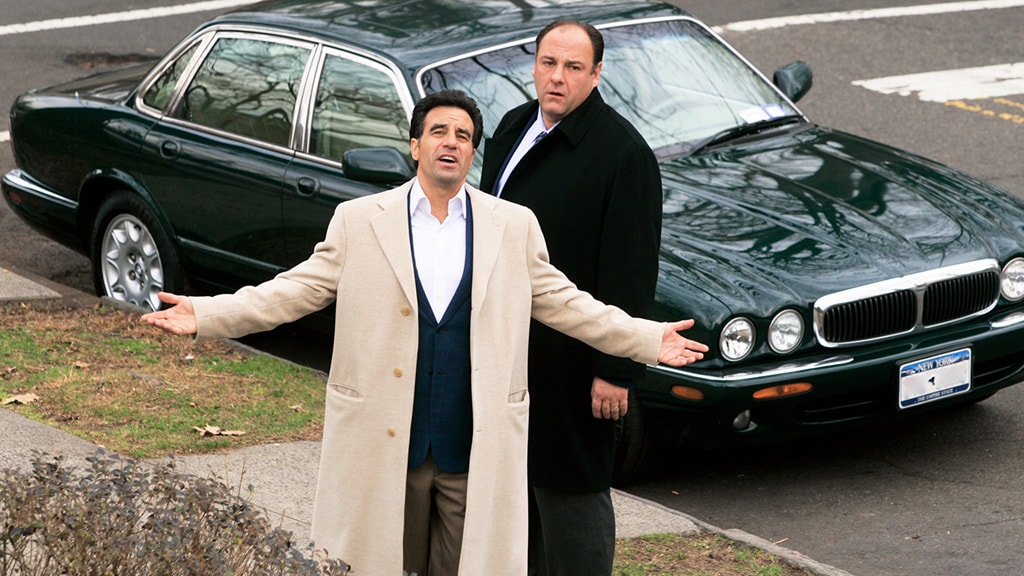
little-carmine-lupertazziLittle Carmine Lupertazzi is a character from the Sopranos and, if a fan of the show, you know he was generally portrayed as rather dimwitted. He often used malapropisms. He made poor managerial decisions and was largely not respected.

What’s interesting is that in the years after the show’s end his character has given rise to a rather popular theory that he was only pretending to be stupid. That in actuality he was luring his enemies into a false sense of security and biding his time to take over the family business. It is commonly, if not universally believed, the show’s controversial ending was actually the culmination of his nefarious plot. That he ordered the assassination of Tony Soprano and took over both families.

That’s what I’d like to discuss. Naturally we cannot prove anything one way or the other as it is a fictional show. Still, I’m of the opinion that it gives us an opportunity to examine the idea of how to be a good writer. Or at least one aspect of being so.

It is extraordinarily important to be honest with your audience.

Let’s imagine you are a mystery writer and the butler did it. You need to conceal this from your audience until the final reveal. To cover up the fact the butler did it you have an eyewitness see the butler somewhere else at the time the crime is committed. Only at the end of the novel do you reveal the butler has a twin brother. That is a betrayal of your audience. They have been given information which they used in their thoughts about the novel as it progressed.

This is bad writing. Your audience will be angry at this contrived conclusion.

Now, if you established the butler has the twin brother at some earlier point, then you have not betrayed your audience, you have merely fooled them. There is nothing wrong with this. The audience slaps their forehead and exclaims, “Of course! I should have known that. It was mentioned earlier.”

That is good writing.

This is why Little Carmine Lupertazzi is no secret mastermind. There is nothing to indicate as much. He is almost always portrayed as an utter fool.

We can say many things about the Sopranos as a television show but we cannot accuse the writers of being bad at their craft. We must assume the writers are good writers based on the content they provided us during six glorious seasons.

This is not just about Little Carmine Lupertazzi being an idiot. It is also a blueprint on how to be a better writer.

To a certain degree this is what separates excellent entertainment from its more common peer, garbage. What makes a good television show? Good writing, good acting, good directing, good lighting, etc. It is the sum of all these parts that brings us quality entertainment. Of which we desperately want more.

What books do you most enjoy? Movies? Television shows? Think about your favorite characters and ask yourself if their story was written in a consistent fashion.

We all want quality entertainment. Better television, better movies, better books. More shows like the Sopranos. That being the case, we must accept the fact that Little Carmine was an idiot.

Tom Liberman

Why are Manufacturing Jobs in China?

manufacturing-jobs-chinaI just read a lengthy but amazingly interesting article describing a firsthand account of working in a Chinese electronics factory, apparently one of the better ones. The account of what happens in the factory and how the workers are treated is an eye-opening experience. It also explains why manufacturing jobs are vanishing in the developed world.

Why so illuminating? Not because it gives the reader an insight into the working conditions of the workers. I have, nor do I think most people have, any illusions about that particular issue. It’s fascinating because it shows, in the starkest possible terms, why such manufacturing is happening in China and other less-developed nations.

There is good, bad, and awful about how these factories operate. I’m not going to go into detail on the various issues. My goal today is to simply explain why such jobs are being performed in China and other countries like them.

It’s really quite simple. In developed countries, we lead amazing and largely wonderful lives. We have access to things people in other countries can only dream about. China and countries like it have a huge and largely disposable workforce. Turnover rates at such factories are enormous. Young people come, work a few months or so to earn enough money to help their families, and then leave.

Suffice it to say that the workers in developed countries would simply refuse to work in such conditions because of our way of life. I’m fairly certain the so-called bad guys here, factory owners, would not want a world in which such factories were possible in the United States.

Consumers drive business. If the United States were China or Mexico as far as the average user’s buying power, well, manufacturers wouldn’t be able to sell their product. They would go bankrupt.

What’s happening is that we have disparity. Wealthy nations have workers who don’t want to do awful jobs whereas poor nations have a plethora of such employees.

The good news is that such jobs, unpleasant as they are, raise the economic profile of countries like China. As the average Chinese citizens gets more wealth then there will be fewer workers to do this sort of work. Automation in the form of robots will continue to take over.

As wealth increases so does quality of life. Eventually the entire world will catch up and there will be no profitable way to exploit workers in this fashion. Not without turning back the clock in way that is detrimental to the super-rich as well as the poor.

This kind of manufacturing job is gone. It won’t be back. And that’s a good thing.

Tom Liberman

Charging Bull and Fearless Girl Statues at Odds in more ways than One

Girl-and-Charging-BullThe fight between the Charging Bull and the Fearless Girl just left the park and headed to the courts!

I am the son of a lawyer, the brother of two lawyers, and the cousin of even more lawyers. I find law fascinating and when I read the artist who created the Charging Bull, Arturo Di Modica, plans to file a lawsuit against New York City in regards to the Fearless Girl statue placed nearby, well, I had to learn more. And learn I did!

I suspect Di Modica doesn’t have a case seeing as he installed the Charging Bull as an act of Guerilla Art back in 1989. The police seized it but then replaced it a few blocks away because of its popularity. It has remained there on a temporary permit ever since. The worst-case scenario for the city is likely that Di Modica moves it to a new location, at his expense.

Di Modica is a rather litigious fellow so we will see.

Meanwhile, the statue of a young girl facing down the bull was commissioned, created, and placed by State Street Global Advisors as part of an advertising campaign coinciding with International Women’s Day. This statue is referenced as the Fearless Girl. It was placed legally with a permit for one week. It also proved popular and the temporary permit has been extended in the same way as the Charging Bull’s was.

Another incredibly interesting thing is why Di Modica is planning to involve the courts. It is something called Artistic Integrity. Di Modica believes Fearless Girl changes the integrity of his art. The Charging Bull is meant to symbolize aggressive financial optimism. Fearless Girl staring down the bull seems to change this meaning. Now, at least in the minds of some people, Charging Bull is a symbol of aggressive bullying.

As I mentioned earlier, I don’t think Di Modica has a chance in court, but I still wanted to examine this idea. I’m an artist. I write books. Is it really up to me challenge the meaning one, or many, of my readers choose to assign to events in those books? When Jon Gray tangles with High Priest Amalagaz I certainly intend the scene to have particularly meaning, specific artistic integrity. There is a point to it.

If a reader came to me with a completely difference conclusion, I’d certainly explain what I meant by the scene. That being said, I’d have no legal basis to challenge the right of someone else to believe what they want. Likewise, if Barnes & Noble chose to put my ostensibly Sword and Sorcery Fantasy books on the shelf with Mystery Novels I would have little recourse other than telling them not to sell my books.

I strongly suspect Di Modica is simply drumming up publicity and his threatened lawsuit will eventually go away.

Still, I’m glad he filed it because I learned a lot of things today. I hope you did also.

Tom Liberman

ATF Agents Breaking the Law to Make Money

loose-cigaretteThere’s a great story in the New York Times that is a follow up to one they wrote back in February about how the Bureau of Alcohol, Tobacco, Firearms, and Explosives (ATF) used a secret account to pay for all sorts of things.

The articles expose any number of egregious problems in ATF but I’d like to focus on how the account in question was supplied with millions of dollars.

Basically, agents authorized their informants to purchase untaxed cigarettes and sell them at a profit. They then used the revenue generated to fill the account.

It’s really important what’s happening here. The ATF is doing the very thing they are arresting other people for doing. They are doing exactly the thing that resulted in the death of Eric Garner.

The government is breaking the law ostensibly to stop people from breaking the exact same law. The law itself is stupid. If New York decides to put a ridiculously high tax on cigarettes they make it possible for entrepreneurs to bring in product from other states and sell it at a profit. In order to prevent such activity, they create more laws. I’ve written about this stupidity before so I won’t wax poetic here today.

What we’re seeing here is simple market dynamics. The state of New York, and others, created some taxes making certain behavior profitable. The state and federal government then attempted to stop people from doing the profitable thing. Eventually they realized how profitable was the system and began to do the same thing.

That’s natural. That’s capitalism in action. This chain of events is something that needs to be considered every time a legislative body passes a law or institutes a tax.

Unfortunately, this sort of thing happens all the time. Legislators pass new taxes to raise revenue for whatever reason, they pass laws to prevent particular behaviors. This often create criminals. In this case, the very agency tasked with stopping such people.

Think about it. If the tax incentives criminals, what hope does it have of having long term success? Yes, it will raise revenue, that’s true. But how much money is spent enforcing the laws engendered by the tax?

I think it can argued that all we’re really doing is taking money from cigarette smokers to give law enforcement agents work. Work created by the original misguided taxes.

It all could be avoided if we didn’t tax cigarettes so highly. All because we don’t like smokers and don’t mind taking their money.

For the record, I don’t smoke.

Tom Liberman

FCC Decides Against Cell Phone Use Because They’re Noisy

cellphone-airlineYep. Not because they pose a threat to communications between pilots and air traffic controllers. Because FCC Chairman Ajit Pai thinks people want some peace and quiet in flight. Pai believes the government has the right to prevent you from using a cell phone because it might disturb someone else.

This is government that Libertarians like myself not only hate, but fear.

If there was a technical reason using your cell phone on a flight was dangerous, I’d fully support the airlines preventing you from doing so. The reason Pai doesn’t mention this as an excuse is because there is little evidence doing so is dangerous.

In a survey, it was found the majority of people don’t really want the person next to them on the plane gabbing away on her or his cell phone. And therefore, the FCC seems to be of the opinion that it should be made illegal. That because people don’t like it, it should be against the law.

I’m certainly not opposed to each airline creating rules about cell phones. If one airline wants to restrict their use during flight then that’s their business. Consumers might flock to that airline for the silence. Other consumers might patronize airlines that allow cell phone use because of the convenience. That’s a free market. That’s the way it should be.

This is an important distinction. When the government is allowed to make things illegal because other people don’t like them we’re treading in dangerous waters. Let’s face facts. We’re not merely treading in such waters. We’re up to our necks with our heads tilted back trying to breathe.

The United States is certainly not a totalitarian regime. We have many freedoms in this country that are not available in places like Russia, Saudi Arabia, and China. I’m grateful for those freedoms but that doesn’t mean we shouldn’t fight against even minor grievances like this one.

The government has no good reason to restrict the use of cell phones on planes. We should not be making laws based on what the majority of people may or may not find annoying. Remember that someone else might very well find something you do to be irritating. When you support government restricting someone else, you inevitably open the door to rules prohibiting you from doing something you would enjoy. Resist such temptations.

Tom Liberman


Mozart vs Salieri Talent or Hard Work

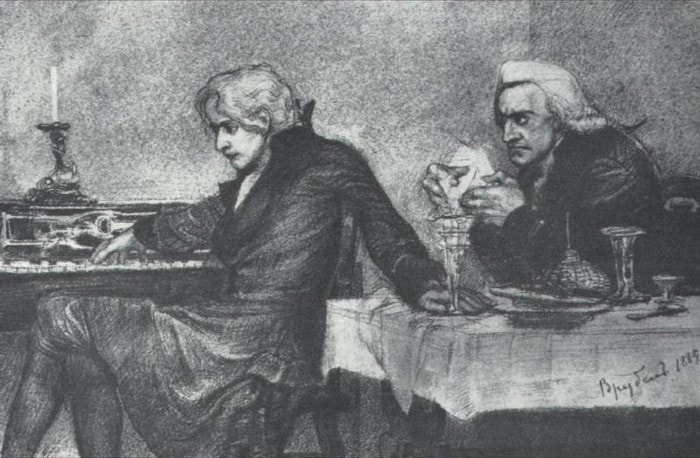
mozart_and_salieriI was browsing through YouTube when I came across a clip from the movie Amadeus where Mozart plays a piece written by Salieri without any effort and then improves it within seconds. In the comment section below, someone mentioned how talent is better than hard work.

A number of other people immediately lambasted the original poster saying that talent was nothing more than a lot of hard work. I thought I’d examine the idea here today.

Let me relate a personal story. I was a pretty decent athlete as a young fellow. I had excellent hand-eye coordination, was moderately strong, and had decent foot speed. I loved sports and dreamed of becoming a professional athlete. In sixth grade I was playing flag football with some other kids and doing quite well when a talented athlete took the field. He literally ran circles around me. No matter how I tried I was unable to grab his flag. He was faster, quicker, and plain better. Not by a little either.

It was then the realization dawned upon me that I was not nearly as good as I imagined. I suppose this happens to almost everyone as they progress in their chosen field; athletics, music, sciences, writing, or anything else. As you get better so too does the competition. Hard work can only take you so far in this world.

Don’t get me wrong. I’m a huge advocate of hard work. The superstars of the world combine both hard work and talent. Hard work will get you many places in life that talent alone will not. Plenty of talented people don’t work hard and fail to succeed. I’m just pointing out the reality of talent. You know it when you see it and you can’t get there by hard work.

What’s the lesson in all this? I think it’s important to understand your limitations. It’s fantastic to reach your maximum potential through hard work, study, and practice but it’s also good to recognize there are things beyond you. Understand these things you will never achieve, playing shortstop for the St. Louis Cardinals, are not personal failures. I just didn’t have enough talent to play major league baseball. That’s reality.

If I had worked harder I certainly could have done more with my athletic talent but I moved on to other things. I like to think I’m a pretty good writer and I work hard at that. I study the structure of good writing. I practice my craft regularly. I hope that I will enjoy success. That’s a good model to follow in life.

Do the things you enjoy doing. Work hard at them. Study and understand the best way to perform these things. But understand sometimes someone else is just better than you. And that’s ok. And so are you.

Tom Liberman

Strict Rules at the Masters a Good Thing?

The-MastersThe Masters golf tournament just finished up with Sergio Garcia winning an epic battle with Justin Rose. Sergio has had a long and successful career but always fallen short in the Majors so it was quite wonderful to see him win and the emotion of the triumph. However, that’s not what I’m writing about today. As a Libertarian I want to examine the nature of the stringent rules for spectators at The Masters.

There are rules against using cell phones, rules against running, and plenty more. Spectators who violate the rules not only risk being removed from the grounds that day, but also losing their ticket forever. That’s right. Forever. The Masters tickets are strictly limited and the only way to get new ones is if someone else gives up their own. Thus breaking the rules carries serious consequences and most people do not do so.

Now that we know the consequences are serious I’ll turn my attention to the rules. Said regulations are certainly the purview of the people who run the Masters. They can make whatever rules they want.

In other, less popular, events such rules would likely drive away their audience and cut into their ticket sales.

Watching the Masters on television is rather pleasant because there are not as many spectators yelling banal encouragements or trying to distract the actual competitors.

The lesson to be learned here is important from a Libertarian perspective. Those who run the Masters created in environment in which many people want to participate. Television networks pay huge sums of money to broadcast the even. Advertisers pay even more money for the right to run commercials during the event. Spectators hope against hope to even have the possibility of getting tickets.

But there is something else to discuss as well. Prior to 1990 the club where the Masters is held, Augusta National Golf Club, did not allow black members. Prior to 2012 they did not allow women members. These policies threatened their audience. People were rightfully upset about such racist and misogynistic rules. Fewer people wanted tickets to the event. Fewer people wanted to watch on television. The event itself, if they continued such policies, risked serious reduction of revenue. Even players began to at least think about not attending in protest over such rules.

The government did not force Augusta to change their policies. Several members resigned. Corporate sponsors faced heavy criticism from those who consumed their products and put pressure on August as well. It became in Augusta’s self-interest to change their rules and they did.

We often rely on the government to right social wrongs but it is generally unreliable in such matters. There will always be those who hold racist, misogynistic, anti-Semitic, and other vile views. They are often in positions where they can discriminate. People can effect change where the government is powerless. Something to keep in mind.

Tom Liberman

Jordan Spieth – Tiger Woods Misleading Headline

spieth-woodsThis one is a doozy! Jordan Spieth tees off on Tiger Woods in Epic Shade Throwing reads the completely false and malicious headline from Sportsnaught and Vincent Frank.

Clickbait at its absolute worst. Not only does the headline make it appear as if Spieth said something nasty about Tiger Woods but the article pretty much matches the headline. It talks about how Spieth was throwing a “whole heck of a lot of shade.”

Give me a break. Spieth pointed out his game is not based on hitting the ball long but on accurate approach shots and strong putting. Thus the methods used at the Masters to lengthen the golf course for Woods and other long hitters wouldn’t be effective against Spieth.

It was not shade. It was not even directed at Woods. It was simply a comment on his style of play.

Congratulations Sportsnaught and Vincent Frank, you win Misleading Headline of the Week!

Tom Liberman

Shayrat Air Base Launches Fresh Attacks Undeterred

Shayrat-Air-BaseSigh. Double Sigh. Triple Sigh. It’s a mess. A big, horrible, horrific, terrible, nightmarish mess. Syria. The Syrian Civil War rolls along. Long before Syrian President Bashar al-Assad launched a chemical weapon attack on Khan Shaykhum on April 4, 2017; over 300,000 died in the war. Many of them children.

The images of the terrible chemical attack somehow managed to touch the sensibilities of those who were completely oblivious to the hundreds of thousands dead prior to that.

President Trump launched a supposedly devastating attack on the Shayrat Air Base which “severely degraded or destroyed” the base according to the United States military. So degraded and destroyed were they that Assad ordered and carried out raids from the base within 48 hours. According to sources not the United States, the military base was lightly damaged and, because the Syrians had warning of the impending attack, almost no planes were lost and there were few casualties. The majority of the Tomahawk missiles missed their targets.

Sigh.

Our political leaders told us there would be an immediate change in Syrian policy.

Sigh.

President Vladimir Putin of Russia announced they will deploy more air defense systems in Syria to counter future threats.

Sigh.

I get it. Assad is a horrible person. Using chemical weapons is awful. But what do we hope to accomplish? What possible good can come from this attack? What possible good can come from almost any action we take? If we somehow overthrow Assad does anyone imagine things will be better? Those that take over will somehow be wonderful humanitarians?

Why are we there? Why the drumbeat to war? Our interventionist policies have wrought nothing but horror throughout the Middle East, horror for the inhabitants of those countries, and horrors for innocents all over the world.

It’s nauseating to do nothing while terrible things are happening in this world. I get the urge to punish wrongdoers. I understand the rage at the inhumanity of Assad and his allies. I just don’t see anything good coming out of an intervention in Syria. Nothing.

If the action you’re taking isn’t going to do any good, aside from making you look like you’re doing something when you’re not, maybe you should think about not taking said action.

Just a thought.

Tom Liberman
Sword and Sorcery fantasy all About Freedom

Trouble at America’s Malls so we Blame Who?

malls-closingNewsflash! American brick and mortar retail stores are closing in record numbers. What sort of genius do you have to be to figure out why? Not much of one. Total sales aren’t going down, just sales in such stores. More and more people, me included, are purchasing online.

Yet every time I read an article in one business publication or another about how malls are losing their anchor stores and closing down in record numbers, the comment section is filled with tirades about President Obama or President Trump. Filled. I’m not willing to start counting comments and tell you what percentage want to lay blame on one of the two major political parties. Nor will I bother figuring out how many rational people explain there is no blame to be laid, it is simply an example of changing market environments.

This is what happens. This is why buggy whips, to use the example from the hidden gem Other People’s Money, are no longer manufactured in large numbers. This is economics. This is capitalism. While many people benefit from this there are, and always will be, losers. The people who lose their jobs in the malls. The companies that go out of business.

In the end capitalism will benefit the majority of us. We get a product at the price we want without having to leave the comfort of our Tom Pagnozzi locker room chair given to me as a gift many moons ago. I love this chair but that’s beside the point.

It’s obvious why malls are closing. Everyone knows the root cause. It’s not rocket science. I don’t believe people are so stupid as to think political policy is driving this trend. I think their motivation is to convince someone else to further their political agenda.

What can we do about this? You certainly can’t argue someone out of their position on this because they really don’t believe it anyway. You can call them stupid if you want but that’s not really helping matters. You can certainly ignore them and that’s largely what I do. I think often times that’s the best strategy. Don’t get into a pointless debate. Don’t call them idiots. Don’t get enraged. Simply ignore them.

The other possibility is to do what I’m attempting to do here. Plainly, clearly, logically, and without malice lay out some facts. After that it’s just not your responsibility any more. You can’t think for other people, speak for anyone else, or act for anyone else. Do what is in your power to do.

The world would be a better place if we all could ignore provocation and follow the excellent advice of the Hitchiker’s Guide to the Galaxy. Don’t Panic.

Tom Liberman
Sword and Sorcery fantasy all About Freedom

Self-Refereeing and North Carolina vs Gonzaga

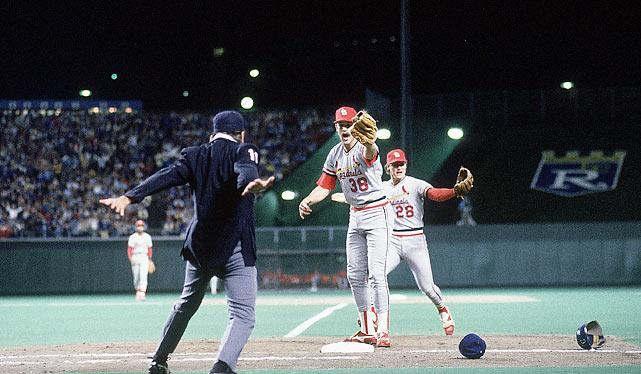
don-denkinger-bad-callI did not watch the NCAA Basketball Championship game between Gonzaga and North Carolina but the articles in the various sports websites I visit seemed to indicate that the referees intruded fairly heavily. This usually means they called a lot of fouls. There are two points of view on this.

One is that officials should let the players play the game. This means not calling many fouls. The problem there is when the players realize the officials aren’t going to call anything other than obvious fouls they start to play outside the rules of the game. Things can get ugly and out of control when that happens.

A second idea is that the officials are right to make the calls and the job is difficult. This sometimes means that the flow of the game is disturbed and it is less enjoyable for the audience. The audience essentially provides all the revenue and without them there isn’t nearly as much money to be made.

Is there a solution? It’s not easy but I harken back to my days of playing sports as a lad. In street games there was no one officiating at all and even in some organized sports like the high school tennis I played, it was up to you to perform self-refereeing.

I remember those days with fondness. When we called our own games. The general idea was that if you made a bad call your opponent had the ability to do the same thing. This meant that you generally called the game fairly. If you didn’t catch the ball in baseball you said you didn’t catch it.

I understand the stakes were considerably smaller on the playground than in the NCAA Championship and the temptation to make an unfair call is significantly greater. Still, there is part of me that imagines if we remove the officials from the game, players are going to be more likely to make accurate calls on themselves. It is the presence of officials that lead to more bad calls. I remember many games where an official made a horrible call and my opponent knew it but said nothing, or vice-versa. I think that in most cases we would never have made the bad call if left to our own devices.

What do you think?

How many bad calls would there be if we eliminated officials?

View Results

Loading ...

Tom Liberman
Sword and Sorcery fantasy with a Libertarian Ideology
Current Release: The Gray Horn
May 2017 Release: For the Gray

Flu Shots Save Lives but Not All of Them

Flu-ShotThe CDC just released a study on 358 children who died from influenza in the years 2010 through 2014. What I’d like to discuss today is the disconnect between hard metrics of statistics and the reality of personal experience. I think this study gives a good chance to fully examine the issue.

Despite hard statistical evidence in favor of one thing or another, people will reject it. They will eschew them even in a case like this where the lives of their children might be impacted.

Here’s the idea. Basically about half of all children in the United States received the flu vaccine in the time frame of the study. That means in a random world about 179 children who got the vaccine should have died and an equal amount of those who did not should have suffered the same awful fate. The study shows in actuality about 268 children who were not vaccinated died while only 90 who were vaccinated died.

The implication are fairly obvious. The chance of your child dying from influenza is reduced if they get a flu shot.

Here’s the problem. Ninety children who did get the vaccine died. Meanwhile millions who did not get the vaccine did not get sick at all and certainly did not perish. Only a small percentage of children in the United States died from complications of influenza. There are ninety sets of parents out there who will swear that the vaccine is useless because their child died. There are millions of parents whose children did not get the vaccine and are alive today.

Statistically speaking there are about 189 children alive today because they got their flu shot. But there is no way to identify those 189 children. It is difficult to argue against the parents of the children who died after they received the vaccine. It is difficult to argue with the personal experience of millions of parents whose children were not vaccinated and are alive and healthy.

Personal experience often flies in the face of numbers and it’s not easy for anyone to overcome such anecdotal bias.

People tend to believe what they want to believe and in this case I’m certain quite a few people will continue to eschew the vaccine. They will not suffer because of this. Only a tiny percentage of people will suffer the horrible loss of a child.

This is why I think it’s important to teach Critical Thinking from an early age. We all tend to give credence to our experiences over a statistical study. It’s human nature. I understand it. That being said, the lives of 189 children depend on convincing people empirical studies are more important than personal experience.

Do you get your flu shot?

Tom Liberman
Sword and Sorcery fantasy with a Libertarian Ideology
Current Release: The Gray Horn
April 2017 Release: For the Gray

Privacy in Browsing History Government v Capitalism

internet-browsing-privacyPeople are up in arms because Congress granted Internet Service Providers the ability to sell the browsing history of users. Well, that’s not exactly what happened. In 2016 the Federal Communication Commission began enforcing a rule preventing ISPs from selling such information. Congress just repealed that rule.

The major ISPs have now come out with a statement saying they will never do so.

Here we have in brilliant technicolor the problem with government regulations. Anything the government can do, they can undo with the swipe of pen. Any law they pass to support one thing, can oppose that same thing when an ideologically different party takes power. When we give government the power to restrict an ISP from selling our browsing history we implicitly give them the power to allow it.

Why, you might ask, have the major ISPs taken the unusual step of vowing never to do so? Because of capitalism. If their customers find out they are selling browsing history they might well find themselves short of customers. Oh, but wait, nobody has much of a choice in ISPs because local government puts up enormous and expensive barriers to companies that want to bring you internet service.

Cable companies pay huge amounts in bribes, I mean fees, in order to service a community. Now things are changing. Wireless Internet Access companies are available in many places but the system is still horribly monopolistic.

Imagine if local governments weren’t involved at all and any capitalist could start up an ISP to compete for your dollars. How long do you think the ones that sell your browsing history would last in a truly competitive market?

The only reason the big ISPs are vowing not to sell your information is because of competition, not government regulations.

Competition brings enormous benefits to consumers in a way government regulation never can. Government regulations are often the reason companies can engage in anti-consumer activity, they stifle competition. Without competition there is nowhere else to go. With competition a company that angers its customers just won’t survive.

That’s capitalism.

The more the government does to protect us, the worse off we are.

Tom Liberman
Sword and Sorcery fantasy with a Libertarian Ideology
Current Release: The Gray Horn
April 2017 Release: For the Gray

Extraordinary Claims and Sherri Papini

sherri-papini

I don’t know how many of you remember the Sherri Papini story from November of 2016 but there is an interesting update to the supposed events that transpired.

What I want to talk about today is the old adage that skeptics embrace: An extraordinary claim require extraordinary proof.

Skepticism

I can say, as do the commenters on the updated story, that I was pretty skeptical of Papini’s story from the start. It was filled with extraordinary claims and there appeared to be little evidence to support it. Nevertheless, she received quite a bit of sympathy.

We certainly don’t know that her story was false, she might well have been telling the truth, but I think it’s fairly likely she made the entire thing up to cover up some other failing; infidelity, drugs, something.

I don’t want to spend time trying to figure out why so many supported her while relatively few questioned her story from the beginning. I just want to offer the same advice as Marcello Truzzi. When someone tells a story that is rather extraordinary take a moment to embrace skepticism. It’s not easy. When someone like Papini tells a horrific story we want to offer sympathy and help. It’s in general human nature to be kind to those who have suffered misfortune. Sadly, that natural instinct allows con-artists to make a living.

Kindness is not Always Helpful

We want to help and the more terrible the story the more we feel empathy and pain for the victim. The more we want to help.

That’s the lesson of the Papini situation. Don’t be quick to believe extraordinary claims. When you are told something that seems unlikely, take a moment and pause. Don’t set your mind to an opinion because it becomes difficult at that point to turn back. Once we’ve committed to a “truth” we find it painful to admit a mistake. If you can just hold off on a snap judgment for a little while, I think it will be to your benefit in many ways.

Conclusion

In your business, in your education, in your daily life; try to be skeptical. It doesn’t hurt to stop and look for evidence.

Tom Liberman

Lessons from the Demise of the Motion Picture Production Code

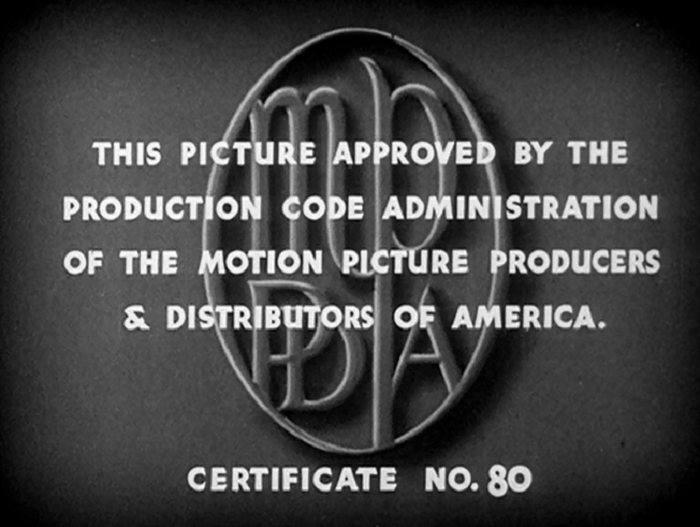
hollywood-production-codeThanks to Bing Search I learned today the Motion Picture Production Code, more commonly known as the Hays Code, was first put into effect eight-seven years ago. It stayed in place for about thirty years before it eventually was replaced with the rating system movies use to this day.

The lesson I’d like to talk about today is why the code failed. Before we get to that, let’s find out what it was and why it was created.

Basically the code restricted all sorts of things from being depicted in movies. The list of banned items included any non-reverent mention of god, trafficking of illegal drugs, and ridicule of the clergy. The list of items to be treated with great caution included cruelty to animals or children, adults in bed together, and the use of firearms.

Movies that did not meet the standards laid out by the Code were not given a Certificate of Approval and could not be released.

The reason the code was put into place was a general feeling of moral outrage that movies were bringing unsavory ideas to audiences. The individual states had begun to put in place their own bans after the Supreme Court ruled movies were not subject to Freedom of Speech protection.

Enough prelude. I’m not going to waste time talking about why the Code was against Libertarian philosophy although I could. I want to focus, quickly and efficiently, on why it failed. That’s what is most important.

Starting almost immediately after the Code was emplaced movie makers started to create films outside the main studios that bypassed the rules. They released them independently.

It wasn’t until competition became an issue that the major studios began to make movies and release them regardless of whether they had a Certificate of Approval. In addition, Foreign films were not subject to the restrictions, television was not subject to the restrictions. The studios tried to keep foreign films from being shown but the Supreme Court ruled this illegal.

Competition. People wanted to see movies that included this sort of content. Not that they went to the movie simply because it had such content but it’s clear such movies had a much larger field upon which to play. They could tell stories in ways movies using the Code could not.

Lots of people wanted to see movies made without the restrictions of the Code.

And thus the studios began to make them and simply ignore the Code. Some Like it Hot was the film that basically ended the code. It was released without the Certificate of Approval and was a huge success.

The lesson to be learned here is when government attempts to enforce moral codes on people it is doomed to failure, simply because people want what they want. You cannot pretend because something is supposedly bad or dangerous, passing a law will fix the problem. It won’t. It will create a host of other issues while completing failing to solve the issue.

Tom Liberman
Sword and Sorcery fantasy with a Libertarian Ideology
Current Release: The Gray Horn
April 2017 Release: For the Gray

The Fools Rush to Limit Opioid Prescription Length

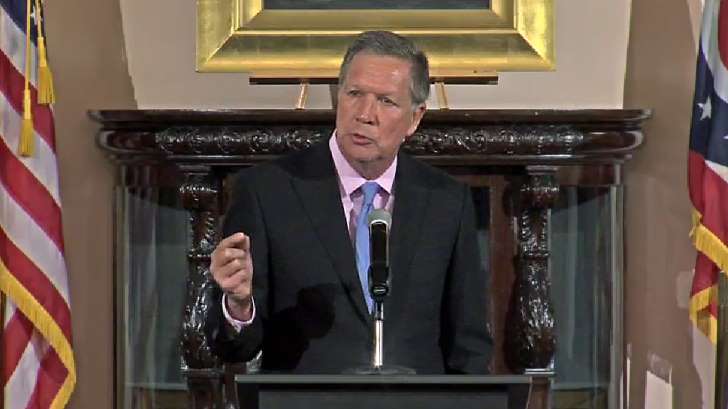
john-kasich-opioid-lawsGovernor John Kasich and the legislature of Ohio just joined Governor Chris Christie and New Jersey in limiting the length of prescriptions for Opioids to one week. Of the new law Kasich said, We all need to stick our noses into somebody else’s business.

Before I go on a Libertarian induced rage rant let’s examine why this is happening.

Pharmaceutical companies have been pumping out enormous amounts of opioids like fentanyl and doctors have been prescribing them in equally large numbers. While the authorities have been quite aggressive about jailing opioid dealers who aren’t pharmaceutical companies and doctors they have largely allowed these two groups to garner huge profits. Meanwhile the people being prescribed the drugs eventually run out of their prescriptions and resort to illegal sources for their addictions.

The thought process behind the limit of seven days rather than ninety days is that there will be fewer unused pills to sell to the black market. And because there will be fewer of these legally prescribed pills somehow this will magically reduce the market for them. Somehow no one will come along to fill the void in true supply-side economic fashion.

What will the new law actually accomplish? It will make it horribly inconvenient for people in terrible pain to get the pills they need to make it through the day. This law punishes the critically ill. It must be noted cancer patients and people in hospice are exempt but that leaves a lot of other people in a difficult situation. People who are critically ill don’t really want to go to the doctor once a week for their prescription and then have to pick it up. They are, you see, critically ill and in horrible pain.

So we’re making life a living nightmare for a group of people to reduce opioids on the street. But will there be fewer illegal drugs for people to purchase? Of course not. Where there is a demand there will be supply. Price goes up. People in terrible pain and addicts will have to pay more. And how do they get this money? Generally by stealing from other people.

Addiction is a terrible thing and I’m all for decriminalization and treatment. This law doesn’t help anyone and it hurts lots of people.

Well, that’s not true. It helps politicians like Kasich pretend they are doing something about a terrible problem. Next time you vote, remember they aren’t helping anyone but themselves. That’s the only way to bring about change.

Tom Liberman
Sword and Sorcery fantasy with a Libertarian Ideology
Current Release: The Gray Horn
April 2017 Release: For the Gray

NFL Referees Allowed in Vegas but why were they Banned?

Raiders_Stadium_artist_renderingThe National Football League owners just voted to allow the Oakland Raiders and owner Mark Davis to move the team to Las Vegas. I’m not surprised. There is more money to be made in Las Vegas than in Oakland in the same way there was more money to be had in Los Angeles than St. Louis.

I’m not here as a snowflake St. Louis Rams fan to condemn the greed of the NFL owners. What I want to talk about is the rule preventing league officials from entering the city of Las Vegas during the season. That’s right, prior to the move of the Raiders, league officials were not even allowed to visit Las Vegas during the season unless their regular job required it. Even then there were restrictions. Obviously this rule will have to change.

The reason for the rule was the league wanted to prevent referees from being influenced by gamblers. Well, that’s what they claim. That’s what I want to talk about. The league knows full well that gambling doesn’t happen only in Las Vegas. They know gamblers look to influence referees in every sport and in every league regardless of physical location. If they know this, why the ban?

The answer is simple and one that strikes to the very heart of problems we have in the United States and around the world. The ban of officials visiting Las Vegas gives the league the appearance of being concerned about gambling and of taking measures to prevent corruption of referees when, naturally, it does neither of those things. The league doesn’t care that the ban is stupid and useless. They care that it makes them look good. It makes it look like they are doing something about the problem. And that’s dangerous. That’s what I oppose.

I think the league has good reason to worry about gamblers corrupting their officials. I think all sports leagues have good reason to worry. The NBA certainly knows all about it. I strongly suspect any number of games in all sports, in all leagues, have been tainted by officials on the take from gamblers. Or in debt to gamblers. Or something along those lines.

I have no proof that it happens and yet I have absolutely no doubt it does. Gambling is not limited to the NFL or even professional sports leagues. Large amounts of money is wagered on high school football. Referees have enormous influence over games. They certainly give gamblers the best chance to influence outcomes. This fact has not slipped past the notice of such organizations.

I’m also not suggesting sports leagues don’t use other tactics to defeat gamblers. What I am saying is that employing useless measures to counter real threats simply for the illusion of safety is foolish. The illusion is safety is far more perilous than understanding you are in a dangerous situation. The reason being, if you understand you are in danger you take precautions. If you think you are safe, you do not.

The league is giving fans the illusion the game isn’t corrupt and therefore the fans are not necessarily looking for corruption. This means corruption can more easily occur. Now, in this case it’s gambling and some money but the same principle applies to pat-downs at the airport.

I say dispense with useless precautions designed simply to create an illusion of safety. When I see such rules in place I become concerned the people who made such rules perhaps do not understand the real threat. They might even be lulled into the same sense of complacency they hoped to foist off onto others.

We should be more concerned with passing laws that do good than passing laws that falsely make us look like we’re doing good. And if you don’t think that has correlation to what’s happening in Washington D.C., statehouses, and your local municipalities, well, you’ve been fooled.

Tom Liberman
Sword and Sorcery fantasy with a Libertarian Ideology
Current Release: The Gray Horn
April 2017 Release: For the Gray