A Real Apology

apologyI was thinking about the idea of an apology. You say or do something you regret. You say you’re sorry. The natural reaction of the person or people you’ve offended or angered is to accept the apology. It is almost as if some part, if not all, of the original transgression never happened. But what is an apology? Just words. I’m beginning to become skeptical about accepting those words, they are merely a way for the person giving the apology to feel better. I’ve decided I don’t want apologies anymore, I want to see a change in your behavior. That’s a real apology. If that’s beyond you, fine. Let’s both move on.

I’m sure this is coming across as rather cruel and heartless and perhaps it is. It’s just that I often see people giving what appears to be heartfelt apologies for particular misbehaviors and then going right back to repeating the offending behavior in exactly the same fashion.

I’m sometimes willing to believe the apology is sincere. The person does feel bad about what she or he did. But the apology is nothing more than a symptom masking panacea. The offending person is fixed and can go on about their life without further worry, until they do it again. It’s an endless cycle of misbehavior and apology. There is no effort to fix the underlying problem, or perhaps there is an attempt but it ends in failure. The apology is a central part of the ongoing problem.

It seems to me, quite frequently the words are completely phony. The person is only apologizing because the behavior generated unfavorable results. The person isn’t really sorry at all. They are sorry about the consequences but they acted exactly in the fashion they desired. The only thing they’d change about the incident that requires an apology is the resulting upset.

However, if the person actually changes their behavior over the course of the next several years, that would seem to me to be a real apology. I’m sorry I did something and I recognize what I did was wrong. Every time I’m in a situation in which I could repeat the behavior, I react differently. That’s an apology I can get behind.

So, there you have it. If you offend me and aren’t sorry. That’s cool. Tell me you’re not sorry and I’ll deal with it. If you are sorry, change your behavior. If I offend you, tell me about it and I’ll try my best to change my behavior if I feel I was in the wrong. Apologies aren’t worthy of accepting or rejecting.

Sometimes I wonder why I don’t have a lot of friends, then I remember!

Have a wonderful day.

Tom Liberman

The Case Against Sanctions

sanctionsWhen the leaders of a nation decide they want to act in a way the United States perceives as detrimental, the general solution is economic sanctions. The idea being that such sanctions hurt the offending nation and politicians eventually give up on their policies. What I’d like to discuss today is what really happens when we implement economic sanctions on another nation.

One of the main arguments against such sanctions is the leaders of the nation don’t suffer any impact but the average person in said country is economically disadvantaged. The argument for sanctions hopes the people will blame their government for lack of goods. Unfortunately, I think it is much more common to blame the nation imposing the sanctions. It drives a country deeper into behavior we dislike. However, this objection is the least of my troubles with sanctions.

One of the biggest problems with sanctions is that, like a sword, they cut both ways. When we limit trade with a foreign nation we are now preventing companies within the United States from making a profit by selling to willing buyers. As an example, I have a number of family members and friends who work for Boeing and they are hurt by the fact their employer cannot sell goods to quite a few countries in the world. For many companies, this is certainly the difference between growth and hiring and shrinkage and layoffs. There is no question all the economic sanctions we are currently prosecuting badly hurt industry in the United States. How much business could be, and should be, done with Cuba?

Another enormous problem is there is largely a “Don’t Ask, Don’t Tell” policy when it comes to sanctions. When we ban selling or purchasing a product from a particular nation it hardly stops such activity. It simply pushes it underground. Many of the companies and nations who supposedly support such sanctions actively work around them in a variety of ways, chief among them is simply maneuvering and repackaging product.

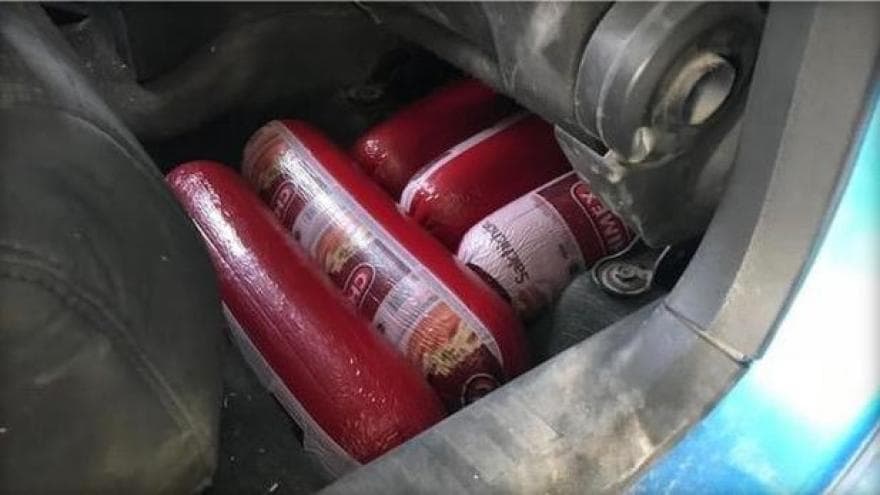
Basically, if we aren’t allowed to sell something to a country, that product is shipped to a third-party nation that does trade with the proscribed country and the commodity is simply packaged in a container to disguise its point of origin. And, of course, the reverse happens in purchasing such goods. The offending country ships things to a willing nation who then repackages and sells back to the United States.

The second problem leads to the third, which is the creation of a black market where criminals gain huge profits at the expense of regular consumers. The moving of these goods must be done by extralegal sources or officials who are taking bribes to perform the necessary maneuvering. Now we are empowering criminals and corrupting officials. The product should be shipping at a certain cost but the price goes up because of the sanctions. Thus, when you purchase a product that might somewhere on the supply chain pass through the country with sanctions being imposed against it, you pay an increased price.

Likewise, the illegal maneuvering to avoid sanctions leads us to the fourth problem: Enforcement. Thousands of people and billions of dollars are spent trying to prevent nations and companies from maneuvering their goods in an attempt to avoid sanctions. We have agents at ports around the world inspecting packages and trying to make sure they actually come from the country of origin the packaging claims. This costs taxpayer directly, as opposed to the more indirect cost of higher prices.

Highly trained law enforcement officials spend their days and nights trying to figure out how nations and corporations are avoiding the sanctions when they could well be doing something more useful. The amount of time and money spent trying to enforce sanctions is astronomical.

The final point of my argument against sanction is they simply do not work. The nation in question continues functioning in a fairly normal way. They continue to sell their goods to willing buyers; either nations that have not imposed sanctions or through a black market.

Sanctions apparently do no good whatsoever, cost us huge amounts of money, waste the time of highly trained professionals who could be doing something else, generally harm the average person of the offending nation thus cementing their hatred of the United States, corrupt officials, funnel money to criminals, and cause an increase in the price of the goods you purchase. Yay!

Let’s take a quick moment to look at the results if we continued to trade with nations who we consider our enemies. Our companies make a profit, the people of those nations look at us more favorably, we pay lower prices, and there is an opportunity to open lines of dialog to bring about the change we are attempting to create through sanctions.

It’s a natural reaction to want to punish nations we think are behaving poorly but a better strategy is to engage. Better for everyone.

I ask for all sanctions, to all countries, be dropped immediately.

Tom Liberman

Martha Stewart and her Unjust Conviction

martha stewartI’ve been reading a number stories about Martha Stewart and her feelings about being imprisoned in 2004 for conspiracy, obstruction of an agency proceeding, and making false statements in regards to the sale of ImClone Systems stocks. She felt it was a horrible experience and she learned nothing from it.

I think there are a number of things to take from Stewart’s opinion on this subject not the least of which is that she was convicted in what most people would regard as questionable fashion and I would classify as grossly unjust. I find her words about her imprisonment resonate strongly with me. She was not made stronger for her stay in jail, she learned nothing, she did not become a better person. It was horrible in every regard. This is an indictment of our prison system.

First, I’d like to talk about her conviction. She sold some stock shortly before it went down by 16% and avoided about $50,000 in losses. This may seem like a lot to you and me but to a woman of her means, it is a fairly trivial amount. Her broker supposedly was informed by an insider that a drug the company was promoting failed to gain approval. Stewart claimed there was a standard order to sell when it reached a certain price, $60, and had documentation that such an order existed.

An ink expert from the Secret Service testified the ink on the order for the ImClone sale was different than other ink on the document. He lied. He hadn’t even examined the document. Another worker examined it and it was clear she had a grudge against Stewart. The case of securities fraud against Stewart was so flimsy the judge threw it out of court. But, Stewart insisted the order for sale at $60 was real and she was convicted on charges related to these statements. This despite the fact the person who claimed it was different ink was lying. She was not convicted of securities fraud. The civil case was eventually settled with Stewart paying the government the equivalent of triple damages although she maintained her innocence.

So, off she went to a minimum-security prison. Here’s where her comments really caught my eye. She was asked if the sentence and imprisonment made her stronger. If the adversity was essentially good for her. This question reflects what we’d like prison to be. A place where inmates reflect upon their misdeeds and emerge the better for it. No, said Stewart. It was not a learning experience. It did not make her stronger. It was horrible. It was only her own strength of character that allowed her to endure. This confirms my opinion that prison is not making better people but is largely making better criminals. It is not turning criminals into good citizens but conversely, turning good citizens into criminals.

This assessment is coming from an undeniably strong woman who was sent into what is largely considered the least penal sort of prison. Imagine men and women of lesser character getting sent to far worse places. We turn a young person who perhaps robbed a store, got caught with some small amount of drugs, or perhaps got into a drunken fight into a hardened criminal by sending them to our failed jails.

If the goal is to have a better society, to have better people, then we must listen to what Stewart has to say. If we merely want to punish people and ensure they are more likely to commit crimes after their release, then we can safely ignore Stewart’s advice. It’s important to note that Stewart is not merely answering a question, she is unleashing a stinging and startlingly accurate indictment of our entire system. I’m not surprised, she is a woman of tremendous strength.

If you choose to ignore her, do so at your own peril. More and better criminals is not a recipe for a successful society.

Tom Liberman

The Underlying Weakness of Anthem Anger

anthem angerThere is an interesting phenomenon going on surrounding the behavior of people during the playing of the national anthem. I don’t want to talk about the reason behind the kneeling but the reaction to the protests.

There are largely two categories of offense in these situations. Either you are affected or you are not. Protestors can act in a way that directly or indirectly affects me, or can perform it in a manner that has no impact on my life. The national anthem protests fall into the latter category. Blocking traffic would be the former. Your reaction to events that don’t affect you is an insight into your character.

The stronger you are as a person the less you should react to affronts that don’t affect you. If you are secure in your patriotism, why would you feel the need to force someone else into an act you deem patriotic? It is your own insecurities that rouse your ire, much more than the protest.

Biblically, Jesus used the idea of love to demonstrate this principle. If you love yourself, you love everyone else. Their feelings toward you are irrelevant, if they hate you that is too bad but it doesn’t change your opinion of them. It is only when you have feelings of doubt and insecurity in yourself that you worry what other people are thinking. Buddha and enlightenment is another example of this principle. The more secure you are in your own opinions, the less you feel it necessary to make others conform to those particular standards.

I’m certainly not criticizing anyone for standing during the national anthem but I do find their rage and urge to punish anyone who does not to be an underlying weakness of character, not a strength. If you really believed in your patriotic stance, you wouldn’t need to coerce others through force, economic or social, to conform to the ideologies you hold dear. You would simply smile and be comfortable in your own behavior. Those who are secure don’t need to be constantly reinforced by others. Those who are weak, who are insecure, require such reassurances.

I’m also not suggesting that such strength is easy to acquire and to demonstrate consistently. I think the ideals proposed by stories of Jesus and Buddha are essentially unobtainable, but still well worth pursuing. Everyone gets a sense of ease from being in a group of like-minded people. It is simply human nature to enjoy such comradery. When I am in a large group of people who share my ideology, I am reassured that I myself must be correct, this is a false comfort. Their agreement, or disagreement, with me has nothing to do with my own opinion.

I don’t hold myself up as a shining example of strength or perfection, but I also feel secure enough in my own beliefs that I don’t attempt to forcefully make people do as I do. I’m a Libertarian and an Atheist but I’m not offended by Democrats or Christians. I make my points as honestly as I can and I leave the decision up to you. If you choose to believe or behave differently than me, so be it. Best of luck to you. This is strength of character.

Not that I’m telling you how to act. That’s your decision, I am suggesting you look at your behavior with an eye toward critical thinking. Trying to force people into conforming to your way of doing things is a sign of tremendous weakness and insecurity, not power.

Tom Liberman

The Right to Peaceably Assemble makes us not North Korea

Constitution of United StatesCongress shall make no law respecting … the right of the people peaceably to assemble …. That particular part of the First Amendment to the Constitution of the United States has been buzzing around my head for the last few days. Likely because of all the people marching up and down in my neighborhood, blocking traffic, smashing windows, and generally making a nuisance of themselves.

As I peruse the delightful and polite discourse that flies across the wall of my Facebook feed much like poop flies gently through the air in a full blown, alcohol fueled, chimpanzee brawl, I’m forced to consider why it is we are allowed to assemble and protest what we perceive as wrongs perpetuated by the government. Why did the Founding Fathers include the aforementioned language in the Constitution?

The answer is quite simple. It’s so we don’t end up like North Korea. There is only one effective way to prevent people from assembling to air their grievances; arrest them for doing so. Arrest anyone that doesn’t like the way the government is doing business. Arrest them for stepping one foot off the sidewalk. Arrest them for marching in the street and blocking traffic. Arrest them and throw them in jail for breaking a window. That’s certainly the tenor of much of what I read from those who don’t like the protestors or their cause. This certainly seems to be the attitude of a lot of people in this country.

This path is frightfully dangerous for two reasons. The first reason is that people who feel they have no voice, people who cannot assemble and cause inconvenience, people who think they have no recourse to their complaints are much more likely to become violent. They will attack and kill police officers instead of marching in the streets. I don’t have to argue this point; the evidence is stark and mounting. Police will become afraid of the people and start shooting them at the slightest provocation. Again, I feel no need to support this point. Look around. It is manifestly happening.

The second thing that can happen is that we simply arrest everyone who dares speak out against the government. At that point, the United States will no longer exist in a way the Founding Fathers imagined. We are no longer a nation of laws when we can throw out those parts of the Constitution that cause us inconvenience. We are no longer free.

Don’t get me wrong. I hate seeing broken windows in establishments I frequent. I hate waiting in my car for a long line of protestors to clear the intersection. I might well sympathize with their cause but such behavior makes me less likely to look upon such protestors kindly. Still, I quite clearly understand to prevent them from doing so is a grave danger to this country and to my personal safety.

Terrorism is the child of repression. It was born in the most oppressive nations in the world and thrives when people try to violently destroy it. Where people have nonviolent means to address their government, terrorism has a hard time taking hold.

When we do not allow people to assemble and cause inconvenience we beget violence and rage. When we say arrest them all, we sign the death warrant of our nation.

You may not like the protestors. You may not agree with the protestors. You might find their methods troublesome and inconvenient, but trust me when I say you’ll like the alternative far less.

If protestors plan their marches to coincide with rush and happy hour to make our lives more inconvenient; we must resist the urge to call out law enforcement with riot gear and weapons. We must let them march to wherever they want to go. We must allow them to march where it causes problems because if we don’t, we take away their hope for progress. And people without hope do horrible things.

That’s why the Founding Fathers expressly gave us that particular freedom. I concur with their judgment.

Tom Liberman

Pay Frank Giaccio for Mowing the Lawn

Frank GiaccioThere’s a feel-good story making the rounds about a fellow named Frank Giaccio who wanted to mow the White House lawn. There is a lot of good in the story but there is one small thing that bothers my Libertarian sensibilities.

Giaccio mows local lawns in the Washington D.C. area and contacted the White House about his desire to perform the service for them. Someone read the letter and invited the young, he’s eleven-years-old, man out to do the job. He was loaned a mower by the National Parks Service and went to work.

I applaud Giaccio for his entrepreneurial spirit and his eye toward publicity. I congratulate the White House and the Parks Service for setting up the event. The young man got a personal visit with the president. All this is great. However, what he didn’t get was paid.

I understand the publicity about the event was worth more to Giacco than any small remuneration, but I’m telling you if I had been president, I would have insisted on paying his normal fee. That’s the message I think is missing in all of this. I’m reminded of the events of Atlas Shrugged when Dagny Taggart and Jon Galt go sightseeing in The Valley. They rent a car from a friend. It’s a small but important moment in the long novel. They don’t borrow the car, they rent it. When services are rendered, payment should be given. If you do something for someone, even a friend, they should pay you for your efforts.

This is the heart of capitalism.

Don’t get me wrong. I don’t think this is some major transgression by the White House, the Parks Service, or even young Giaccio. I’m not triggered. I just think it would have been a good lesson to insist on paying the lad. He did the job, pay him.

Tom Liberman

In My World Jason Stockley has a Job and Anthony Lamar Smith is Alive

st. louis stockley protestsThere’s bit of a hubbub going on here in my hometown and right down my own street in regards to the fact that former police officer Jason Stockley shot and killed suspected drug dealer Anthony Lamar Smith.

There’s a lot of people talking about various things in the news and up and down my social media platforms. My conservative friends rail against protestors who broke windows. My liberal friends argue against the verdict in the case. Both sides assert angrily, and often with threats of violence, their moral superiority. I think there are interesting and pertinent arguments to be made from both sides but I’m going to take this moment to interject my Libertarian perspective. I think it’s something people on both sides of this issue should take into account, not that I would ever force them to do so.

In a Libertarian world, adults are allowed to put whatever chemicals into their body they want. There are no laws against certain kinds of drugs. Heroin is just as legal as Oxycontin. It can be purchased at the local pharmacy for an extremely modest amount of money. Stockley is still working as a police officer and has never been tried for a crime. Anthony Lamar Smith is alive and well. There are no windows broken in the Central West End or University City, one a place where I currently reside and the other my old home. Traffic is flowing normally without disruption in downtown St. Louis. That’s my world. Sadly, it’s not the world we live in.

It’s important to understand that heroin and prescription opioids are, in fact, pretty much the same thing. Law Enforcement Officers are busy risking their lives in order to control the competitors of the pharmaceutical market, not for the safety of the community. The laws against drugs are inarguably making our communities less safe, they are making life more dangerous for everyone. They are funneling huge amounts of money into the hands of violent criminals.

To everyone out there protesting either in physical form or via social media, arguing back and forth with friends and family, saying horribly insulting and threatening things to those on the other side, filled with self-righteous certainty; ask yourself this question: Am I partially responsible for what has happened?

Do you unconditionally support the War on Drugs? Do you support Law Enforcement Officers under almost every circumstance? Do you oppose such officials almost always? Do you hurl nasty and violent insults at those on the opposing side? Do you prefer to pat yourself on the back assuring yourself of your moral superiority rather than looking into real solutions? If you answer yes, you are part of the problem.

There is a simple solution. End the War on Drugs. It’s a War on Us.

Tom Liberman


Best Intervention for Fyre Festival of Pizza

pizza-festivalA fellow named Ishmael Osekre organized a pizza tasting festival in New York City which is being compared the failed Fyre Music festival held in the Bahamas. I’m not going to get into detail on the failings of the festival, suffice it to say serving tiny slices of cold, miserable pie to a New York pizza savvy crowd is going to be a disaster. What I’d like to discuss is the best remedy to this situation? Social Media? Government?

The first avenue is that of Libertarian dreams, Social Media. Such Gotham users are in an uproar about the event. Facebook, Twitter, and more are alive with people complaining about the scam and demanding their money back. The organizers eventually promised to create a makeup date but that is doing little to appease those wronged. As one of those aforementioned Libertarians, I’m quite pleased with this turn of events.

That being said, there are realities to embrace. Osekre might well pack bags and depart, leaving everyone out not only the money they paid but also the time they spent attending the event. In addition, such visitors might well have done something else that day of greater value. Social Media can certainly shame such a fraudster. It can spread the word so that the perpetrator will have a difficult time attempting the same in the future.

However, it is still quite possible for Osekre to change names, move to another city, and attempt the scam yet again. Each time he might steal money from those who want to attend such festivals. I think Social Media makes this far more difficult, but it is still possible. This is where government enters the picture.

Alerted to the travesty by Social Media, the Attorney General of New York is investigating and considering charges. Legal remedies are something beyond the power Social Media. If Osekre collected money but did not provide the expected service, that is a crime called breach of contract. Even if the festival was created in good faith but Osekre simply underestimated the popularity, the people who paid money were still defrauded.

My question then becomes; what is government going to do about it? The courts might well find Osekre guilty of a crime and sentence him to prison. They might order him repay the festival goers. The thought of punishing Osekre with imprisonment certainly appeals to the vengeance part of my brain. The possibility of people getting their money back is certainly a reasonable outcome. I’m not convinced people will ever get their money back. The money is probably already largely spent and there is little way to recoup the losses.

It seems to me there is room for both remedies and one creates justice where the other fails, they complement one another. We live in this brave new world in which the collective has far more power than it ever has in the past. Prior to the advent of the Internet and the rise of Social Media, scam artists like Osekre could simply travel from place to place perpetuating the same crime again and again. It was up to government to stop such fraudsters.

In the past government often failed to do so. In fact, government not infrequently became complicit with the fraudsters as long as they were cut in on a share of the profits. This sort of thing still happens on a fairly regular basis. Social Media can force government to be held accountable in a way never before seen in human history with the notable exception of violent revolution. In the same way, Social Media can hold criminals such as Osekre accountable for their crimes, or at least make it far more difficult for those like him to continue on with their nefarious schemes.

To my mind, this is a wonderful synergy. Government and the people working together to implement justice. This dual defense brings us perhaps as close as we’re ever going to get to true justice. Count me in.

Tom Liberman

Hurricane Irma and Government Hysteria

hurricane-irmaHurricane Irma has run much of its destructive course and I wanted to take a moment as a Libertarian to discuss the government reaction to the approaching storm and why I think it was a ridiculous overreach.

The storm was huge, it caused massive amounts of damage as it approached the United States. A number of people on islands in the Caribbean were killed. There was and remains danger. The question becomes what is the responsibility of government in situations like this? The moment I was pushed over the Libertarian Rant Cliff was when avowed small-government Republican Governor Rick Scott declared in no uncertain terms, “You cannot survive this.” He was referring to the storm surge that could potential swamp many areas with water.

I’m quite comfortable calling that statement a hysterical lie spewed by a politician who has completely lost track of what it is he is supposed to be doing. Hurricanes are inherently unpredictable. There was a chance the surge would be relatively small, which it ended up being. Many people, of course, survived the surge. Not only was the statement completely wrong, hey we all make mistakes, but it was clearly a lie designed to frighten people into behaving the way the governor thought they should act.

This is what government has become in our nation. People in positions of power not only think they know better than us, but feel the need to frighten us with hysterical proclamations and enact draconian legislation. I’m happy to say at least the police and national guard were not marched through neighborhoods forcing people from their homes. At least the governor has that amount of decency left.

Let’s discuss what a responsible politician should have said. The storm is extremely dangerous. If you decide to remain in the area, here are some are some websites that show you how to properly protect your house. Here is a list of items you should purchase based on the size of your family. Emergency crews are going to be overwhelmed and cannot be counted on to rescue you in a timely fashion if the worst predictions come true. You are in charge of your own life, not me. You have all the information available and I trust you to make the best decision possible.

The danger of Governor Scott’s proclamation is there is certainly going to be another hurricane in the future. The fact that many people hunkered down and survived makes it clear his proclamation was fear-mongering idiocy, those people are likely to ignore warnings in the future. Those stupid politicians are always preaching disaster and it’s never as bad as they say. The reality is sometimes the worst predictions do come true. Sometimes there is horrific danger. If politicians create an environment where they are considered overreacting fools, people stop listening to them when there is real danger.

One of the main Libertarian mantras is that the job of government is not to save us from ourselves. I have no problem with the government issuing warnings, explaining the dangers that confront us, but I draw the line at hysterical nonsense like that Governor Scott spewed. You, Governor, do not know what is best for me. Even if you did, it’s not your responsibility to force or frighten me into doing what you want. I’m an adult, treat me accordingly.

Tom Liberman


Pascal’s Wager is all about Integrity

pascal's wagerI was watching my favorite Atheist Based show, Atheist Experience, when they once again took on the topic of Pascal’s Wager. For me it all comes down to integrity. But, I’m getting ahead of myself. What is Pascal’s Wager?

The idea is an interesting study of probability and decision theory. The premise is that a belief in god will bring an almost infinite reward, eternal happiness in heaven. If, on the other hand, you do not have such belief, you suffer eternal damnation. This is where the wager becomes a true bet rather than a religious argument. What is there to lose or gain in belief or lack thereof?

Let’s say you could wager a penny to win a million dollars. No matter how long the odds of the bet, you’d most likely take that gamble. It’s essentially the same thing as spending a dollar on a lottery ticket when the reward is hundreds of millions of dollars. The single dollar you spend has no real effect on your life and the reward is so enormous, it’s worth taking.

Even if you are almost certain god does not exist, the reward of believing and the punishment for not believing makes it silly to do anything else. Why not believe? You don’t have to go to church, you don’t have to express that belief to others, your life doesn’t really have to change all that much. You just have to believe to get the reward and barely give up anything at all.

Well, that is if you don’t value your integrity. For me the loss in believing is that I’m lying to myself, I’m lying to my family, I’m lying to all my friends. I don’t believe in god. I think the very idea is rather silly. I am certain there is no heaven and if it existed, I wouldn’t want to go as it is run by a misogynistic, murdering, despot.

If I decide to believe in god in order to get a reward although it is against everything my rational mind derives; I have no integrity. What won’t I do? Lying, stealing, cheating, raping, murdering are now on the table, as long as doing so likely benefits me. Why wouldn’t I kill my parents to get the money I’d inherit, particularly if I was certain to get away with it? Here is some news for you; I wouldn’t seek to murder anyone, or rape anyone, or steal from anyone; no matter how certain it was that no one would ever find out. Because doing that to other people is wrong, just as if they did it to me.

Pascal argues that believing in god doesn’t hurt me in any way. That is where he is wrong. Stating that I believe something that I do not destroys my own sense of self-worth. I would be living a lie. My integrity would be gone. If I were to do such a thing I would loathe myself for the rest of my life.

The idea behind the wager itself is worth discussing. The concept of risk-reward is something you should think about when making decisions in your own life. What have I to gain and what is there to lose? Those are questions that should be answered before making major life decisions.

In this case the potential loss is greater than the reward, at least for me. The question is valid, I hope my answer is clear.

Tom Liberman


Krysten Ritter and being a Celebrity in One Minute and Forty-Six Seconds

krysten ritter celebrityI’m a big fan of Krysten Ritter and I admit to watching more than a couple of her videos on YouTube. I stumbled across this one the other day and it reminded me why I’m fairly certain I’d make a horrible celebrity, and why Ritter is such a good one.

Fame seems like a wonderful thing when viewed from a distance and I think there are many people who enjoy the non-stop adulation. I, however, am not such a person. Introvert, socially awkward, whatever you want to call it; it’s hard for me to believe I could tolerate such incessant access to me. I would be a lousy celebrity. Much as I like to think I’m a pretty decent fellow, there is no question people intruding into my life so boldly and ceaselessly, would drive me insane.

Part and parcel of being a celebrity and all the good things that come with it; is the simple fact that you are well-known and recognized wherever you go. There will be an essentially never-ending line of people wanting your autograph. They will line up to take selfies with you until you are forced to leave. The lines will go on forever. They will scream your name and tell you to be still so they can take pictures of you.

There are compensations. I’m certainly not suggesting the life of a celebrity is misery and pain. I’m just saying that such a life comes with particular and sometimes onerous obligations. If you don’t like strangers standing next to you and taking pictures with flash after flash after flash, the life of a celebrity might not be for you.

There is an assumption here that I have enough talent to become a celebrity. That my novels have any chance at all of generating enough interest to make me desirable as a selfie mate. I have no illusions of this, but it is something that crosses my mind. If my novels were to become popular and made into movies would I have the patience of Ritter? Would I have the ability to smile and say thank you endlessly?

I think the answer is no. I think I’d have to take a path similar to that of J. D. Salinger or Emily Dickinson although that is not particularly appealing either. Perhaps I could find some sort of happy medium wherein I lived a relatively normal life and avoiding many of the trappings of celebrity. I wonder how many of the people I know would make good celebrities. Would you?

Tom Liberman

Trump: Tweet in All Caps and Drop the Stick when Challenged

president donald trumpPresident Theodore Roosevelt was fond of what he called a West African saying, Speak Softly and Carry a Big Stick. It largely meant policies designed around negotiation, openness, forethought, and careful proclamations but backed by a willingness to fight if the people on the other side of the table are not willing to treat you with equal respect. President Trump seems to believe in the polar opposite of this strategy. He Tweets loudly, rudely, in all caps, with brazen threats, but when presented with real opposition backs down.

There are two important aspects to Roosevelt’s political philosophy and the Speaking Softly is a critical element of success. It is this idea I would like to examine today. If you’ve ever watched an action movie, we almost universally see the humble hero trying to avoid a fight and working towards reasonable solutions while the villain uses brute force, taunts, and bullying to get her or his way. The reason for this is obvious and a diametric visualization of the difference in styles between Roosevelt and President Trump.

The problem with President Trump’s abandoning the Speak Softly part of the equation is that it largely destroys the Big Stick. When you antagonize and attack anyone that opposes you, they have several options. They can back down before your threats, they can ignore your threats and carry on with their business, or they can become belligerent back at you with their own sticks.

The Tweet in all caps strategy ensures that more and more nations and domestic opponents of President Trump are going to test the big stick. There is no doubt the United States has the biggest stick on the playground; that being said, the more you use the stick the better chance there is that it will break. You don’t want to resort to such unless it becomes absolutely necessary. President Trump relishes in threatening to use the stick. Whether he carries through with the threat or not; the stick inevitably becomes smaller and weaker.

Another problem occurs when your stick isn’t nearly as big as you think it is. President Trump doesn’t have many, if any, good options in dealing with North Korea. His bluster simply emboldens them to do things like shoot ballistic missiles over Japan. This is everything except a declaration of war. Trump promised the stick if North Korea continued firing missiles and not only did they do so, but they did it in a much more dangerous fashion, actually crossing over the territories of Japan. Imagine if Russia fired a nuclear capable ballistic missile that crossed over part of the United States!

Another problem arises from the fact that Japan, and other allies, begin to see us as impotent. Japan has the ability to become a nuclear nation with an aggressive military. The fact that they should take such steps is something they must consider seriously at this point. If we can’t be counted on to protect them, they must do it themselves. Some might argue that as a good thing but there is a history of Japan as a military state that you might want to consider.

Turkey is currently angry at us over the arming of Kurds in the attack against ISIS in Syria. Without the Incirlik Air Base our options in the region become severely limited. Russia is currently courting Turkey in hopes of strengthening relations.

I don’t want to get too far afield from the point I’m trying to make here. To summarize; the Big Stick part of the equation doesn’t work nearly as well if you are unwilling to Speak Softly. President Trump appears to be incapable of Speaking Softly. It’s all bluster and threats. This has dangerous repercussions. Either he is forced to use the Big Stick far too often or he backs down from the inevitable challenges.

In either case it cannot possibly be a foreign policy that will result in safety and security for the citizens of the United States or the world.

Tom Liberman

All Female Lord of the Flies Taking Heat

Lord of the FliesWilliam Golding wrote a book entitled Lord of the Flies which was later made into a movie and remade years later. There is a new movie in the works in which the children stranded on the island will be girls instead of boys. The script is being written by two men. Triggered!

Well, I’m not triggered. I think it’s an interesting idea. However, other people are pretty upset. The three main complaints seem to be that two men cannot possible write the script about girls, the idea the main plot of the boys degenerating from peaceful intentions to violent war wouldn’t happen with girls, they would be peaceful and nice to each other, and the story was about boys and should remain so.

I have sympathy for rage at the fact two men are writing the scripts. There is some merit to the idea men don’t have the personal experience of being a woman and therefore can’t write as good female characters as would a woman. That being said, I think there are plenty of wonderful female characters written by men. Wonder Woman comes to mind but there are many others. Would there be uproar if two women wrote a remake of Lord of the Flies with the original all boy survivors?

The second complaint is baseless. The children stranded on the island in the book and movies are all preadolescent boys. To some degree there is no real difference between boys and girls until sexual maturity. I have a number of friends and they have daughters. I’ve seen preteen and young teen girls in action. If anyone is under the insane delusion they can’t be as vicious and nasty as boys, well, you need to look a little closer. Perhaps the way they carry out their violence is subtler than a group of boys but I think that is interesting fodder for the new movie.

The third argument is likewise nonsense. There is no reason a book that originally had male characters can’t swap them for female characters.

The complaints seem to perpetuate sexist ideologies rather than dispel them. Two men can’t write a screenplay about preadolescent girls is as sexist as saying two women can’t write one about such boys. The third argument is similar to complaints about the 2016 Ghostbusters movie which had an all-female cast.

I’ve got a crazy idea. Let’s wait until the movie comes out and judge it then. Perhaps the two male writers will create a wonderful screenplay. Perhaps it will be awful. Perhaps an island populated by girls won’t end as horrifically as the original. Perhaps they will be worse.
All the judgment going on is sexist, from both sides.

And, by the way, I saw Lord of The Flies as a ten-year-old boy and remain traumatized to this day. I see no reason why ten-year-old girls shouldn’t be likewise disturbed. It’s only fair.

Tom Liberman

Handbook for Mortals Scam and the Power Young Adult Readers

handbook for mortalsThere was a fascinating incident the other day involving the Young Adult Best Seller list from the New York Times which demonstrates the good that can be done through group communication. In essence, someone scammed the New York Times and had their book, Handbook for Mortals, put atop the list. Fans of such fiction launched an investigation and, by the end of the day, the listing was removed.

The events themselves are fairly remarkable but their implications confirm my opinion about the potential of the Internet and Social Media. In this day and age see we violent extremists gathering and organizing using such tools and these sorts of things frighten people. What we seem to overlook is that far more often groups of people with a like interest gather using the same tools and bring much good to the world and great joy to individuals.

I think we need look no further than Wikipedia to see the great good that can come from such gatherings, but this incident with the New York Times Young Adult Best Seller List is further proof.

What happened is a new book, Handbook for Mortals, appeared atop the list, but no one had even heard of the book. There was no advanced publicity and there weren’t even copies of it available for sale. This inexplicable listing caught the attention of a Young Adult author named Phil Stamper who noted it in a Twitter post. From there the crowd took over.

At least two book stores reported large orders of the Handbook only after the purchaser confirmed they reported sales to the New York Times. It can be inferred the scammers purchased thousands of the books from various stores in order to get it listed. But our story of sleuthing does not end here.

Other investigators found the author of the book was a former publicity agent who was noted for pulling such scams. Yet more tracked down the Publisher, GeekNation, and found they created a new book publishing division just last month. The company was founded by a woman who has ties to minor celebrities. It turns out they are planning on making a movie based on this book, which is likely the reason for the attempt to place it atop the best seller list.

The entire convoluted scheme is interesting enough in its own way, but I find the power of the crowd to be the real story. Someone saw something suspicious, reported it on Social Media, a few hour later a large part of the scheme was unraveled, and action was taken shortly thereafter. This sort of thing was certainly possible in the past with diligent investigation, commitment, and a great deal of time. Now, with thousands of people involved in the investigation, each looking at different leads, the entire scam was discovered and dealt with in mere hours.

How about that!

Good job Young Adult authors and readers. Keep up the good work.

Tom Liberman

No Recess During Eclipse

eclipseIf you were a child and told you could not go outside during a solar eclipse because looking at the sun was dangerous; would that make you more or less likely to go outside on the sly? I think the answer to this question gives us great insight into the problems associated with a state that tries too hard to protect us from ourselves.

The Cumberland Valley School District sent a letter to parents explaining that recess will be cancelled on Monday August 21st during the full solar eclipse. I think it’s a mistake and I’m happy to tell you why. I don’t disagree that looking at the sun is dangerous. I think children should be warned not to look at the eclipse as it could damage their eyes. I understand the danger of litigation. I just think preventing children from going outside during the event is a silly way to go about protecting the children.

A far better solution would be to assemble outside with all of the students and have a telescope with appropriate lenses on it for them to use. Another solution would be to have an assembly where a live broadcast of the eclipse is shown on screen. Perhaps parents could be asked to purchase eyewear that will protect the student and send it to class with their child that day.

There are many, many solutions available to the district and they chose the one that is probably going to endanger the students the most. By telling them they can’t go outside at all, they work against human nature. Just looking at the sun during a normal day will cause blindness. Children go outside quite frequently and manage not to blind themselves. I understand the special circumstances of the eclipse will generate more interest in looking at it, I just think the solution is utterly silly.

This attempted solution mimics what government does when they try to force behavior on its citizens. Using mind altering drugs can be dangerous. Getting married is a good thing. The government rewards behavior they think is useful and punishes behavior they think is dangerous. The problem is that such actions generally create new and bigger problems than those they are trying to solve.

I don’t want to give a series of examples, starting with the War on Drugs, to show the generally negative outcome of such laws; I just want you to contemplate what happened in school when you were young and there was a solar eclipse. Were you denied recess? Were you herded into a dark room to mitigate the chances you’d blind yourself? How many kids were blinded?

It’s always important to consider the result of any rule or law you might want to enforce. If the only good it’s going to do is make people feel like they are doing something useful, then maybe you should reconsider.

Tom Liberman

Garry Kasparov Disses Jennifer Shahade

garry-kasparovI’m lucky enough to live in the Central West End where the St. Louis Chess club is currently hosting the Sinquefield Cup and recently former World Chess Champion Garry Kasparov visited the studio and joined Yasser Seirawan and Jennifer Shahade. During his chat, he essentially completely ignored Shahade both in spoken words and body language.

It’s an interesting situation because I doubt Kasparov is misogynistic. The first reality we must take into account is that Seirawan is objectively a better chess player than Shahade. Therefore, when analyzing the various games, it was to be expected that Kasparov would rely more on the opinion of Seirawan.

The second thing we must take into account is that Kasparov is somewhat, or perhaps a great deal, a pompous jerk. Not to say he doesn’t deserve to think highly of himself, he was the best chess player in the world for a very long time and it can be argued he is the best to have ever played the game. He doesn’t suffer fools lightly, as the saying goes.

But, even taking all of that into account, Kasparov barely even gave indication that he knew Shahade was in the room, occasionally glancing at her with his eyes but never directly addressing her or asking her any questions. He leaned toward Seirawan the entire time he was in the studio. The mood was so obvious the camera crew focused in on the two men in a tight shot for the majority of the interview.

The obvious conclusion we can draw is that Kasparov is misogynistic, but I’ve already said I don’t think he is such. Chess is a sport that is dominated by men even today, but was even more so in the era when Kasparov was world champion. It’s most likely, although I am not certain, Kasparov never analyzed a single chess game in his long career with a woman.

Of particular note is his opinion of Judit Polgar who is largely considered the best woman chess player in history. Early in her career Kasparov was asked about her potential and gave what can only be called a misogynistic statement: She has fantastic chess talent, but she is, after all, a woman. It all comes down to the imperfections of the feminine psyche. No woman can sustain a prolonged battle. Later in life, however, after he had lost a rapid game against Polgar in 2002, Kasparov revised his opinion: The Polgars showed that there are no inherent limitations to their aptitude ….

I think it’s fair to say Kasparov maintains some dismissive attitudes towards women chess players and it came through, certainly unintentionally, during the interview.

I think the lesson here is that you don’t have to be overly sexist, racist, anti-Semitic, or any other sort of particular prejudice in order to behave like you are so. Be careful out there, people are watching!

Tom Liberman

Mercenaries in Afghanistan

mercenariesThere is an interesting proposal percolating at the White House in which the United States would withdraw our formal military operations in Afghanistan and use mercenaries as a replacement. These private contractors would support the government in its war against the Taliban. Naturally, there are a lot of strong opinions about this idea.

I’d first like to dispense with the idea of private contractors. What we’re talking about is mercenaries, plain and simple. These are people hired to participate in a conflict who have no national motivation but are simply in it for the money. We can use all the euphemisms we want in order to paint a particular picture, but reality is clear to see.

The United States has been fighting the war in Afghanistan actively since 2001. It began supposedly in response to the September 11th attacks against the United States. The war has had its ebbs and flows but by no measure is the United States winning. The Taliban controls large swathes of the country and our soldiers largely act to support the Afghanistan government rather than taking an active role in combat.

One of the major reasons officials are considering switching to a mercenary force is the cost savings proposed by doing so. It is estimated it costs about $1 million per soldier per year to continue the fight in Afghanistan. The exact costs are unclear but it’s probably safe to say we are spending in excess of $45 billion a year on the conflict. The mercenary solution would supposedly cost around a quarter of that although I’m highly skeptical.

The two arguments for such mercenaries are they will be cheaper and they will be more effective. The arguments against them generally revolve around the idea that fighters not under the discipline of the United States military command are more prone to atrocities, that they will do anything in order to further the cause of victory. I think there is merit to all of these arguments but, to be frank, it just doesn’t matter.

The United States military is largely just one big mercenary force at this point. We don’t fight wars to keep our nation safe, we do so in order enrich the coffers of whatever contractor produces military equipment. Said contractor then pays for vacations, dinners, tickets to events, and various other luxuries our leaders enjoy.

We don’t fight wars to defend the nation but we create them in order to further what President Dwight Eisenhower called the Military-industrial complex. We don’t have soldiers in hundreds of far-flung bases in the interests of national security, we do so to pour taxpayer dollars into the coffers of allies who in return offer their political support.

There is a very good reason we’ve been fighting this pointless and losing war for the last sixteen years. There is good reason we will continue to do so for the foreseeable future, money. The Founding Fathers would not only have balked at the idea of this endless war but they would have fomented revolution of the people to put an end to it. Our soldiers are being sacrificed in both mind and body in the pursuit of money.

This push for a mercenary force is simply a tacit acknowledgement of what we already know. The United States military is nothing more than a hired gun, used by nations around the world to do their dirty work. Every soldier who volunteers for our military should do so with the understanding they are being used by the government to do the work of a mercenary at a cut-rate salary. They are being sacrificed to put money on the table of those who provide the equipment used by the soldiers.

It’s not about winning the war in Afghanistan. It’s probably never been about winning the war in Afghanistan. It’s about politics, money, and ego. To my way of thinking, there is little difference in using my tax dollars to pay soldiers wearing the uniform of the United States and paying the salaries of mercenaries.

The business is war, and it’s booming.

Tom Liberman

Josh Rosen Disses Alabama Misleading Headline

josh-rosenThe Headline Screams: UCLA Quarterback Josh Rosen: Raise the SAT Requirement at Alabama and See what kind of team they have.

It seems like if you use a direct quote from someone it can’t possibly be a misleading headline but that’s exactly what happened in this case. What Rosen was talking about is the terrible incongruity between being a college football player and being a student. In the majority if the article he talks about how spending last season injured was a hugely eye opening experience. He was able to spend more time taking classes than he would normally be allowed to do. He learned that many of the requirements of his economic major are not even available at the times his normally limited schedule allow.

He used the Alabama quote not to deride Alabama but to simply illustrate that it’s impossible for many of the best young football players in the nation to also excel at academics. What he said, and I think he said it effectively, is that no Division I college football team is made up of athletes who are stellar students. That if we want to limit college athletes to the best students, the quality of football will suffer.

He was saying that the job of being a college athlete largely precludes being a strong student. Both are jobs and you can’t work hard at one without the second suffering. The primary job of young college football players is to play, not to study. Their schedules are designed to make it extremely difficult to accomplish both.

Perhaps he should have used UCLA as an example rather than Alabama but I have no problem with his basic point and I hate to see him getting trashed because of a Misleading Headline.

Tom Liberman

Donald De La Haye cannot Monetize YouTube and Play College Football

donald de la hayeI’m a Libertarian and my hate for the National Collegiate Athletic Association is as great as my dislike for any government agency. The case of Donald De La Haye reinforces that opinion. De La Haye has a YouTube channel which earns him money. The NCAA told him he is not allowed to do that unless none of his videos involves his athletic endeavors, which are essentially a significant part of everything he does.

De La Haye’s channel had over fifty-thousand followers before the controversy and more now. YouTube has a legal agreement with members that pays them money depending upon a number of factors including how many people watch the videos.

It’s important to understand that in addition to being good at YouTube, De La Haye is also good enough at football to have received an athletic scholarship from the University of Central Florida. This means he doesn’t have to pay tuition, room, and board while attending the University in exchange for playing football for the Knights.

In essence, De La Haye was told to either give up your YouTube channel or your scholarship. He chose the scholarship. I think it’s a wonderful decision but I’m saddened he was forced to make it.

Now, some of you will be confused as to why the NCAA does not allow its student athletes to have jobs. The idea is that in the past, star athletes were given essentially fake jobs and paid a good salary as an incentive to attend a particular school. Rather than spend the time and effort required to ferret out those doing wrong, the NCAA decided to punish every student-athlete by preventing them from getting a job. This rule predominantly hurt athletes from economically disadvantaged families because they need extra money for things like purchasing dinner for a romantic interest or having a night out with friends.

Basically, throwing the baby out with the bathwater as the expression goes. The NCAA recently agreed to allow exceptions to the rule which is why De La Haye was permitted to appeal and was given the supposed choice to continue his YouTube channel as long as he didn’t talk about his athletic endeavors. This was, of course, no choice at all. His entire life is largely wrapped around his athletic prowess. What the NCAA was asking was essentially impossible. How could he make any honest video about his life without mentioning football? But even that’s not the problem. Why shouldn’t he make money talking about football? What right does the NCAA have to prevent anyone from making a living?

The NCAA prevents athletes from selling their own signature to willing buyers but sells them itself in the form of silent auctions. The NCAA doesn’t put the names of the players on the backs of the jersey so the organization doesn’t have to give any money they get from sales to the athletes. I find the entire thing disgusting.

If a young man builds a career for himself we should be encouraging him. Sure, part of the reason he is popular on YouTube is because he is a good football player, but why shouldn’t he be able to profit off of that? Such profit is directly in line with the capitalistic ideals of our country.

Let the kid play. Let the kid make some money.

Tom Liberman

Biblical Morality Attacked in Jordan

moralityMany people are cheering the government of Jordan for removing a clause in their legal code by which a rapist is exonerated of their crime if they marry the victim. I, on the other hand, find this attack on biblical morality an affront to religious freedom.

The bible is quite clear on this subject. Deuteronomy 22:28-29: If a man is caught in the act of raping a young woman who is not engaged, he must pay fifty pieces of silver to her father. Then he must marry the young woman because he violated her, and he will never be allowed to divorce her.

In the United States, the First Amendment to the Constitution is quite clear about Religious Freedom. The government shall pass no law that infringes on my right to practice religion freely. In the Bible, it is stated quite clearly that if I choose to rape a woman who is not engaged or married, my punishment is that I must pay fifty bucks to her father and marry her. That seems like plenty of punishment to me. I mean, maybe I just wanted to rape her because she was wearing really hot clothes and showing a bit of ankle. A man has his needs. Now I’ve got to marry the ho and I’m not even allowed to divorce her!

Before this affront to my religious freedom I would have applauded Jordan for applying biblical morality to their legal code and only wish the United States, whose own legal code is clearly and completely based on the bible, do the same. I mean, if I want to beat my slaves and they don’t die within a day or two, that’s totally my right. If I kill a dude who has the nerve to say God Damn It and thus violate the Third Commandment, I’m merely following biblical morality. It’s clear to me punishment for such a crime should be death, I mean, it’s third on the list of commandments and therefore of greater concern than murder.

Jordan has caved to the pressure of secularists who somehow think that men can come up with morality that is more just than that provided by an all-knowing, all-powerful God. If God says a rapist must marry the victim then that’s the way it should be, not to mention the $50 bucks!

Now, I know some namby-pamby, cry-babies are going to say, hey, what about the woman who was raped? Maybe she doesn’t want to marry her rapist. Give me a break, she’s soiled property now. Nobody is going to marry that ho after I raped her. I’m far and away the best options she’s got. I’m doing her a favor.

I don’t understand how people can possibly imagine the word of god has less weight than any legal remedy created by men. I mean, it is men who create the legal code. Women exist merely to glorify me and tell me how great I am. That’s what a wife should be doing, serving her man, by that I mean the fellow she is lucky enough to marry after he rapes her.

Secularists can suck it! Don’t cave my Jordanian brothers! Reinstate the Rape Clause because that’s what God says.

Tom Liberman